
A Day of Pressure Points: Iran, Elections, Vaccines, Courts and Climate
The national news cycle was shaped by overlapping tests of presidential power, public trust and institutional resilience. A widening Iran crisis touched both presidential security and energy markets, while midterm primaries in key states sharpened the political stakes for November. At home, the Trump administration faced new scrutiny over vaccine policy and voting rules, as federal climate data confirmed that July had become the hottest month ever recorded across the contiguous United States.
Iran Crisis Brings Security Secrecy and Market Jitters
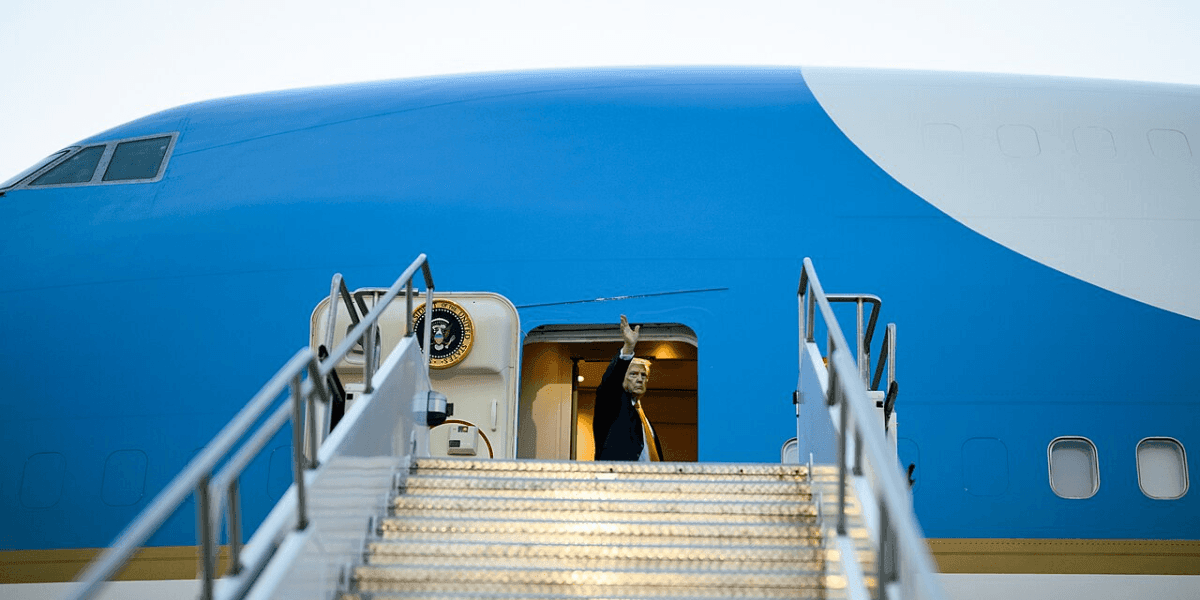
The Iran conflict remained the central national-security story of the day after President Donald Trump confirmed that the Secret Service and military moved him off Air Force One during a July departure from Turkey because of a threat. The Associated Press reported that Trump was transferred by airport catering container to another aircraft while Air Force One flew as a decoy, leaving staff, security personnel and reporters on the original plane. The revelation prompted questions about presidential transparency, press access and the handling of risks to others traveling with the president.
The broader confrontation with Iran also escalated at sea. U.S. Central Command said American forces fired missiles from a helicopter into the engine room of the Panamanian-flagged M/V Vela Nova after it allegedly ignored warnings and tried to evade the U.S. blockade of Iranian ports. Trump said the United States had “total control” of the Strait of Hormuz, though AP reported that Iran’s actions have still sharply impeded traffic through the waterway, which carried roughly one-fifth of traded global oil before the war. The uncertainty rippled through markets, with Brent crude rising 1.4% to $88.91 a barrel and major U.S. stock indexes closing lower.
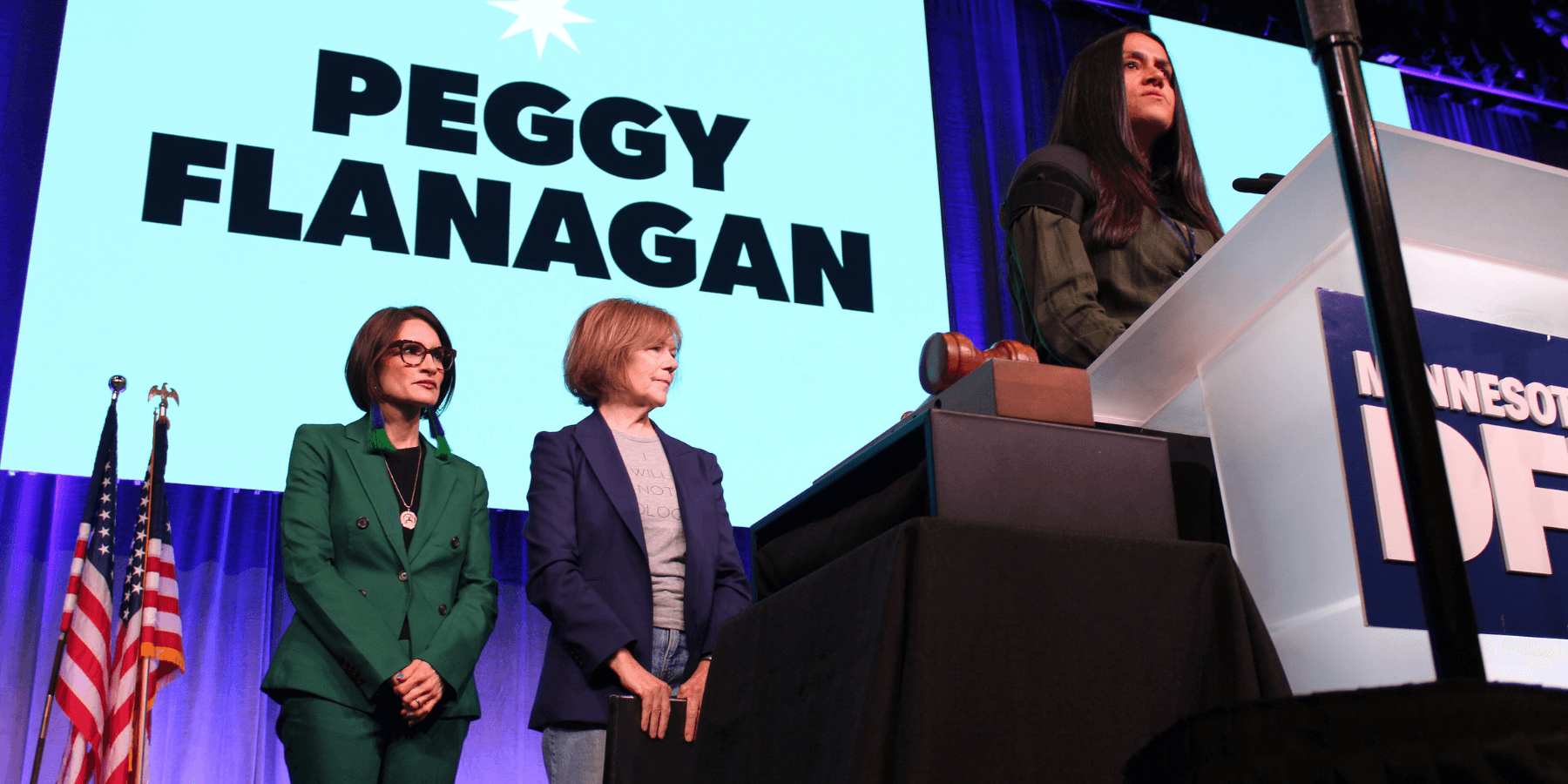
Aliya Rahman introduces Peggy Flanagan at the 2026 DFL Convention, May 2026.
Photo Credit: Taylor Dahlin/Wikimedia (Cropped)
Midterm Primaries Expose Democratic Fault Lines
Voters in Alabama, Connecticut, Minnesota, South Carolina, Vermont and Wisconsin went to the polls in primaries that served as another measure of party direction ahead of the November midterms. The Associated Press framed the night as another contest between establishment and progressive wings of the Democratic Party, with Wisconsin and Minnesota drawing particular national attention.
In Minnesota, Lt. Gov. Peggy Flanagan won the Democratic primary for U.S. Senate over Rep. Angie Craig in a race heavily shaped by immigration enforcement and anti-ICE sentiment. Flanagan, a citizen of the White Earth Nation, will face Republican Michele Tafoya in November and would become the first Native American woman elected to the Senate if she wins. In Wisconsin, Milwaukee County Executive David Crowley narrowly defeated progressive state Rep. Francesca Hong in the Democratic primary for governor, setting up a general election against Republican Rep. Tom Tiffany in one of the country’s most closely watched swing states.
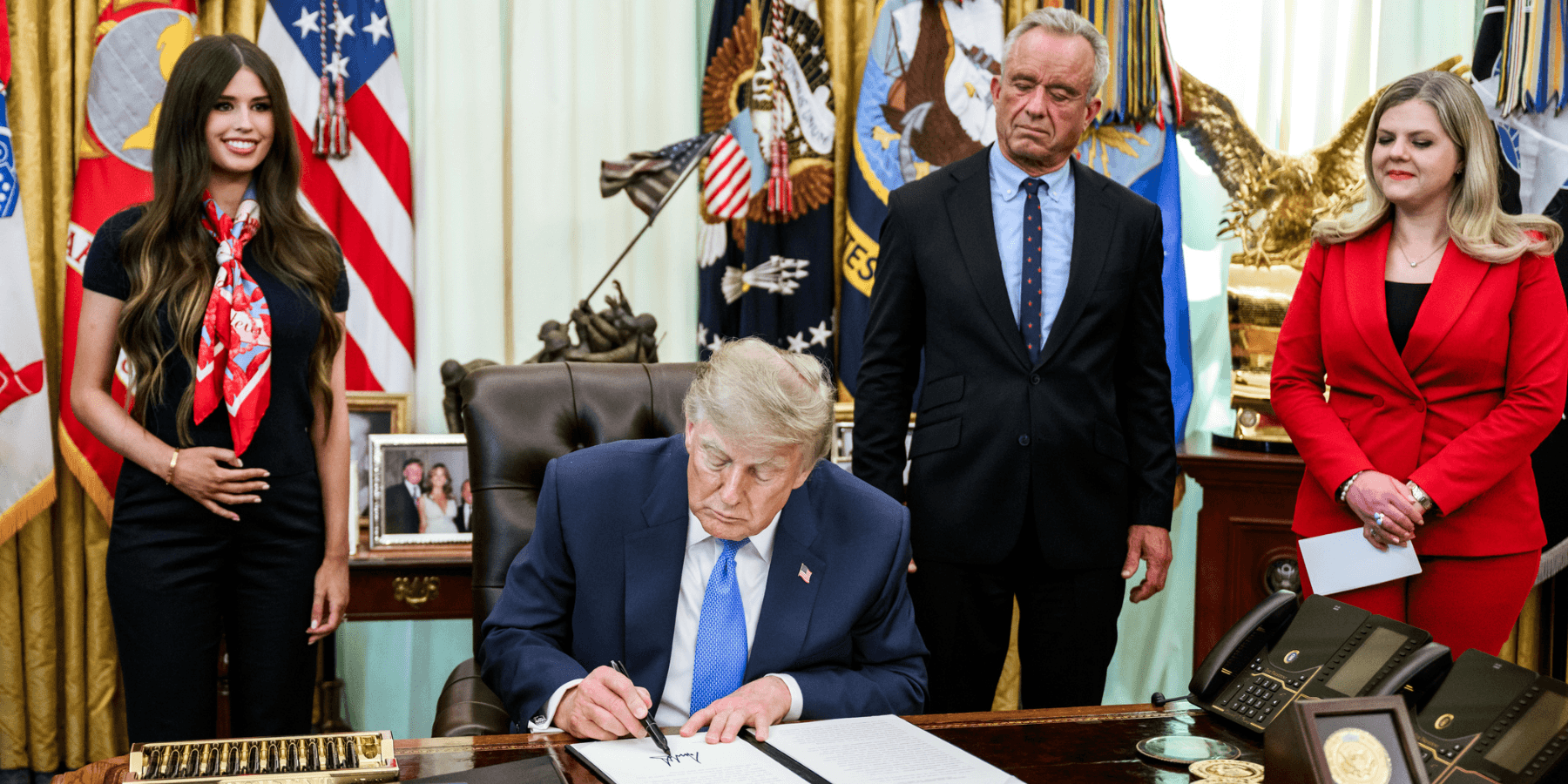
Photo Credit: The White House/Wikimedia
President Donald J. Trump signs an Executive Order regarding childhood vaccines in the Oval Office, Monday, August 10, 2026
Trump Vaccine Order Draws Medical Backlash
Public health policy moved to the center of the national debate after Trump signed an executive order creating new “Gold Standard Childhood Vaccine Recommendations.” The order recommends routine immunization for 11 diseases, moves several vaccines into high-risk or shared clinical decision-making categories, and calls for the combined measles, mumps and rubella vaccine to be administered as three separate single-disease shots once such products are available domestically. It also advises states to consider revising school immunization rules.
Doctors and public health experts sharply criticized the move. AP reported that pediatricians warned the order could sow confusion as children return to school, measles cases rise and immunization rates fall. Medical experts also rejected Trump’s suggestions about vaccines and autism, noting that decades of studies have found no link. The debate now moves to federal agencies, states and courts, where the administration’s vaccine policy is likely to face both implementation questions and legal challenges.
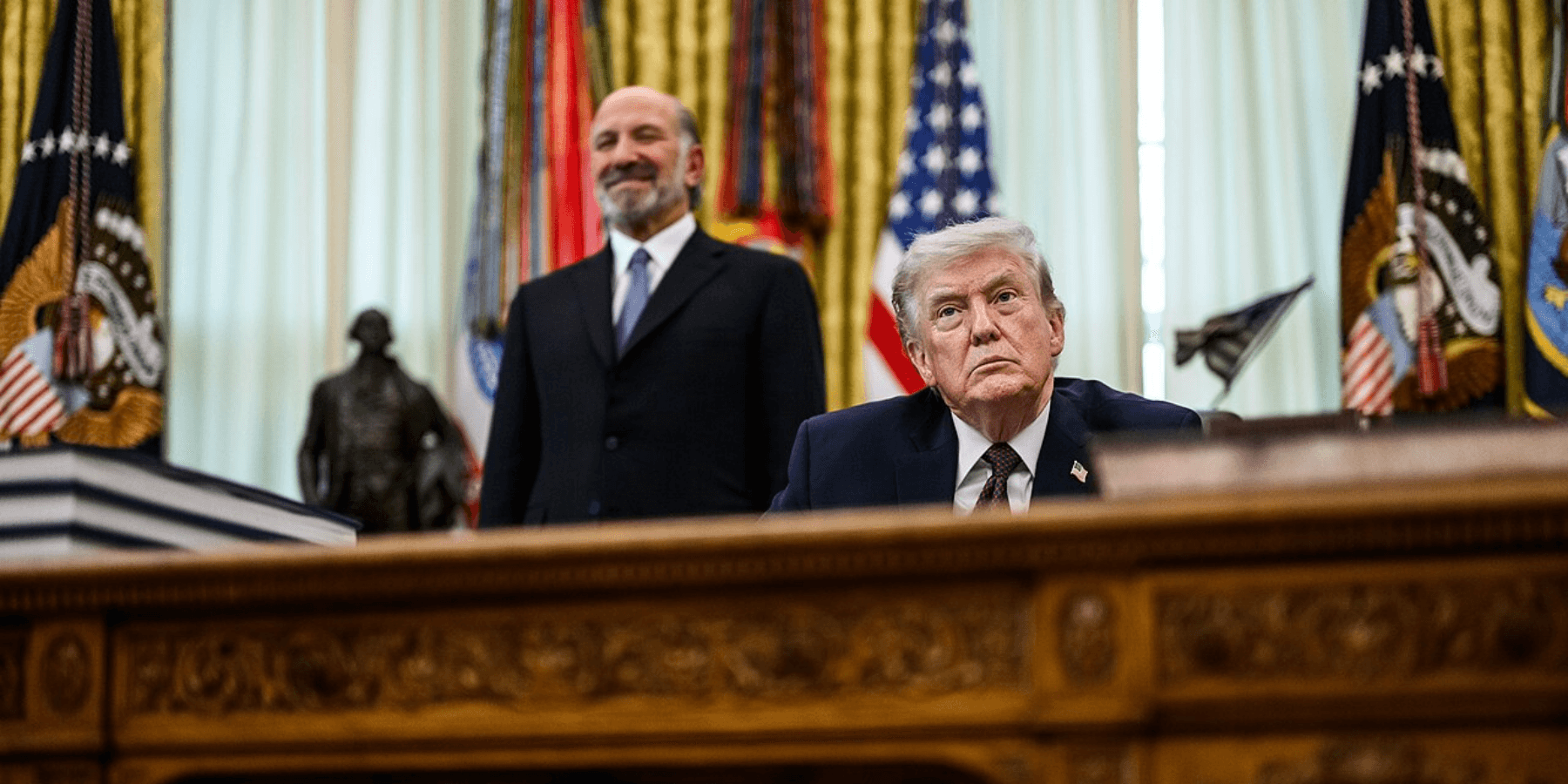
Photo Credit: Official White House Photo by Joyce N. Boghosian/Wikimedia
President Donald J. Trump answers questions from members of the media after signing an Executive Order limiting mail-in voting, March 31, 2026, in the Oval Office.
Federal Judge Blocks Mail-Voting Order Before Midterms
A federal judge in Boston again blocked Trump administration efforts to reshape mail voting before the November elections. U.S. District Judge Indira Talwani ruled against an executive order that sought to create a federal voter list and involve the U.S. Postal Service directly in election operations, writing that the executive branch lacks authority to regulate elections. Her injunction barred the Postal Service from taking steps to implement the order for the 2026 midterms.
The ruling adds another legal barrier for the administration as it asks the Supreme Court to lift lower-court blocks on election-related executive actions. Voting-rights groups praised the decision, while the White House defended the broader push as part of Trump’s election-security agenda. With less than 90 days before the November 3 midterms, the ruling underscored how election administration itself remains a central legal and political battleground.

Photo Credit: Unsplash
NOAA Confirms July Was the Hottest U.S. Month on Record
The National Centers for Environmental Information reported that July 2026 was the warmest month ever recorded for the contiguous United States, with an average temperature of 76.9°F. NOAA said the month was 3.3°F above the 20th-century average and slightly warmer than the previous record-setting Julys of 1936 and 2012.
The heat was widespread rather than localized. NOAA said every contiguous state ranked in the warmest third of its July records, with 13 states among their five warmest Julys. Overnight lows were especially striking, averaging 64.2°F and setting a record for warmest monthly minimum temperatures. The agency also noted expanding drought across parts of the country, while August outlooks favored above-average temperatures across much of the central and southern United States.
Looking Ahead
The next flashpoints are already visible. The Iran blockade and Strait of Hormuz dispute will continue to shape oil prices, military risk and domestic economic politics. Midterm candidates emerging from Tuesday’s primaries now move toward a general election defined by immigration, inflation, public health and election rules. Courts will remain central as challenges over voting procedures and vaccine authority proceed, while NOAA’s climate data adds urgency to questions about heat preparedness, drought and infrastructure resilience.