
Jason Santiago Introduces Let the AI Be Smart And Council Method To Help Professionals Verify AI Before They Trust It
Jason Santiago launches Let the AI Be Smart, introducing the Council Method to help professionals verify AI generated work before making critical decisions.
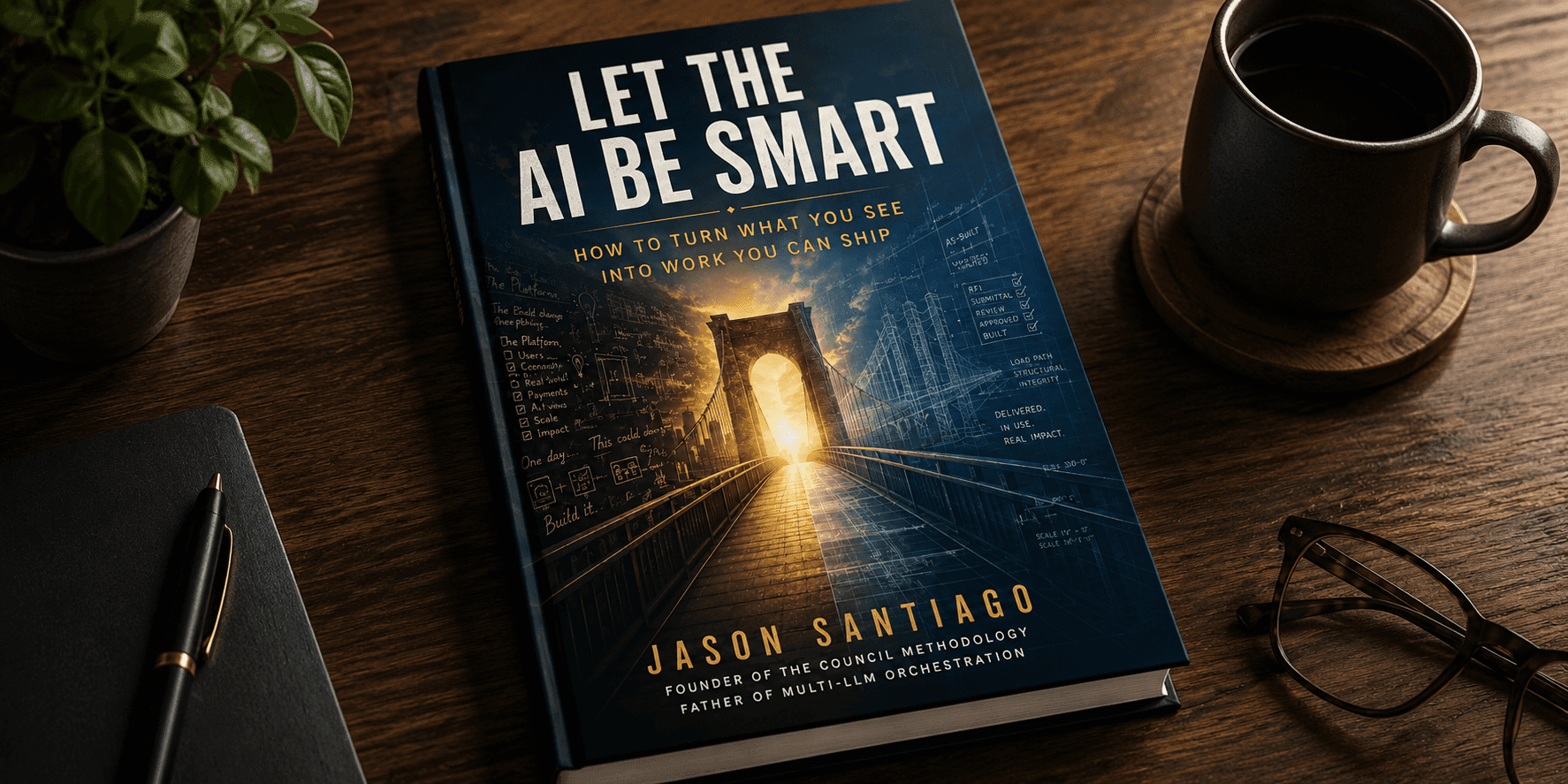
As artificial intelligence becomes part of everyday business, one question continues to surface across industries: when should people trust what AI produces? For Jason Santiago, the answer did not come from theory or experimentation in a laboratory. It came from managing commercial construction projects while simultaneously building production software, where even a single incorrect AI generated answer could create expensive consequences. That experience inspired his new book, Let the AI Be Smart: How to Turn What You See Into Work You Can Ship, and the creation of the Council Method, a practical framework that shifts the conversation away from writing better prompts and toward verifying AI before acting on its recommendations.
Jason Santiago is the founder of Santiago Innovations, creator of the Council Method, and author of Let the AI Be Smart. His career combines two disciplines that rarely intersect. As a commercial construction superintendent and self taught full stack developer, he recognized that the same quality control principles used to protect complex construction projects could also improve how professionals use artificial intelligence. Instead of accepting the first confident answer from a single AI model, Santiago created a framework that encourages multiple independent AI systems to examine the same problem before a human makes the final decision.
Why AI Verification Matters More Than Ever
Many organizations have embraced generative AI to accelerate writing, software development, research, planning, and decision making. While these tools can improve productivity, they can also produce convincing information that is inaccurate. The confidence of an AI response does not necessarily reflect its accuracy, making verification an essential part of responsible adoption.
Santiago believes the next stage of artificial intelligence is not simply faster responses. It is better decision making through independent verification. Rather than replacing human judgment, the Council Method strengthens it by requiring AI generated information to be challenged before it is trusted.
As Santiago explains, "One AI response isn't a verdict. It's testimony. The goal isn't to make AI think for you. It's to make AI prove its work before you trust it."

The Council Method Brings Quality Control To Artificial Intelligence
Unlike many resources that focus primarily on prompt engineering, the Council Method introduces a structured verification process. Multiple AI models independently analyze the same question, compare conclusions, identify disagreements, and expose weaknesses before a person evaluates the final outcome.
This methodology reflects practices that construction professionals have relied upon for decades. Critical work is inspected, reviewed, and verified because important decisions deserve multiple layers of accountability. Santiago adapted those same principles for artificial intelligence, creating a workflow that helps reduce the likelihood of costly mistakes while preserving human responsibility.
The Council Method has been developed through practical use on production software and commercial construction projects where reliable information directly affects outcomes. That real world experience distinguishes the framework from approaches designed primarily around generating faster responses.
A New Book For Professionals Who Need Reliable AI
With the release of Let the AI Be Smart: How to Turn What You See Into Work You Can Ship, Santiago provides readers with more than another guide to artificial intelligence. The book introduces a repeatable verification system that helps professionals build confidence in AI assisted work before making important decisions.
Readers learn how to apply the Council Method across a variety of professional environments, including software development, consulting, construction management, legal support, business operations, and other knowledge based fields. Rather than encouraging blind trust in technology, the book teaches readers how to compare independent AI perspectives, identify inconsistencies, and make better informed decisions with human oversight.
Drawing from his experience in both construction and software development, Santiago demonstrates that accuracy is not achieved by asking one AI better questions. It is achieved by requiring multiple systems to validate information before it is accepted.
Building Confidence In The Future Of AI
As artificial intelligence becomes increasingly integrated into professional work, the need for trustworthy processes will continue to grow. Jason Santiago believes the greatest opportunity is not teaching AI to replace people, but helping people make better informed decisions by validating AI generated information before acting on it.
His new book, Let the AI Be Smart, represents that philosophy in a practical, accessible format. It offers business leaders, developers, consultants, and knowledge workers a framework for reducing AI errors while improving confidence in the results they use every day.
Readers interested in learning the Council Method can visit Let the AI Be Smart for additional resources. Let the AI Be Smart: How to Turn What You See Into Work You Can Ship is available now on Amazon. Readers can also follow Jason Santiago through Facebook for updates on future resources and educational content focused on responsible AI adoption.
Jason Santiago Introduces Let the AI Be Smart And The Council Method To Help Professionals Verify AI Before They Trust It