
Johnny Achkar and the Poetry of Escape
Johnny Achkar turns ordinary moments into poetry that helps readers recognize their own emotional lives.

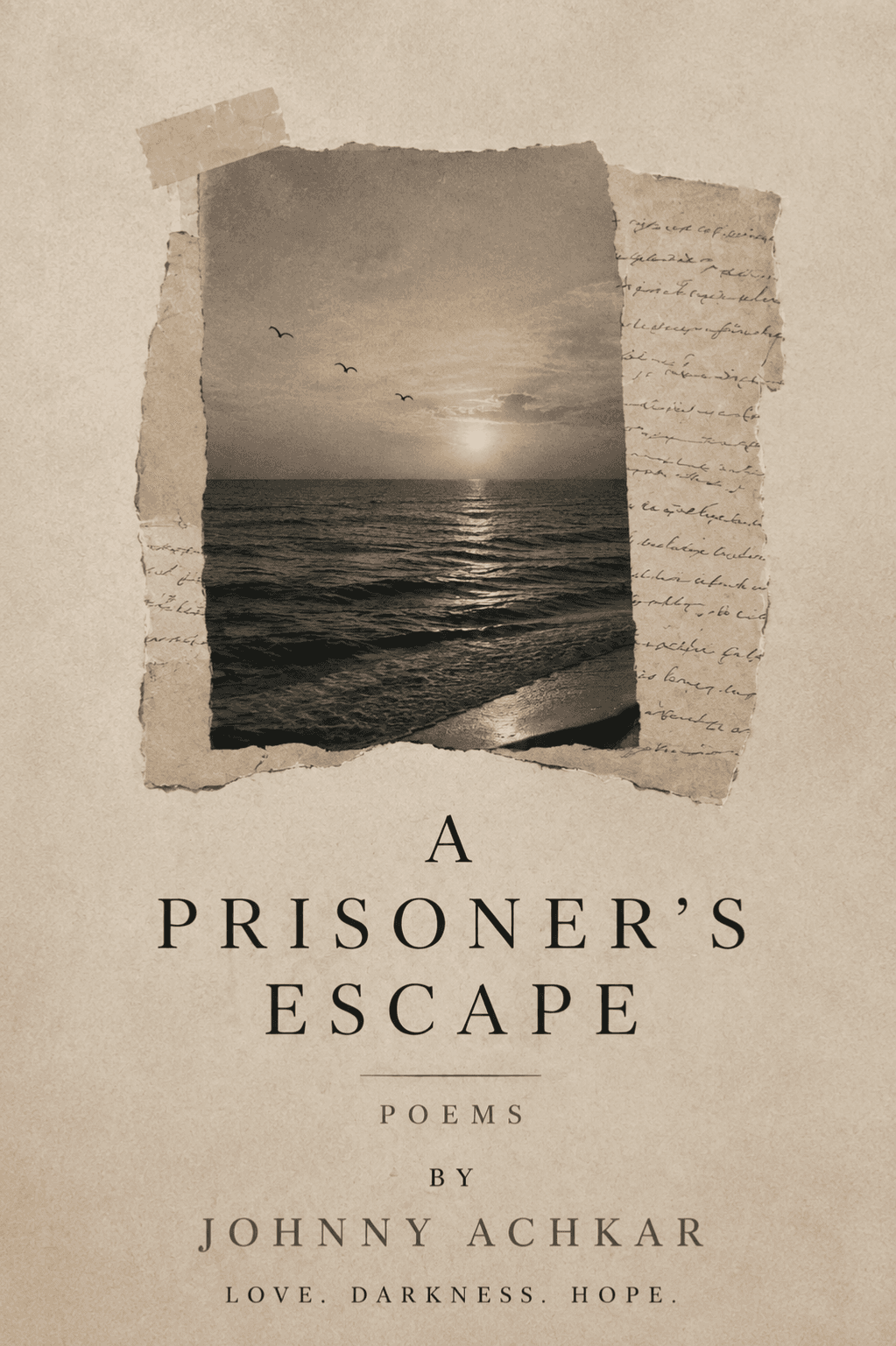
There are books that ask to be understood, and there are books that ask to be felt. Johnny Achkar’s work belongs to the second kind. In the quiet space between love and loss, solitude and renewal, the Johnny Achkar poetry collection, A Prisoner’s Escape, invites readers into an intimate landscape of human feeling. Its poems do not stand above life, explaining it from a distance. They move through it closely, with language shaped by memory, longing, grief, and the fragile persistence of hope.
Johnny Achkar Poetry Collection And Its Human Core
Johnny Achkar sees poetry as a reflection of how we feel, rather than just a collection of pretty words. For him, writing is a way to take tangled feelings and finally make sense of them. His first book, A Prisoner’s Escape, features 100 poems written over several years in both English and French. Using two languages gives the book a wider emotional reach while still feeling deeply personal and intimate.
The collection focuses on three main themes: Love, Darkness, and Hope. Love is explored through warmth, connection, and what it costs to care for someone. Darkness touches on the hidden loneliness and heavy burdens we often carry in secret. Hope isn't portrayed as a magical cure for pain; rather, it's about healing, moving forward, and staying open-hearted when things get hard. Reading these poems feels less like watching a staged performance and more like a friend sharing their private diary with you.
What makes Achkar’s writing so powerful is how relatable it is. He doesn't hide behind confusing, academic language. Instead, he writes honestly about real things we all go through: love, missing someone, feeling confused, making memories, and just getting through the day. His writing is easy to read, but that doesn't mean it lacks depth. In fact, it takes real skill to write so clearly about such complicated emotions.
Even the title, A Prisoner’s Escape, tells a story. It captures the tension between feeling trapped—whether by grief, fear, or memories—and finding a way to break free. Achkar’s poems speak directly to anyone who has loved deeply, experienced painful loss, or tried to find meaning in the quiet, everyday moments we usually keep to ourselves.
From Private Feeling To Shared Reflection
Every poet begins, in some way, with attention. Achkar’s attention turns toward the emotional life beneath common events. A look, a separation, a remembered voice, a hard season, or the slow return of light can become material for poetry. His writing is driven by the belief that the everyday is not minor. It is where people become themselves. It is where heartbreak settles, where tenderness survives, and where change often begins long before anyone recognizes it.
That focus gives the collection its sense of closeness. Readers are drawn to work that feels honest because recognition carries relief. When a poem names an emotion a person has held silently, it can create a rare kind of companionship. Achkar’s poems offer that space. They do not tell readers what to think. They invite them to pause, reflect, and locate parts of their own experience within the lines.
The collection also carries a dedication to the author’s late father, Khalil Al Achkar. That detail matters because it places memory and love at the foundation of the book. In poetry, dedication can become a hidden pulse, a presence that informs the work even when it is not named in every poem. For Achkar, it deepens the collection’s emotional atmosphere and connects personal loss with a broader human search for meaning.
Still, the center remains the text. Achkar’s accomplishment is not only that he assembled 100 poems. It is that he did so with a clear emotional architecture. The movement from Love to Darkness to Hope gives readers a path. It acknowledges that human life rarely proceeds in a straight line, yet it also suggests that feeling itself can become a form of passage. Pain may mark the journey, but it does not have to be the final destination.
Why Johnny Achkar’s Poetry Feels Accessible
In an era when much writing competes for speed, volume, and instant reaction, Achkar’s poetry asks for quiet attention. That request is part of its value. Poems are brief enough to enter quickly, but deep enough to return to over time. A reader may come to the book looking for beauty, then find consolation. Another may arrive through curiosity and discover language for an emotion that had remained unnamed.
The collection stands apart because it treats vulnerability as strength. Achkar does not lean on grand declarations to make his work feel important. Instead, he trusts emotional truth. His poems explore love, loss, madness, loneliness, hardship, and enduring hope through a voice that aims to be direct without becoming harsh, tender without becoming sentimental. This balance helps the work feel human rather than staged.
That human quality is especially important for readers who may feel distant from poetry as a form. Some people approach contemporary poetry with hesitation, expecting riddles, codes, or references that require expert training. Achkar offers another doorway. His poems are crafted to be felt first. Reflection follows naturally. This makes the work suitable for readers who already love poetry, as well as those returning to it after years away.
His bilingual presentation in English and French also reflects a broader literary sensibility. Language carries culture, rhythm, and emotional texture. When a collection moves across two languages, it creates added layers of resonance. For readers, this can make the book feel more intimate and expansive at once. The poems remain deeply personal, yet their presentation suggests that feeling does not belong to one language alone.
The title A Prisoner’s Escape also speaks to the reader’s desire for release. Many people carry inner rooms they rarely open. They move through work, family, memory, and expectation while holding private burdens. Achkar’s poems meet that reality with empathy. They do not promise easy answers. They provide something more durable: the feeling of being seen, accompanied, and gently invited toward renewal.
A Collection Built For Recognition And Return
The lasting value of a poetry collection often lies in its rereading. A novel may be completed. A poem can be revisited like a room where the light changes with each season of life. Achkar’s work lends itself to that kind of return. The themes of Love, Darkness, and Hope are universal, but the experience of reading them changes depending on what the reader is carrying on a given day.
For one reader, a poem about love may feel luminous. Months later, that same poem may reveal the cost beneath the beauty. A passage shaped by darkness may feel heavy during one season and strangely comforting in another. Hope, too, may read differently after loss, change, or recovery. This flexibility is one reason emotionally honest poetry continues to matter. It grows with the reader.
Achkar’s artistic identity is grounded in connection. He writes not to impress from a distance, but to invite recognition. His poems create a place where readers can reflect without judgment and feel without apology. In that sense, the collection is more than a debut. It is an introduction to a literary voice shaped by empathy, accessibility, and a sincere belief in the power of words to meet people where they are.
For readers seeking poetry that turns everyday emotions into meaningful reflection, A Prisoner’s Escape offers a thoughtful place to begin. Explore Johnny Achkar’s work, spend time with the poems, and discover how his writing can help you see love, hardship, memory, and hope with greater clarity.
Explore More About Johnny Achkar
Connect with Johnny Achkar, Linktree, and YouTube.
Meta description: Explore the Johnny Achkar poetry collection, A Prisoner’s Escape, and its moving journey through love, darkness, and hope.