
NoPhone NoEmail Redefines Private Messaging
A new app lets users communicate freely without ever sharing a phone number or email.
Every time someone downloads a new messaging app, the first request is almost always the same: enter a phone number or email address. For millions of people, that moment represents a quiet but significant trade, surrendering personal identity in exchange for the ability to simply talk to someone. One independent technology company decided that trade was no longer acceptable.
The Problem With Modern Communication
Digital communication has never been more accessible, yet the cost of entry keeps rising. Traditional messaging platforms require users to verify their identity through phone numbers or email addresses before accessing even the most basic features. That requirement creates a chain of exposure: personal contact information gets stored, shared, and sometimes sold, opening users to spam, unwanted contact, and data collection they never fully agreed to.
The concern is not theoretical. Privacy issues tied to personal data collection have grown into one of the defining conversations of the digital age. Users are more aware than ever that the information they provide to access a platform rarely stays contained. For many, the question has shifted from "how do I communicate?" to "how do I communicate without giving everything away?"
A Platform Built From a Real-World Gap
NoPhone NoEmail was built to answer that question directly. The platform emerged from a straightforward but often overlooked reality: millions of people around the world lose access to communication not because they lack internet connectivity, but because they no longer have an active phone plan. Wi-Fi is widely available. Phone service is not always consistent. That gap, between connectivity and accessibility, became the foundation for something new.
"People should be able to communicate without being forced to give away personal information," the founder of NoPhone NoEmail has stated. "We created NoPhone NoEmail to simplify communication while giving users more control over their identity online."
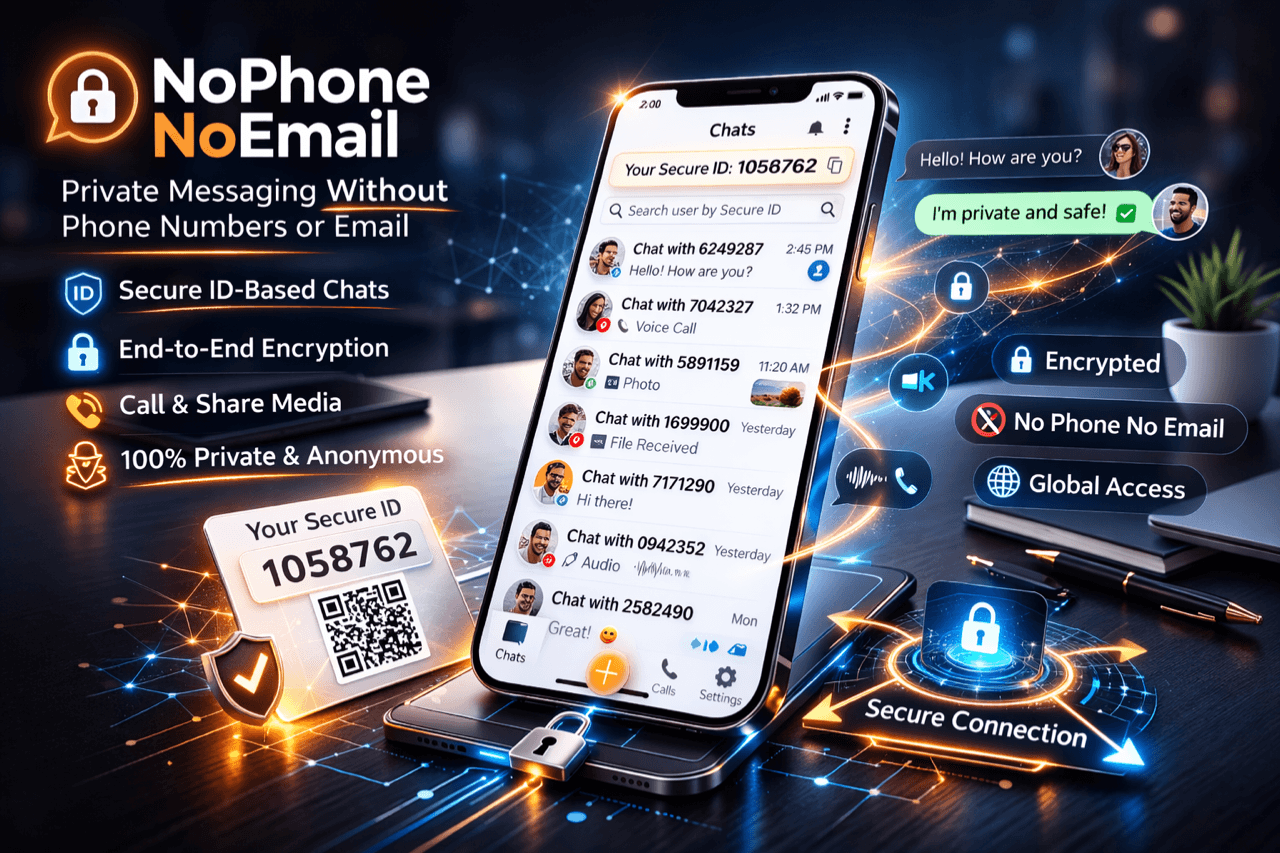
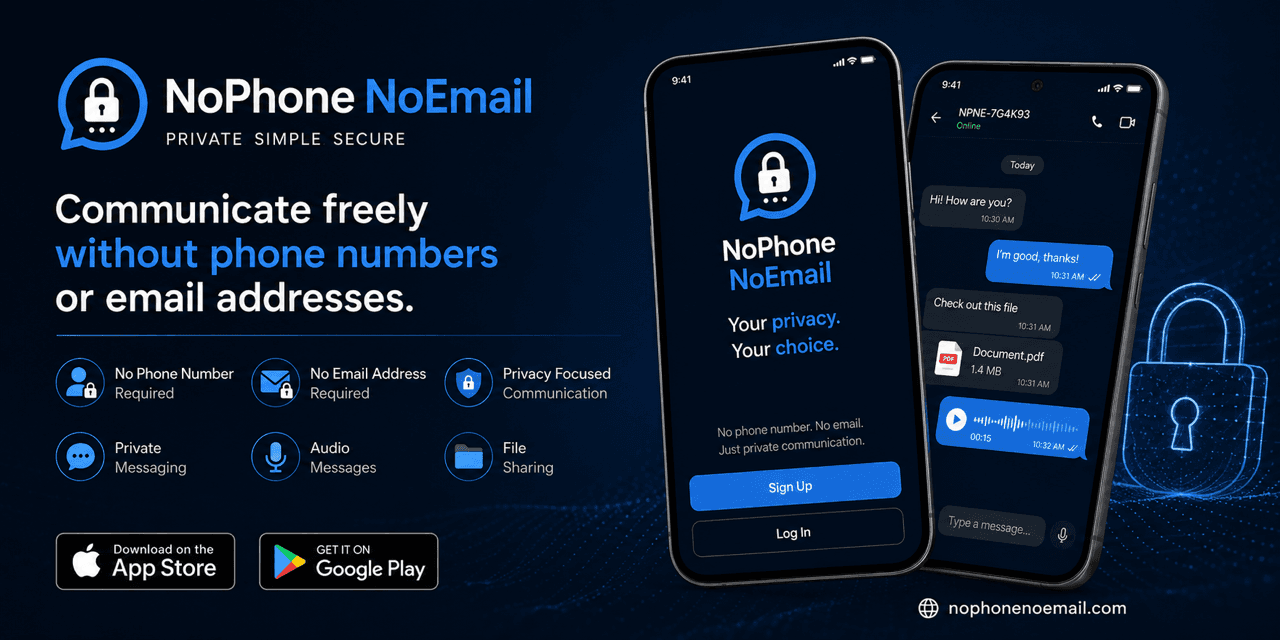
Rather than requiring a phone number or email address, the platform assigns each user a secure generated ID. That ID becomes the basis for all communication, removing the traditional link between messaging and personal identity. Users can send private messages, share audio, and transfer files without exposing any contact information in the process.
What Makes NoPhone NoEmail Different
The differences between NoPhone NoEmail and conventional messaging apps go beyond the registration process. The platform is built around a privacy-first philosophy that shapes every feature and decision. There are no advertisements. There is no phone number dependency. There is no email requirement. Users maintain greater control over their digital identity from the moment they open the app.
The secure ID system also reduces spam risk. Because users are not sharing phone numbers or email addresses, the most common vectors for unwanted contact are simply removed. Communication becomes more intentional, more controlled, and more private by design.
"Privacy should not be treated as a premium feature," the founder noted. "It should be part of everyday communication."
Accessibility is equally central to the platform's mission. NoPhone NoEmail was designed with users in mind who may not have consistent access to phone service but still maintain internet connectivity through Wi-Fi. For those individuals, traditional messaging apps create an invisible wall. NoPhone NoEmail removes it.
Available Now, With More on the Way
The platform launched on both the Apple App Store and Google Play, making it available to iOS and Android users worldwide. Current features include private messaging, audio sharing, and file sharing, with secure audio and video calling features currently in development. The app also includes PIN protection and content filtering, reinforcing its commitment to giving users meaningful control over their experience.
As an independent technology company, NoPhone NoEmail is building toward a long-term vision: a global communication ecosystem where people can connect securely without depending on identity-based systems. That vision places the platform within a broader shift already underway in how users think about digital privacy.
"Not everyone has consistent access to phone service, but many people still have internet access," the founder explained. "Communication should remain accessible."
A Mission Worth Paying Attention To
The timing of NoPhone NoEmail's launch reflects a growing appetite for alternatives to data-heavy platforms. Users across demographics are actively seeking tools that respect their privacy without sacrificing functionality. NoPhone NoEmail occupies a space that few platforms have been willing to build toward: communication that is simple, private, and free from the identity requirements that have come to feel inevitable.
The platform is not positioned as a niche solution for a narrow audience. It is built for anyone who has ever paused before entering a phone number into a sign-up form and wondered whether there was another way. As digital privacy continues to rise as a global priority, platforms designed around user control rather than data collection are likely to become increasingly relevant.
NoPhone NoEmail is already live, already available, and already offering something the messaging landscape has been slow to provide.
Explore More About NoPhone NoEmail
Discover a new approach to private communication by visiting NoPhone NoEmail, downloading the app on Apple App Store or Google Play, and following the platform on Facebook and TikTok.