Rob MacKay’s The Sea Made Us: Preserving the Story of the Garifuna People
For Rob MacKay, The Sea Made Us: A History of the Garifuna People began with a lifelong connection to a culture he believes deserves wider recognition.

By
Jul 8, 2026
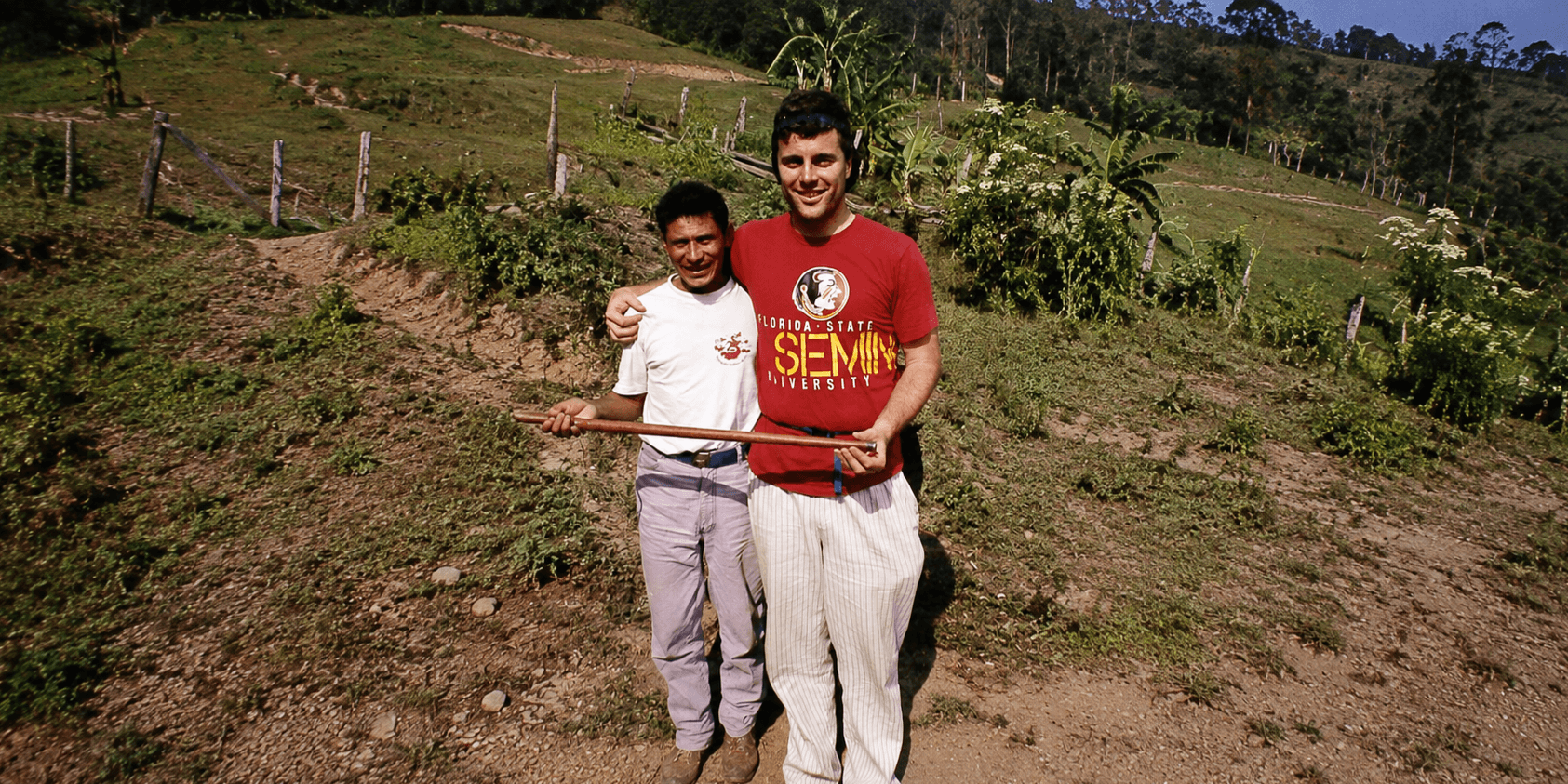
Long before the book existed, MacKay found himself drawn to Garifuna culture through a personal connection. Right before leaving for Honduras with the Peace Corps, he dated a woman whose mother had lived with a Garifuna man with a fascinating take on life, health, and spirituality. When he arrived in Honduras in 1993, that interest only deepened. Because he spoke Spanish, communication came naturally, and the people, traditions, music, food, and everyday rhythms of Garifuna life stayed with him.
After returning to the United States, MacKay felt a lingering nostalgia for Honduras and for the Garifuna community in particular. He began looking for Garifunas in New York City, where he found a large community in the Bronx and a smaller one in Brooklyn. What had started as curiosity became a decades-long connection.
That connection is at the heart of The Sea Made Us. The book is not only a historical overview of the Garifuna people. It is also the result of years of attention, admiration, research, and a desire to preserve a culture that MacKay believes more people should know.
A Culture at Risk of Being Forgotten
The Garifuna people have one of the most distinctive cultural histories in the Americas. Their identity blends African and Indigenous Caribbean roots, shaped by survival, displacement, migration, and adaptation. Their communities are found along the Caribbean coasts of Central America, especially in Honduras, Belize, Guatemala, and Nicaragua, as well as in diaspora communities across the United States.
Yet MacKay did not write The Sea Made Us simply because the Garifuna story is fascinating. He wrote it because he believes the culture is facing real pressure.
For him, one of the most urgent concerns is language loss. Fewer young people speak Garifuna today, and many prioritize learning English for economic reasons. Modern technology has also changed the way traditions are passed down. Folklore, bedtime stories, rituals, music, and community practices now compete with video games, global pop culture, and the same digital habits shaping young people everywhere.
Migration has added another layer. Many Garifunas have moved to the United States, where assimilation is a daily reality. Culture can survive migration, but it can also become thinner from one generation to the next if language, rituals, foodways, music, and oral history are not actively protected.
With that in mind, MacKay wanted to gather firsthand accounts, experience traditional culture closely, and preserve as much as possible in written form.
The Author as Researcher, Listener, and Witness
MacKay describes his responsibility as an author in direct terms: to tell the truth and leave no stone unturned.
That responsibility matters because writing about a culture requires care. MacKay admires the Garifuna people deeply, but he also tried not to idealize them or place them on a pedestal. The result is a book built on respect rather than romanticism. It presents the Garifuna as a living people with a rich culture, complex history, and human reality.
The research process took about two years from the decision to write the book to its publication, though MacKay says the idea had been “bubbling” in his mind for at least two decades. During that time, he interviewed many Garifuna community members directly. He also listened to podcasts, watched videos, read existing books, and studied available cultural and historical material.
That mix of firsthand contact and wide-ranging research gives The Sea Made Us its strength. It is accessible for readers who are new to the subject, but it is also grounded in the voices, memories, and lived experiences of people connected to the culture itself.
Mayangulé: A Living Symbol of Garifuna Survival
One of the most powerful stories in the book is that of Mayangulé, who represents many of the themes at the center of Garifuna history: community, displacement, resilience, and cultural continuity.
Mayangulé grew up fully immersed in Garifuna life. His youth was spent barefoot in the community, eating freshly caught fish, dancing, and making tambors with his brother and father. His life was later disrupted by violence, forcing him to leave Honduras and begin again in Brooklyn. But even after migration, his culture remained alive in him.
For MacKay, Mayangulé is not just a subject in the book. He is a living expression of what the Garifuna story means. Even after displacement, the community still “courses through his veins,” as MacKay puts it.
Recently, Mayangulé invited MacKay to his apartment to eat hudutu, a traditional Garifuna seafood dish. The meal was more than food. It was memory, hospitality, identity, and survival served at the table. MacKay left with a full stomach and a fuller brain.
What Garifuna Readers May Find in the Book
MacKay hopes Garifuna readers feel the specialness and uniqueness of their culture when they read The Sea Made Us. He also hopes they learn something new about their history.
One of the book’s most meaningful sections is its “Notable Figures” chapter, which highlights Garifunas who have made important contributions in different countries and fields. MacKay notes that even some Garifunas he knows were surprised to learn about so many people from their own community who had achieved success abroad.
That matters because cultural preservation is not only about remembering hardship. It is also about recognizing achievement, pride, influence, and contribution. The Garifuna story is not confined to the past. It continues through artists, leaders, thinkers, musicians, activists, athletes, and everyday families carrying the culture forward.
What Non-Garifuna Readers Can Learn
For readers unfamiliar with the Garifuna people, The Sea Made Us offers an introduction to a world they may never have encountered in school, media, or mainstream history books.
MacKay wants non-Garifuna readers to come away with knowledge of the community’s culture, history, music, language, food, spirituality, migration, and identity. He believes that once readers learn the word “Garifuna,” they will begin noticing it more often, much like a new vocabulary word that suddenly appears everywhere after it becomes familiar.
He also hopes the book inspires some readers to visit Garifuna Nation, the stretch of Caribbean coastal communities across Central America where much of the culture continues to live.
That possibility is important. Books can preserve history, but they can also create bridges. They can move readers from awareness to curiosity, and from curiosity to respect.
More Than a History Book
The Sea Made Us works because it is not limited to dates and events. It looks at the Garifuna people through history, music, dance, religion, food, language, names, fashion, migration, notable figures, and the future of the culture.
This broad approach reflects the reality of culture itself. A people cannot be understood only through conflict or chronology. They must also be understood through what they eat, how they pray, how they dance, how they name one another, how they mourn, how they celebrate, and how they remember.
MacKay’s book gives readers that wider view. It introduces the Garifuna people as a living culture rather than a distant historical subject.
Why MacKay’s Work Matters
At its center, The Sea Made Us is about the Garifuna people. But MacKay’s role matters because he has taken on the work of listening, gathering, organizing, and sharing a story that deserves wider attention.
His connection to the culture spans more than thirty years. His interest began before Honduras, deepened during his Peace Corps experience, continued in New York, and eventually became a book. That long arc gives the project a personal foundation without making the author larger than the subject.
MacKay is not presenting himself as the story. He is presenting himself as someone who recognized the importance of the story and committed himself to telling it carefully.
That is what makes The Sea Made Us valuable. It is both a tribute and a resource. It is a book for Garifuna readers, non-Garifuna readers, educators, libraries, students, travelers, and anyone interested in the survival of culture across time, borders, and generations.
The Garifuna people have carried their identity through centuries of movement, loss, adaptation, and renewal. Through The Sea Made Us, MacKay invites readers to finally pay attention.

MacKay speaking at the opening of the Queens World Film Festival 2019 at the Museum of the Moving Image, in his capacity as director of the Queens Tourism Council.
Learn More
To learn more about MacKay, The Sea Made Us, and the Garifuna people, visit: robmackay.info