
Sayed Rohani: Exploring the Symbolism of the Quran’s Secret Letters
A scholar’s exploration into the Quran’s secret letters and the number 19, offering a fresh perspective on Islamic scholarship.
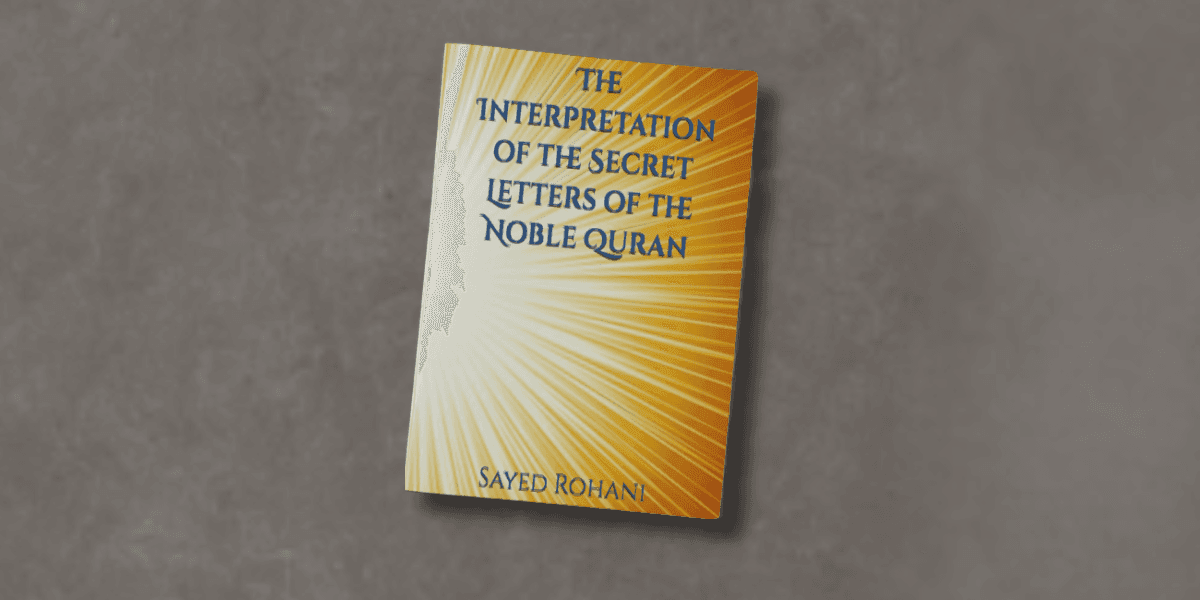
In the search for deeper understanding of sacred texts, there are moments that spark curiosity and open new avenues of inquiry. For Sayed Rohani, a writer and academic with a passion for unraveling spiritual truths, his exploration of the Quran's enigmatic letters has led to insights that challenge traditional interpretations. His work, The Interpretation of the Secret Letters of the Noble Quran, seeks to offer a new perspective on the Quran’s depth, focusing on the significance of the entire enigmatic letters and their potential hidden meanings.
A Journey of Academic Exploration
Sayed Rohani, originally from Afghanistan and now residing in the United States, has long been drawn to the mysteries of the Quran. With a Master’s degree in Education and a doctorate in English as a Second Language (ESL), his academic background provided a strong foundation for his scholarly endeavors. However, it was his dedication to exploring religious and spiritual texts that led him to examine the Quran’s symbolic letters, a feature that has intrigued scholars for centuries.
These letters, found at the beginning of several chapters in the Quran, have been the subject of various interpretations. Some scholars regard them as symbols with an unknown meaning, while others suggest they may have deeper spiritual significance. In his research, Rohani explores these letters as potential keys to understanding the Quran in a new light.
The Role of Number 19 in Islamic Mysticism
Rohani’s research delves into the role of the number 19, which is mentioned in Chapter 74, Verse 30 of the Quran. In Islamic mysticism, numerology often holds symbolic meaning, and the number 19 has been a subject of interest for many scholars and thinkers. Rohani explores the possibility that this number is not merely a coincidence but could be part of a larger, intricate design within the Quran’s structure.
The article presents an examination of how the number 19 might correlate with the Quran’s secret letters and whether it could represent a symbolic or numerical pattern hidden within the sacred text. Rohani’s analysis suggests that the number may serve as a tool for unlocking further layers of meaning in the Quran, though his revelation remains one among many in the ongoing discussion of Quranic numerology.
The Truth Comes from Quran Itself, Not from the External Sources
Number 19 has been used as a litmus test to identify the veracity of the interpretation of the secret letters. In fact, the whole proof comes from the Noble Quran itself, not from the external sources. Just as all the letters, words, and verses of the Noble Qur’an have been divinely sealed by number 19, so too does the interpretation of each and every letter partake of this same divine gift or formula that attests to its truth. In fact, the Noble Quran starts with 19 letters and ends with 19 words (Al- Nassr: the 110th Surah of the Quran).
Engaging with the Quran in the Modern World
Rohani’s findings encourage both Muslims and non-Muslims to engage with the Quran in a more profound way, seeking wisdom from the text that extends beyond its religious teachings to touch on broader themes of morality, justice, and human nature.
His book, The Interpretation of the Secret Letters of the Noble Quran, provides a detailed analysis of his findings and offers a unique perspective on the Quran’s structure. Rohani hopes that by presenting this research, he can inspire others to approach the Quran with curiosity and a desire for deeper understanding.
A Scholar’s Legacy Beyond Religious Boundaries
Beyond his academic work on the Quran, Sayed Rohani has written extensively in other fields, including novels, plays, and nonfiction. His body of work explores themes such as social justice, the human condition, and the nature of prejudice and corruption. While his scholarly work on the Quran is at the forefront of his academic career, his wider writings reflect a commitment to understanding the complexities of society and human behavior.
Rohani’s ongoing exploration of religious and philosophical texts reflects his belief in the importance of knowledge, understanding, and critical thinking. His approach to Quranic scholarship challenges readers to think beyond conventional interpretations, inviting them to explore the Quran’s hidden meanings through careful analysis and open-minded reflection.
Conclusion: A New Perspective on an Ancient Text
Sayed Rohani’s work on the Quran’s secret letters presents an intriguing exploration into the deeper meanings of the Quranic text. While his effort contributes to the ongoing conversation surrounding the Quran’s structure, it is essential for readers to approach these ideas with an open mind, acknowledging the variety of interpretations that have shaped Islamic scholarship over the centuries.
For those seeking a deeper engagement with the Quran, The Interpretation of the Secret Letters of the Noble Quran offers a thoughtful analysis that encourages further exploration of one of the world’s most important religious texts.
Discover more about Sayed Rohani’s work, explore his Amazon profiles and buy his books.