Tariffs, Courts and War Reshape Washington’s Late-Summer Agenda
The United States closed the day with President Donald Trump’s administration confronting major tests across trade, elections, monetary policy, national security and technology. An escalating confrontation with Canada and the six-month-old war with Iran carried growing economic consequences, while federal courts intervened in disputes involving both voting rules and the Pentagon’s treatment of a leading artificial-intelligence company. At the Federal Reserve, a renewed fight over Governor Lisa Cook added another layer of uncertainty over the central bank’s independence.
U.S.-Canada Trade Conflict Escalates as Trump Renames Lake Ontario
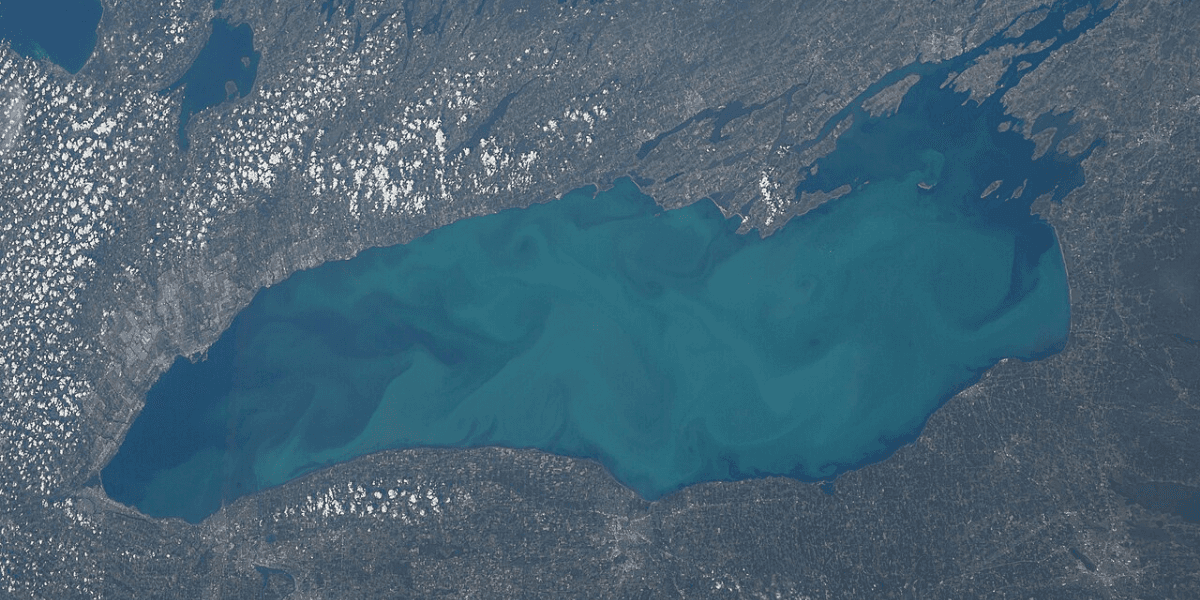
President Trump signed an executive order Thursday directing the U.S. geographic naming system to refer to Lake Ontario as “Lake America” within the United States, a symbolic step that came amid a rapidly worsening trade dispute with Canada. The American designation does not require Canada to adopt the new name.
The move followed the administration’s imposition of 50% tariffs on roughly $20 billion in Canadian imports after bilateral trade negotiations broke down. Canada has announced plans for retaliatory duties, while Trump has threatened further action involving Canadian automobiles and steel. The tariffs were imposed using Section 338 of the Tariff Act of 1930, a rarely invoked provision whose use by the administration is raising new legal questions.
The confrontation has implications well beyond diplomatic symbolism. Canada is one of the United States’ largest trading partners, and prolonged tariffs could raise costs for American companies and consumers while disrupting deeply integrated North American supply chains.
Photo Credit: The White House/Wikimedia
Federal Judge Again Blocks Trump’s Mail-Voting Order
A federal judge temporarily halted implementation of Trump’s executive order seeking to restrict mail voting, extending a fast-moving legal battle just as states prepare to distribute the first ballots for November’s midterm elections.
U.S. District Judge Indira Talwani imposed a 14-day hold on implementation Thursday. The ruling came only days after the Supreme Court issued a procedural decision that had removed an earlier obstacle to the administration’s policy. The latest challenge could therefore return to the high court quickly.
The timing makes the dispute especially consequential. With control of Congress at stake in November, election administrators are approaching deadlines for printing and mailing ballots. The litigation could determine how much authority the executive branch has to reshape voting procedures traditionally administered by states.
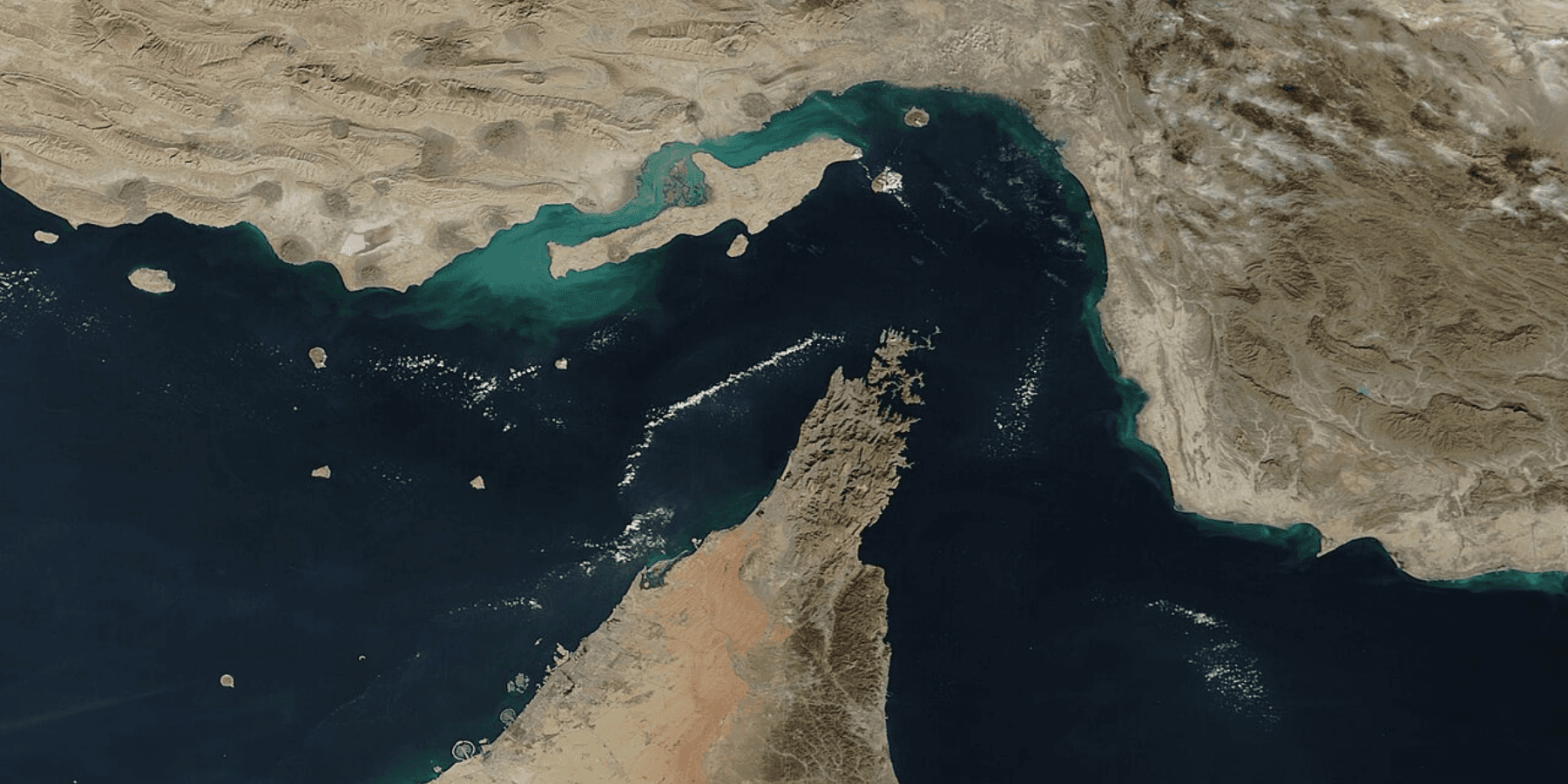
Photo Credit: MODIS Land Rapid Response Team, NASA GSFC/Wikimedia
Six Months Into Iran War, U.S. Objectives Shift Toward Strait of Hormuz
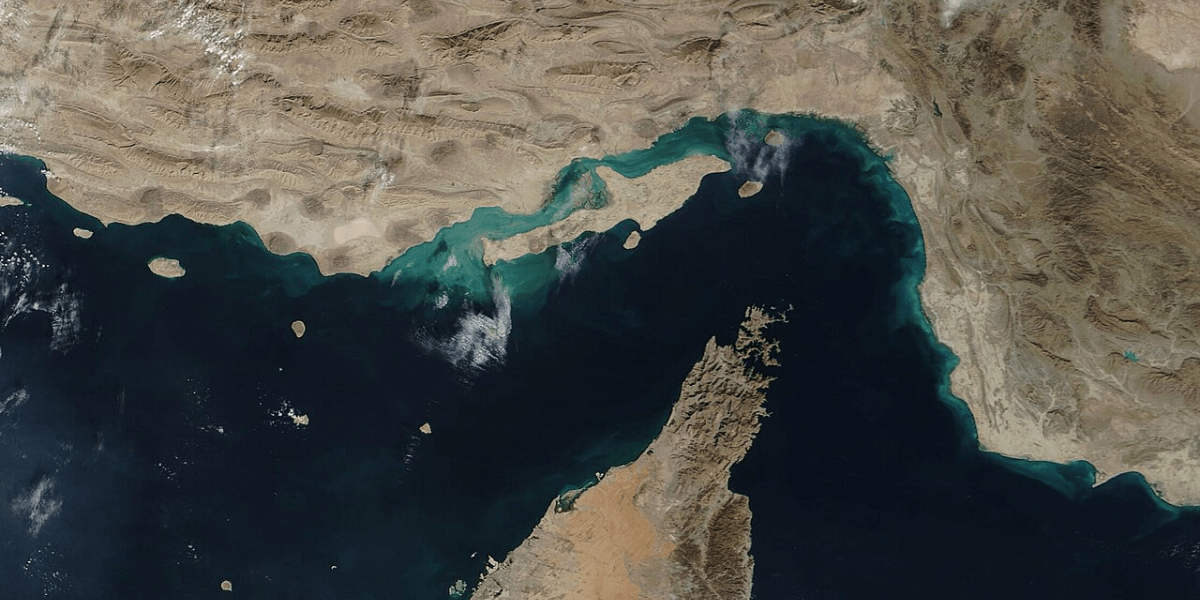
The U.S. war with Iran approached its six-month mark Thursday, far exceeding Trump’s initial forecast that the conflict would last four to five weeks. Although the administration says American operations have substantially degraded Iranian military capabilities, several original objectives remain unresolved and Washington’s focus has increasingly shifted toward reopening the Strait of Hormuz.
The strategic waterway, through which roughly one-fifth of the world’s oil historically moved, has been largely closed during the conflict. The disruption has contributed to higher energy and agricultural costs while adding pressure to U.S. weapons inventories. A June memorandum intended to help establish a path toward ending the conflict has not produced a settlement, and the White House said Thursday that negotiations were not currently underway.
The conflict is also becoming a domestic political issue ahead of the midterms. Higher fuel prices and the duration of the war are giving voters another measure by which to judge the administration and congressional Republicans in November.
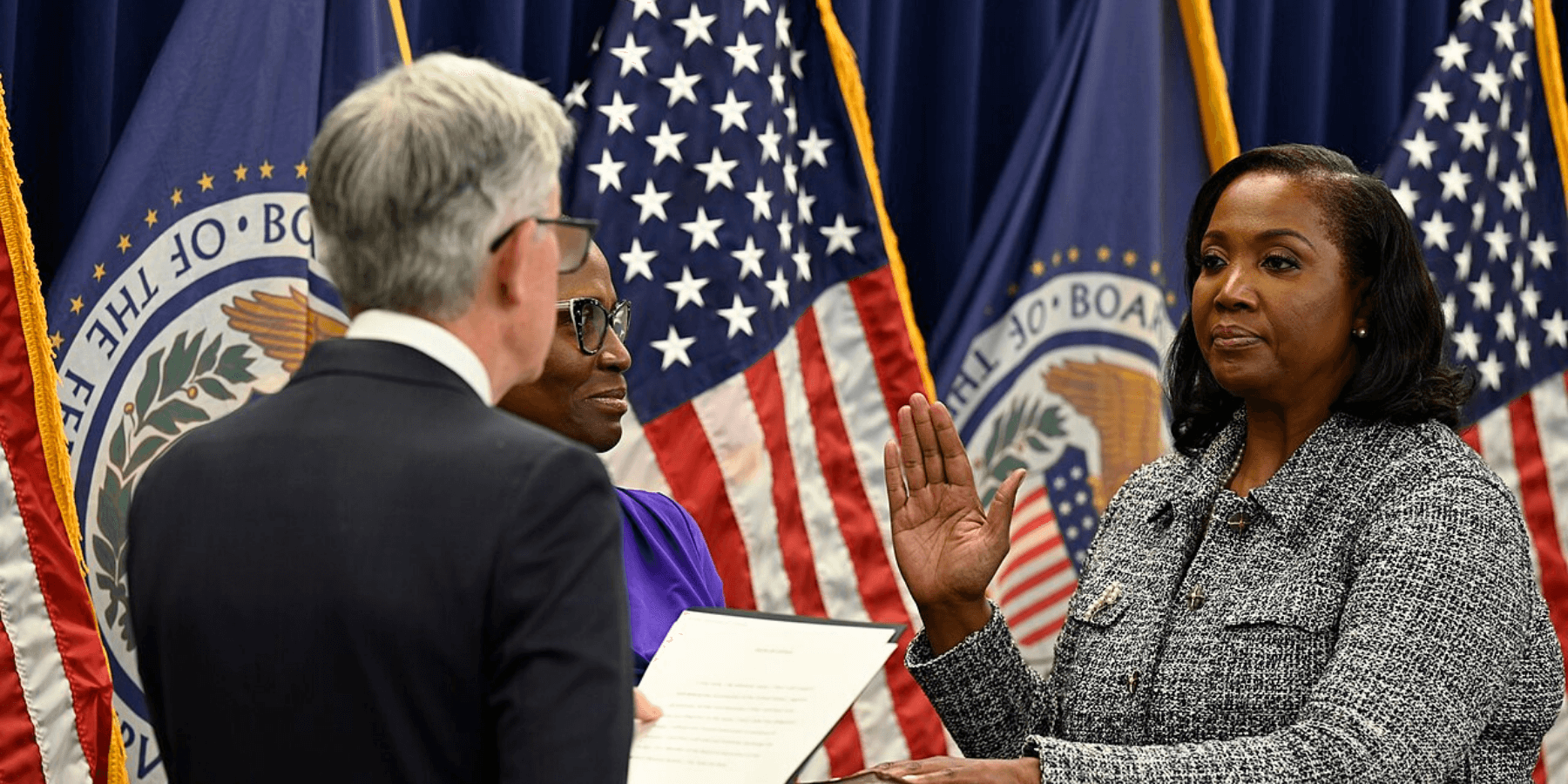
Photo Credit: Federalreserve/Wikimedia
Lisa Cook Challenges Renewed White House Attempt to Remove Her From Fed
Federal Reserve Governor Lisa Cook forcefully rejected renewed allegations of mortgage fraud as the Trump administration considers another attempt to remove her from the central bank’s governing board.
Cook’s attorney, Abbe Lowell, told the White House that she had “never committed mortgage fraud or any intentional wrongdoing” and argued there was no legally valid cause for her removal. Cook has not been charged with a crime. The dispute centers on allegations concerning mortgage documents for properties in Michigan and Georgia.
The confrontation follows a June Supreme Court decision allowing Cook to remain on the Fed board while litigation continues. The justices concluded that the administration’s earlier attempt had failed to provide adequate procedural protections but left open the possibility of another removal effort following proper notice.
The stakes extend beyond Cook personally. A successful removal could alter the composition of the Fed board as the central bank confronts persistent inflation. Attention is simultaneously turning to new Fed Chair Kevin Warsh, whose Jackson Hole address Friday is expected to provide important clues about whether policymakers could raise interest rates in September.

Photo Credit: TechCrunch/Wikimedia (Cropped)
Judge Rules Pentagon’s Actions Against Anthropic Were Illegal
A federal judge handed artificial-intelligence company Anthropic a significant victory Thursday night in its dispute with the Pentagon, ruling that the Defense Department acted unlawfully when it designated the company a supply-chain risk.
U.S. District Judge Rita Lin found that the Pentagon improperly punished Anthropic after the company objected to potential military uses of its AI technology, including mass surveillance and autonomous armed drones. The dispute began earlier in the year when Trump and Defense Secretary Pete Hegseth accused the company of creating national-security risks.
The decision could become an important marker in the rapidly evolving relationship between Silicon Valley and the national-security establishment. As advanced AI systems become increasingly central to military planning, the case raises broader questions about whether technology companies can impose limits on government uses of their models without risking exclusion from federal contracts.
Looking Ahead
Attention now turns to Federal Reserve Chair Kevin Warsh’s Friday address at Jackson Hole, where investors will look for clearer guidance on inflation and the possibility of a September rate increase. Washington will also be watching for an appeal in the mail-voting case, the administration’s next move against Lisa Cook, and potential challenges to its Canadian tariffs. Abroad, the unresolved Iran conflict and the future of the Strait of Hormuz remain central economic and national-security risks heading into the final months before the 2026 midterm elections.