
Tariffs, Courts and Midterm Pressures Reshape Washington’s August Agenda
The United States entered the weekend with economic, legal and political pressures converging ahead of November’s midterm elections. A sharp escalation in trade tensions with Canada, significant court rulings affecting the Trump administration, and mounting questions about U.S. foreign policy underscored a day in which decisions in Washington carried consequences at home and abroad.
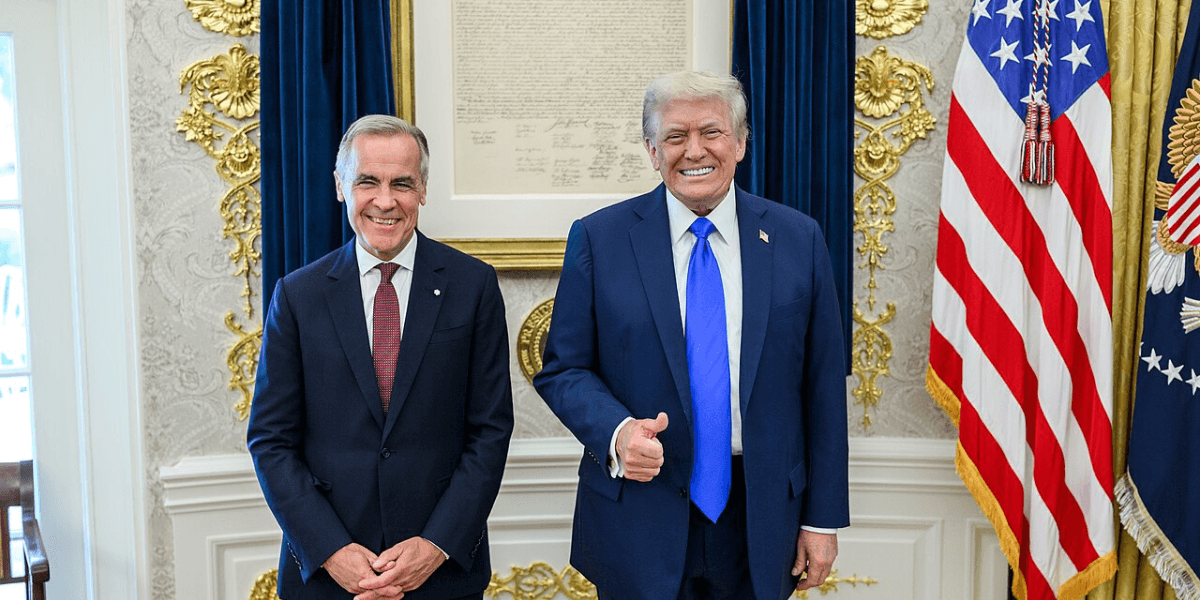
U.S.-Canada Trade Talks Collapse as 50% Tariffs Take Effect
Trade relations between the United States and Canada deteriorated sharply Saturday after negotiations failed to produce an agreement before a deadline for new American tariffs. The United States imposed 50% duties on roughly $20 billion worth of Canadian goods, covering products across sectors including dairy, furniture, clothing, cement and sporting equipment. The affected trade represents only a fraction of Canada's exports to the United States, but the dispute carries broader implications for the two deeply integrated economies.
Canadian Prime Minister Mark Carney suspended negotiations and said Ottawa would respond “dollar for dollar,” with retaliatory tariffs scheduled to begin September 8. The confrontation could complicate future negotiations over the U.S.-Mexico-Canada Agreement and create additional uncertainty for businesses dependent on cross-border supply chains.
Federal Judge Strikes Down Immigrant Visa Suspension
A federal judge dealt the Trump administration a significant immigration-policy setback, striking down a State Department policy that had suspended immigrant visa issuance for applicants from 75 countries. U.S. District Judge Jeannette Vargas in Manhattan ruled that the policy exceeded Secretary of State Marco Rubio’s statutory authority and conflicted with federal immigration law.
The suspension, introduced in January, affected applicants from countries across Latin America, Africa, the Middle East, the Balkans, South Asia and the Caribbean. The administration had argued that nationals from the designated countries presented elevated risks of becoming dependent on government resources. The ruling challenges another component of President Donald Trump’s broader effort to restrict immigration and could reopen visa pathways for applicants and U.S. families affected by the suspension.
Supreme Court Lets White House Ballroom Construction Continue
The Supreme Court temporarily allowed construction of President Trump’s planned White House ballroom to continue, putting lower-court rulings that would have halted above-ground work on hold. Chief Justice John Roberts issued the temporary stay while the legal dispute proceeds, without resolving the underlying question of whether the project was lawfully authorized.
The $400 million project has generated controversy over presidential authority, congressional oversight and historic preservation. The administration has argued that the ballroom and related construction serve security needs, while challengers have objected to the scale of alterations to the White House complex and the absence of congressional authorization. The Supreme Court’s intervention therefore represents a short-term victory for the administration rather than a final judgment on the project’s legality.
Trump Faces Growing Foreign-Policy Pressure Over Iran
President Trump entered the final stretch before the midterms facing growing scrutiny over an increasingly difficult foreign-policy landscape. Reuters reported Saturday that the war with Iran remained at a costly standoff while conflicts involving Ukraine and Gaza also remained unresolved, complicating the president’s effort to present himself as a peacemaker who could quickly settle major international disputes.
The administration has increasingly emphasized economic pressure on Tehran, including intensified sanctions intended to force concessions over Iran’s nuclear program and the reopening of the Strait of Hormuz. The foreign-policy challenges have significant domestic implications: prolonged conflict and disruptions to energy flows risk reinforcing voter concerns about costs and government priorities just as the midterm campaign enters its most intensive phase.
Trump Turns Toward Midterms and Tests His Political Pull
The midterm elections moved further into focus as Trump sought to translate his personal political following into votes for Republican candidates. At a South Carolina rally Friday night whose impact carried into Saturday’s political coverage, Trump urged supporters to behave as though he himself were on the November ballot while campaigning for Sen. Darline Graham ahead of Tuesday’s Republican Senate runoff.
The message highlights a persistent strategic question for Republicans: whether voters who reliably turn out for Trump will show the same enthusiasm when he is not personally running. With control of Congress at stake in November, the South Carolina contest provides an early test of the president’s endorsement power and his ability to mobilize the Republican coalition behind preferred candidates.
Looking Ahead
Attention now turns to Canada’s planned retaliatory tariffs and whether Washington and Ottawa can revive negotiations before the dispute causes broader economic damage. Federal courts will remain central to the administration’s immigration and executive-power agenda, while the Supreme Court must eventually decide what comes next in the White House construction dispute. Politically, Tuesday’s South Carolina runoff will offer another measure of Trump’s influence over Republican voters, as unresolved foreign conflicts and affordability concerns increasingly intersect with the battle for control of Congress.