
Trump Heads to Asia for Major Nuclear Talks as U.S. Markets Slide, FAA Faces Scrutiny and Global Climate Negotiations Intensify
President Donald Trump departed for Asia on Monday for a diplomatic trip that includes planned nuclear discussions with China and Russia, while renewed selling in artificial intelligence stocks sent Wall Street sharply lower. In Washington, federal aviation officials faced mounting questions over a nationwide flight disruption and a newly deployed AI system. Meanwhile, fresh data showed declining international enrollment at American universities, and negotiators at the United Nations climate summit in Turkey released an initial agreement that exposed significant divisions over fossil fuels and climate financing.

Trump Begins Asia Trip With Nuclear Diplomacy, Trade and Regional Security on the Agenda
President Donald Trump departed Washington on Monday, November 16, for a high-profile diplomatic visit to Asia that will bring him together with Southeast Asian leaders before planned meetings with Chinese President Xi Jinping and Russian President Vladimir Putin. The trip comes as the administration faces domestic political challenges following Republican losses in the November midterm elections, while major international disputes continue to test relations among Washington, Beijing and Moscow.
Trump is scheduled to arrive in Manila on Tuesday for meetings associated with the Association of Southeast Asian Nations summit, where trade, maritime security and regional stability are prominent issues. The administration is expected to pursue commercial agreements, including a planned trade deal with Thailand, while addressing concerns about China's activities in the South China Sea. Southeast Asian governments have emphasized the importance of international law and avoiding actions that could escalate territorial disputes.
The president will then travel to Shenzhen, China, for the Asia-Pacific Economic Cooperation summit. The most consequential diplomatic event is expected to be a three-way meeting involving Trump, Xi and Putin, with discussions centered on nuclear weapons and international security. The proposed talks would represent an unusual opportunity for the leaders of the world's three major nuclear powers to discuss their arsenals directly.
Speaking to reporters before his departure, Trump said Russia's war in Ukraine would also be part of the conversation, despite earlier administration indications that the discussions would concentrate on nuclear disarmament and the conflict involving Iran. Trump additionally raised the possibility of meeting North Korean leader Kim Jong Un during his time in China, although no such meeting had been confirmed.
China's Foreign Ministry described the planned trilateral discussions as potentially significant for international stability. Russian officials also indicated that a separate meeting between Trump and Putin was being arranged.
The diplomatic agenda carries considerable economic and security implications. Washington and Beijing remain divided over advanced technology, trade restrictions and regional influence, while the war in Ukraine and the conflict involving Iran continue to complicate relations among the three governments.
The immediate test will be whether the leaders can move beyond broad diplomatic statements toward specific agreements on nuclear risk reduction, trade or regional security. Trump's meetings in Manila and Shenzhen are expected to establish the direction of those discussions over the coming days.
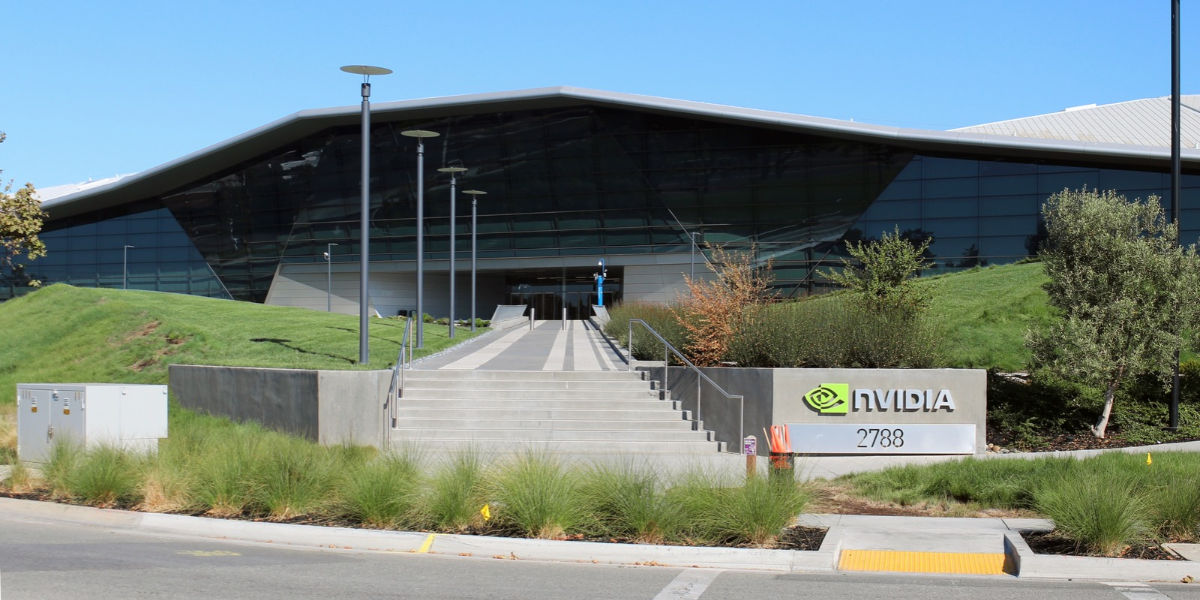
Wall Street Falls Sharply as Nvidia Turmoil Deepens Concerns About AI Investments
U.S. stocks declined substantially Monday as another wave of selling in artificial intelligence companies weighed on the broader market. Investors continued reassessing technology valuations amid uncertainty surrounding Nvidia, one of the companies most closely associated with the rapid expansion of AI infrastructure.
The S&P 500 lost approximately 1.9%, marking its third consecutive decline, while the technology-heavy Nasdaq Composite fell 2.4%. The Dow Jones Industrial Average dropped about 716 points, or 1.4%. Nvidia shares declined 4.6%, extending losses following the resignation of longtime chief executive Jensen Huang last week.
Huang's departure followed revelations about a personal relationship involving a woman suspected of connections to Chinese intelligence. U.S. officials have said they have not determined whether the woman was a Chinese spy. The controversy has generated questions about corporate oversight, national security and compliance with American restrictions on advanced semiconductor exports.
The situation has attracted attention from the White House and federal regulators because Nvidia occupies a central position in the global market for AI computing chips. Trump said Monday that he would not object to Huang returning as the company's chief executive, although any leadership decision would rest with the company.
The uncertainty comes at a sensitive moment for technology investors. Nvidia and other major semiconductor companies have benefited from enormous spending on AI data centers, specialized computing equipment and supporting energy infrastructure. Concerns about whether that spending can continue at its current pace have increasingly influenced market valuations.
Shares of other AI-related businesses, including Advanced Micro Devices, Broadcom and CoreWeave, also declined Monday. The weakness extended to companies involved in supplying electricity and infrastructure for large computing facilities.
The selloff occurred despite generally strong corporate earnings. According to Associated Press market reporting, earnings per share among S&P 500 companies were tracking nearly 32% above the comparable period a year earlier.
Investors will closely examine Nvidia's upcoming quarterly financial results and comments from interim CEO Colette Kress on Tuesday. The company's outlook for semiconductor demand, export restrictions and customer spending could influence not only technology shares but also broader market expectations for the AI investment cycle.

FAA Faces Growing Scrutiny After Nationwide Ground Stop and Launch of New AI System
Federal aviation officials faced renewed scrutiny Monday as investigators continued examining the communications problems behind Friday's nationwide flight ground stop, an extraordinary disruption that affected thousands of flights and left travelers struggling with cancellations and delays.
The Trump administration is seeking approximately $50 billion to modernize the country's aging air traffic control infrastructure. Administration officials argue that extensive investment is necessary to replace vulnerable systems and improve the reliability of the national aviation network.
Congressional Democrats have questioned the size of the funding request and called for a fuller accounting of previously approved modernization spending. The disagreement has intensified following the disruption, which exposed the potential consequences of failures in systems that coordinate aircraft movements across the United States.
Investigators have been examining communications equipment, including apparent router-related problems, as they work to determine the precise cause of the nationwide shutdown. The final technical explanation has not yet been established.
Separately, the Federal Aviation Administration is facing questions about its newly introduced $875 million artificial intelligence platform, known as SMART, which stands for Strategic Management of Airspace, Routes and Trajectories.
The system was expanded nationwide on November 10, just three days before the grounding. It integrates approximately 200 streams of information, including weather forecasts, aircraft movements, traffic volumes and staffing data, to help aviation specialists anticipate congestion and identify more efficient routes.
FAA officials and Air Space Intelligence, the company responsible for developing SMART, have explicitly denied that the system caused the ground stop. Transportation officials have likewise attributed the disruption to communications problems rather than the AI platform.
Nevertheless, lawmakers have requested additional oversight. House Democrats previously sought a Government Accountability Office review of SMART, citing concerns about limited involvement by frontline aviation personnel, training requirements and the possibility that AI-generated recommendations could contain errors.
The technology is intended to support, rather than replace, human decision-making. Air traffic managers and controllers retain authority over operational decisions, and aviation specialists have emphasized that any automated recommendations must be carefully verified.
The controversy comes as the FAA continues confronting a longstanding shortage of air traffic controllers and growing pressure to modernize equipment without compromising safety.
With the busy Thanksgiving travel period approaching, the immediate priorities are identifying the cause of Friday's failure, restoring confidence in communications infrastructure and determining whether Congress will approve additional modernization funding. The FAA's ability to demonstrate that new technologies can operate safely alongside existing systems will remain central to that debate.

International Student Enrollment Drops as U.S. Universities Confront Visa and Funding Pressures
American universities are reporting a significant decline in international student enrollment, according to new survey findings released Monday by the Institute of International Education.
The survey, which included responses from more than 800 higher education institutions, found that international enrollment fell 9% this fall, while the number of new international students arriving at U.S. institutions declined 15%.
The findings point to growing challenges for universities that depend on international enrollment for tuition revenue, graduate research and specialized academic programs.
The decline was particularly pronounced among graduate students, whose enrollment fell 15%, compared with a 3% decrease among undergraduates. Participation in Optional Practical Training, which allows eligible international graduates to work temporarily in the United States, declined 6%.
Universities identified several contributing factors, including visa-processing difficulties, travel restrictions, higher education costs, competition from institutions in other countries and uncertainty surrounding research funding.
The Trump administration's immigration policies have added to those concerns. Measures affecting student immigration status, deportations and postgraduation employment have generated uncertainty among prospective applicants and university administrators.
A proposed $70,000 fee affecting graduates seeking employment through Optional Practical Training has also raised concerns about the financial feasibility of remaining in the United States after completing a degree. Separately, a proposal to impose a four-year limit on student stays has been temporarily blocked by a federal judge.
The financial consequences are already becoming visible at some institutions. Cleveland State University has reported a 46% decline in international enrollment over two years, with an estimated budget impact ranging from $2 million to $4 million.
NAFSA, an association representing international education professionals, estimates that the economic contribution of international students to the United States declined by approximately $2.4 billion this fall.
The implications extend beyond university budgets. International students contribute to local housing markets, retail spending, research laboratories and the skilled labor pipeline, particularly in science, technology, engineering and mathematics.
Universities will be watching immigration policy decisions, judicial proceedings and congressional oversight as they prepare recruitment plans for the next academic year. Institutions facing the steepest declines may need to reconsider budgets, graduate program capacity and international recruitment strategies.
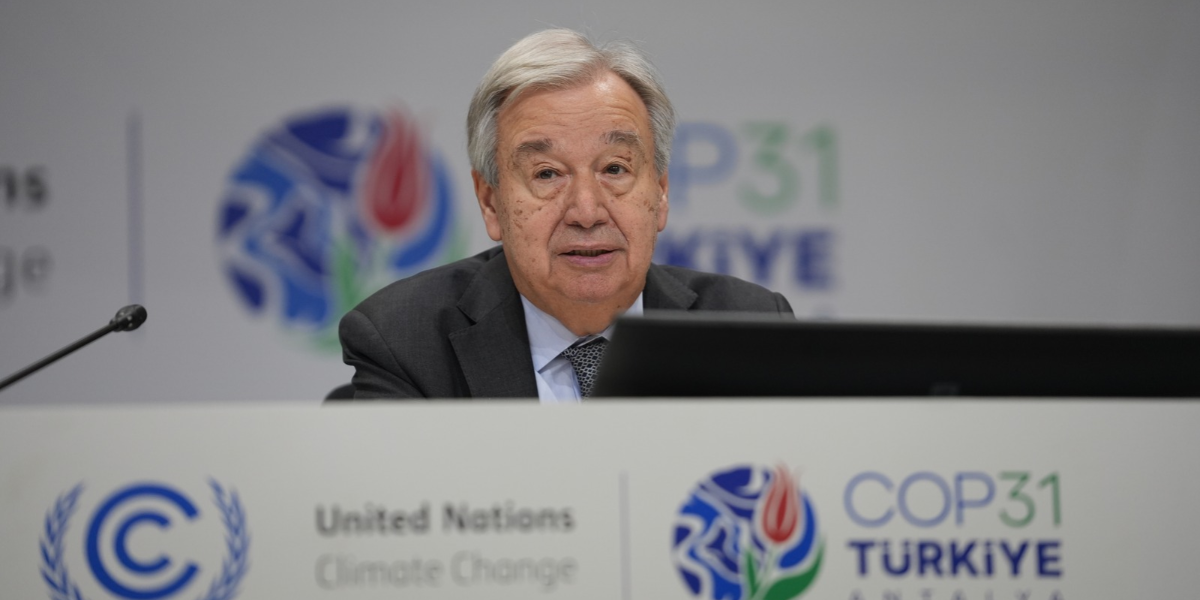
COP31 Negotiators Release First Climate Agreement Draft as Divisions Persist Over Fossil Fuels
International climate negotiations entered a more consequential phase Monday when delegates at the United Nations COP31 summit in Antalya, Turkey, released an initial draft of a proposed final agreement.
The 18-page document contains 144 separate items and is intended to provide a basis for negotiations before the conference's scheduled conclusion later this week.
The draft addresses several contentious issues, including the future of fossil fuels, financial assistance for developing countries and measures to limit the extent to which global temperatures exceed the Paris Agreement's 1.5-degree Celsius objective.
Among its most disputed provisions is language calling for an immediate transition away from fossil fuels. That proposal goes beyond the less specific commitments made at earlier climate conferences and is expected to encounter opposition from countries heavily dependent on oil, gas and coal production.
Australia's climate and energy minister, Chris Bowen, who is leading negotiations under an arrangement with host country Turkey, acknowledged Monday that the document contains provisions some governments have already rejected.
Bowen explained that the purpose of the initial text is to identify disagreements early enough for negotiators to work toward compromise before the conference ends.
Climate financing remains another major obstacle. Developing countries have repeatedly argued that stronger emissions-reduction commitments must be accompanied by additional financial support to help vulnerable economies adapt to rising temperatures, extreme weather and other climate-related damage.
The draft includes proposals related to expanding adaptation financing and accelerating changes in global energy systems. It also references a potential target for electricity to account for 35% of global final energy consumption by 2035.
However, negotiators remain divided over how these commitments should be financed, which countries should carry the largest obligations and whether the final agreement should establish stronger timelines for reducing fossil fuel use.
Those disagreements reflect broader economic tensions between industrialized countries, emerging economies and major energy exporters. Nations with substantial fossil fuel industries are concerned about the consequences of rapid transitions, while climate-vulnerable countries are seeking stronger commitments to reduce emissions and address mounting environmental risks.
The negotiations also come against a difficult international backdrop, with armed conflicts, energy security concerns and rising living costs competing for government attention and financial resources.
The initial draft is expected to undergo substantial revision before any final agreement can be adopted. Because decisions at United Nations climate conferences generally require consensus, even a small group of opposing countries can prevent stronger language from surviving.
Delegates will spend the remaining days negotiating the most disputed provisions, particularly those involving fossil fuels and financial commitments. Whether the summit produces new implementation measures or largely reaffirms existing pledges will become clearer as the final text takes shape.
Looking Ahead
Tuesday, November 17, will bring several developments with implications for U.S. policy and financial markets. President Trump is expected to participate in meetings with Southeast Asian leaders in Manila before continuing to China, where nuclear diplomacy, trade and international security will dominate the agenda. Investors will examine Nvidia's quarterly results and management commentary for indications of whether demand for AI infrastructure remains strong enough to support current investment expectations.
In Washington, attention will remain on the investigation into the nationwide aviation disruption and the administration's request for additional FAA modernization funding. Universities will continue assessing the effects of declining international enrollment, while COP31 negotiators in Turkey work to narrow differences over fossil fuels and climate financing ahead of the summit's scheduled Friday conclusion. Together, those developments will help shape the next phase of U.S. diplomatic, economic and regulatory decisions.