
U.S. Midterm Elections Intensify as Iran Tensions Push Oil Higher, Jobless Claims Fall and Tech Earnings Lift Wall Street
The United States entered the final stretch of its midterm election campaign Thursday as early voting accelerated in closely contested states and economic concerns remained central to voters. New labor figures showed unemployment claims falling to their lowest level since July, while stronger technology earnings offered support to Wall Street amid questions about artificial intelligence spending. Overseas, escalating attacks around the Persian Gulf pushed oil prices higher and prompted new American diplomatic security measures in Saudi Arabia. Meanwhile, Washington and Moscow signaled potential movement toward renewed Ukraine peace negotiations, although major disagreements remain unresolved.
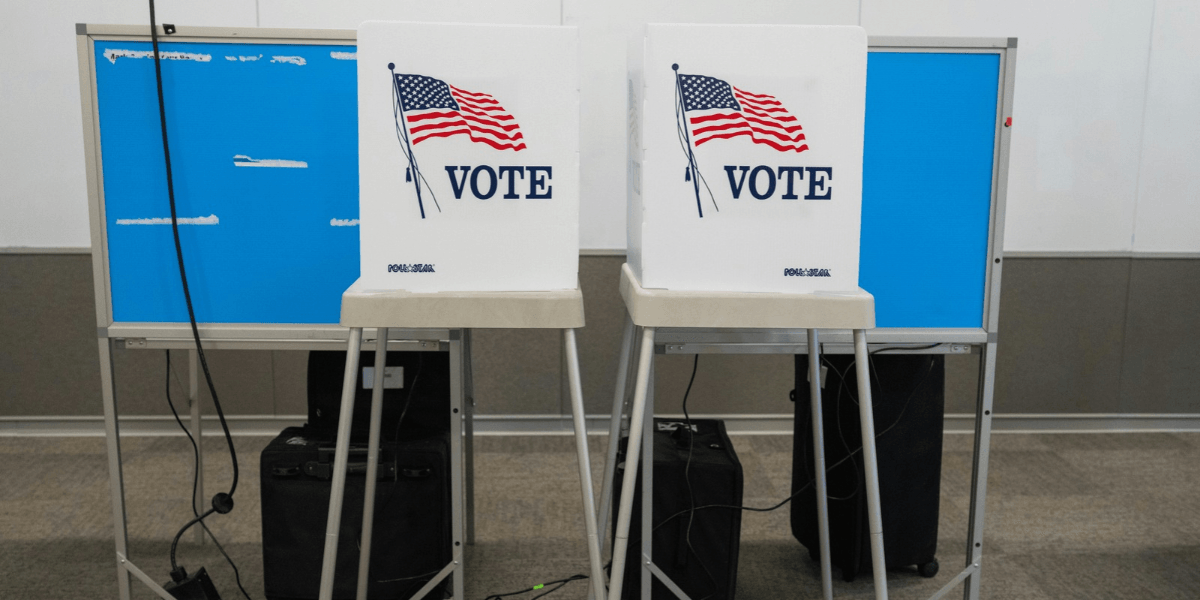
Early Voting Surges in Senate Battlegrounds as Midterm Campaign Enters Final Stretch
Early voting is accelerating in several states that could determine control of the U.S. Senate, highlighting heightened political engagement ahead of the November 3 midterm elections. With less than two weeks remaining before Election Day, both major parties are concentrating resources on competitive races that could reshape congressional oversight, federal spending priorities and the legislative agenda for the final two years of President Donald Trump's term.
Early voting data indicate increased participation in several closely watched contests, although early ballot totals do not reliably predict final election outcomes. Democratic campaigns are seeking to gain Republican-held Senate seats, while Republicans are working to preserve their congressional position amid public concern about living costs and the continuing conflict with Iran. Candidates are also confronting questions about immigration enforcement, healthcare, national security and the federal government's economic policies.
Recent Associated Press-NORC polling found substantial agreement among voters on the importance of reducing everyday expenses and ending the Iran war, even as partisan groups differed over the actions they wanted Congress to take. Those differences are shaping campaign messages in competitive states, including Michigan, where Senate candidates have faced questions about foreign policy, economic security and political representation.
Voting rules are also drawing attention. Ballot initiatives concerning voter identification and mail voting in states including California, Colorado and Nevada have added election administration to the campaign debate. Supporters describe such measures as election-security protections, while opponents have raised concerns about potential barriers to voting.
The immediate focus is shifting toward turnout operations, remaining candidate debates and the administration of early and mail ballots. The outcome will determine which party controls congressional committees, shapes legislative priorities and exercises oversight of the executive branch beginning in January 2027.

U.S. Jobless Claims Drop to 194,000, Signaling Continued Labor Market Resilience
The number of Americans applying for unemployment benefits declined last week, providing fresh evidence that employers remain reluctant to reduce their workforces despite economic uncertainty, elevated energy costs and relatively subdued hiring.
The Labor Department reported Thursday that initial unemployment claims fell to 194,000, down from 200,000 the previous week. The reading was the lowest since July and continued a pattern of historically modest layoffs. The four-week moving average, which smooths weekly fluctuations, declined to 197,750.
The figures illustrate an unusual combination of limited layoffs and cautious recruitment. Employers have largely retained existing workers, but the pace of new hiring remains considerably slower than in the years immediately following the COVID-19 pandemic.
Monthly job creation has averaged approximately 68,000 positions during 2026, compared with roughly 9,700 in 2025. Although that represents an improvement, it remains below the monthly pace commonly recorded before the pandemic. The unemployment rate edged up to 4.2% in September.
Economists have characterized the current environment as a low-hiring, low-firing labor market. For employees who already hold jobs, limited layoffs provide some stability. For unemployed workers, recent graduates and people attempting to change careers, slower recruitment can make finding new positions more difficult.
The figures arrive as the Federal Reserve prepares for another interest-rate decision. Policymakers must weigh relatively stable employment against inflation pressures associated with energy prices and the broader economic effects of the Iran conflict.
The next major indicators will include additional inflation readings, payroll figures and the Federal Reserve's policy announcement. Together, they will help clarify whether the economy can maintain employment stability without a renewed acceleration in inflation.

Iran Conflict Raises Gulf Security Concerns as Oil Climbs Above $110
Security conditions around the Persian Gulf deteriorated further as attacks attributed to Yemen's Iran-backed Houthi movement raised concerns about regional infrastructure, diplomatic personnel and international energy supplies.
The United States ordered embassy personnel and family members to leave Saudi Arabia amid escalating attacks. Reports from the region described strikes affecting Saudi infrastructure, including an oil facility and an airport. Saudi authorities reported casualties, while the developing security situation prompted renewed scrutiny of the risks facing civilian transportation and energy operations.
The escalation comes against the backdrop of the broader U.S.-Iran conflict that began in late February. Fighting and disruptions to regional shipping have contributed to higher global energy prices, complicating inflation forecasts and increasing costs for consumers and businesses far beyond the Middle East.
Brent crude rose approximately 1.1% in Thursday's Asian trading session to around $110.03 per barrel, near a five-month high. Higher crude prices can translate into more expensive gasoline, diesel, aviation fuel and freight transportation, potentially feeding into consumer prices and corporate operating expenses.
Reports also indicated that American and Israeli military planners had developed options for renewed strikes against Iranian targets after the U.S. midterm elections. Those reports did not establish that a final decision had been made to conduct such operations. Iranian officials, meanwhile, warned of possible attacks on American bases if U.S. naval operations supporting commercial shipping through the Strait of Hormuz continued.
Washington also expanded economic pressure on Iran. The U.S. Treasury announced sanctions targeting a law firm, maritime intermediaries, individuals and vessels that American authorities say facilitated Iranian commodity trading and sanctions evasion. The measures extend enforcement attention beyond oil shipments themselves to the financial, legal and shipping networks supporting those transactions.
The Strait of Hormuz remains a critical passage for international energy trade, making threats to commercial shipping particularly consequential for global markets. Even without a complete interruption of traffic, higher insurance premiums, rerouting costs and concerns about future attacks can increase the cost of transporting oil.
The next developments to monitor include any further attacks on Saudi infrastructure, changes in U.S. diplomatic security measures, the operational status of Gulf shipping routes and whether military or diplomatic contacts produce signs of de-escalation.

Technology Earnings Support Wall Street as Investors Reassess AI Spending
Strong corporate earnings helped lift major U.S. technology shares Wednesday, offering some relief to investors who have questioned whether the enormous investments flowing into artificial intelligence infrastructure will produce sufficient financial returns.
The technology-heavy Nasdaq led Wall Street higher after several companies delivered results or forecasts that exceeded market expectations. Meta reported third-quarter revenue above analysts' estimates, while AI server manufacturer Super Micro issued a stronger-than-expected outlook for quarterly revenue and profit margins.
The results provided evidence of continued demand for computing infrastructure, cloud services and related technologies. They also reinforced the central role of artificial intelligence in corporate capital spending, with major technology companies investing heavily in data centers, specialized processors and supporting equipment.
However, investor enthusiasm remained selective. Meta's plans involving a new class of non-voting shares attracted scrutiny alongside continuing questions about the scale and financing of AI investment. The broader concern is whether revenue generated by new AI products and services will grow quickly enough to justify the costs of expanding computing capacity.
That uncertainty was evident in Asian markets Thursday. Despite the positive earnings developments in the United States, regional equities struggled to maintain gains.
The MSCI Asia-Pacific index excluding Japan declined about 0.2%, while Japan's Nikkei fell approximately 0.4% and South Korean shares lost more than 1% during the session. U.S. stock futures also weakened, indicating that the previous day's Wall Street gains had not eliminated broader concerns about interest rates and geopolitical risk.
Bond markets reflected the uncertainty. The benchmark 10-year U.S. Treasury yield declined to approximately 5.11%, while the 30-year yield fell to around 5.40%. Treasury yields move inversely to bond prices and are closely watched because they influence borrowing costs throughout the economy.
Investors now face several overlapping developments: the remaining major technology earnings reports, the Federal Reserve's approaching interest-rate decision, higher energy prices and the November elections.
The immediate test for technology shares will be whether upcoming earnings reports demonstrate continued revenue growth alongside credible returns on AI-related spending. Market participants will also assess whether higher financing and energy costs begin to constrain corporate investment plans.

Ukraine and Russia Signal Openness to Renewed U.S.-Mediated Peace Talks
Diplomatic efforts surrounding the war in Ukraine showed tentative movement after Russia indicated that it was prepared in principle to resume trilateral negotiations with Ukraine and the United States in November.
Russian President Vladimir Putin met U.S. envoy Steve Witkoff in St. Petersburg on October 21, with discussions including the possibility of restarting negotiations around November 10. Ukrainian President Volodymyr Zelenskyy separately expressed support for an early meeting involving negotiators from the three countries.
The signals suggest that diplomatic channels remain active, but no agreement was announced on the central issues dividing Moscow and Kyiv. The location, format and agenda of any renewed talks have not been finalized, and neither side has publicly accepted a comprehensive settlement framework.
Among the most difficult unresolved questions are territorial control, security guarantees for Ukraine, the conditions for a ceasefire and mechanisms for monitoring or enforcing any agreement.
The diplomatic developments came as fighting continued. Ukrainian authorities accused Russia of using cluster munitions in attacks on Kyiv and reported renewed strikes targeting energy infrastructure. Those allegations underscore the continuing humanitarian and infrastructure risks facing Ukraine even as negotiations are discussed.
Energy facilities have been a recurring target during the conflict, and damage to electricity generation and distribution systems carries particular consequences as colder weather approaches. Disruptions can affect residential heating, hospitals, industrial production and other essential services.
The possibility of renewed negotiations also has broader implications for European security and U.S. foreign policy. Washington remains central to diplomatic discussions, while European governments continue to assess military assistance, sanctions and longer-term security arrangements.
The next important milestone will be confirmation of whether a trilateral meeting actually takes place in early November. Until negotiators agree on a substantive agenda and both governments indicate a willingness to address their core disagreements, the proposed talks remain an opening for diplomacy rather than evidence of an imminent settlement.
Looking Ahead
The November 3 U.S. midterm elections are approaching rapidly, with early voting, campaign debates and economic concerns likely to dominate domestic political coverage. Investors will watch the Federal Reserve's next policy decision, forthcoming inflation and employment data, and additional technology earnings for indications of how the U.S. economy is absorbing elevated energy prices and tighter financial conditions.
Internationally, the most immediate risks center on the Persian Gulf, where attacks on infrastructure and threats to shipping could produce further oil-price volatility. Diplomatic attention will also turn toward the proposed November negotiations involving Russia, Ukraine and the United States. The coming days will help determine whether those discussions advance beyond preliminary commitments while military operations continue.