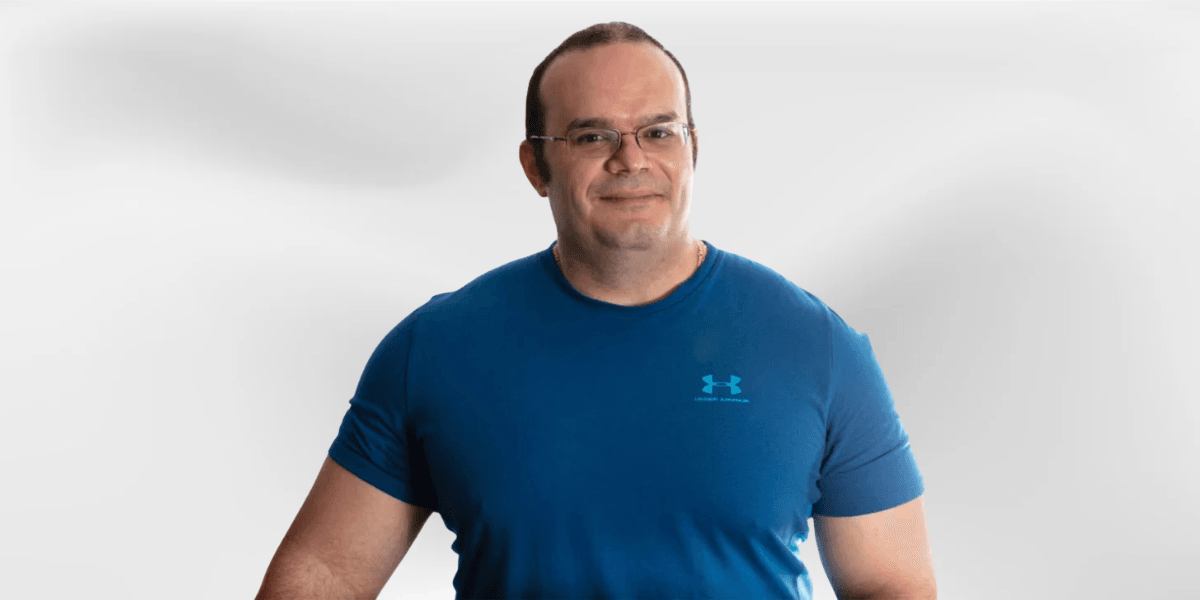
What 30 Years Of Career Reinvention Can Teach Us About Surviving The AI Age
Career strategist and executive Pascal Xavier argues that Artificial Intelligence (AI) is not the biggest challenge facing professionals. Adaptability is.

The headlines are everywhere.
Artificial Intelligence (AI) will transform jobs. Entire professions may disappear. Skills that took years to develop could become obsolete almost overnight.
For many professionals, the future feels uncertain.
But Pascal Xavier believes most people are asking the wrong question.
After more than thirty years navigating career changes across industries, countries, and leadership roles, he argues that the greatest threat is not AI itself. It is the inability to adapt when change arrives.
"I've already lived through the future people are worried about," Pascal says. "The difference is that I experienced it in multiple waves over three decades."
Today, Pascal serves as a Chief Risk Officer, governance advisor, author, speaker, and Founder and Principal Consultant of GRC Advocates. His career spans engineering, defense research and development, semiconductor manufacturing, mining and construction, healthcare, astronomy, higher education, consulting, and executive leadership.
Looking back, there is one lesson that connects every chapter.
The people who thrive are rarely the ones who predict change accurately. They are the ones who learn how to respond to it.
The Myth Of The Stable Career
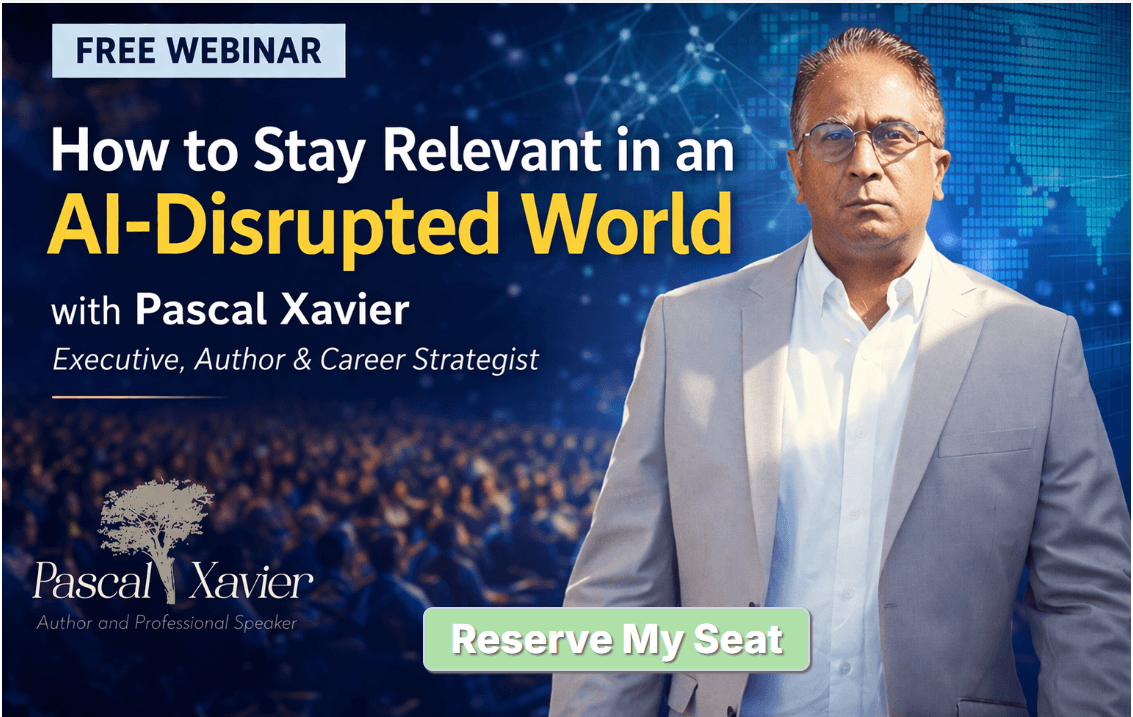
The webinars are organized periodically and invitations are through LinkedIn and Facebook.
For much of the twentieth century, career success followed a familiar formula.
Choose a profession. Build expertise. Climb the ladder. Stay the course.
That model worked when industries evolved slowly and professional identities remained relatively fixed.
According to Pascal, those conditions no longer exist.
Throughout his own career, he has witnessed industries transform, organizations restructure, technologies reshape entire functions, and economic shifts force professionals to reinvent themselves repeatedly.
He has personally experienced redundancies, career resets, international relocations, and transitions into entirely new sectors.
Rather than resisting those moments, he began studying them.
The result was a realization that would eventually shape his writing, consulting work, and keynote presentations.
The future belongs to adaptable people, not perfect plans.
"The path isn't found," Pascal says. "It's forged."
Why AI Is Only Part Of The Story
Much of today's discussion focuses on Artificial Intelligence (AI) as the defining force shaping the future of work.
Pascal believes that perspective misses a larger reality.
He coined the term "Concruption" to describe what organizations and individuals increasingly face: multiple disruptions occurring simultaneously.
AI may be one challenge.
At the same time, businesses are dealing with demographic shifts, workforce shortages, economic uncertainty, regulatory complexity, geopolitical instability, and changing employee expectations.
Professionals often experience these pressures alongside personal challenges such as health concerns, family responsibilities, financial stress, or relocation.
The real issue is not a single disruption.
It is the cumulative effect of many disruptions arriving at once.
"We often talk about change as though it happens one event at a time," Pascal explains. "The reality is that disruption tends to arrive in clusters."
That insight has become a cornerstone of his advisory work with executives and organizations seeking to build resilience in increasingly complex environments.
The Human Skills Machines Cannot Replace
As AI becomes more capable, many workers are asking what remains uniquely human.
For Pascal, the answer is surprisingly clear.
Technology may automate tasks, accelerate decisions, and improve efficiency. Yet organizations still depend on qualities that cannot be reduced to algorithms alone.
Judgment.
Context.
Ethics.
Creativity.
Relationship building.
Strategic thinking.
Resilience.
These capabilities have allowed Pascal to move successfully between professions that, on the surface, appear entirely unrelated.
They are also the capabilities he believes will define professional value in the coming decades.
"Technology changes what we do," he says. "It doesn't change why humans matter."
That message resonates with leaders confronting digital transformation and employees wondering how to remain relevant in rapidly evolving workplaces.
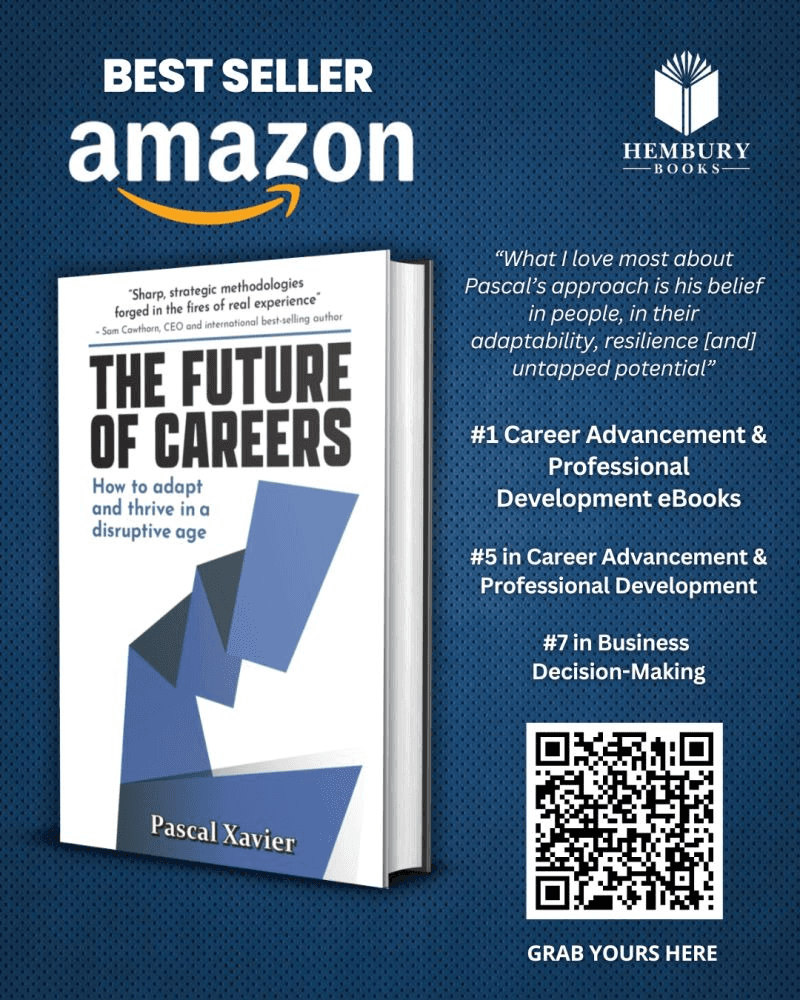
Reinvention As A Professional Skill
Many experts spend their careers becoming specialists in a single discipline.
Pascal became a specialist in reinvention.
His experience as an engineer, executive, consultant, educator, author, governance professional, and board advisor has given him a perspective that few career experts can claim.
Rather than teaching theory, he teaches what he has repeatedly practiced.
His frameworks, including S.T.E.P.S. and P.I.V.O.T., were developed from real career transitions, not academic case studies.
They are designed to help professionals understand how to move across industries, functions, and geographic boundaries while remaining valuable in changing markets.
"In a world changing this quickly, expertise has an expiry date," Pascal says. "The real competitive advantage is learning faster than the environment changes."
A Roadmap For An Uncertain Future
The conversation about AI often focuses on what technology will do next.
Pascal Xavier prefers to focus on a different question.
What kind of person will thrive regardless of what happens next?
His answer is not someone with perfect predictions or flawless career planning.
It is someone who can learn, adapt, and reinvent themselves repeatedly.
That philosophy has guided his own journey across industries, continents, and leadership roles. It also forms the foundation of the advice he shares through his consulting, speaking engagements, and writing.
For professionals wondering how to navigate an uncertain future, his message offers both realism and optimism.
The future cannot be controlled.
But it can be navigated.
And those who develop adaptability as a skill may discover that disruption is not something to fear. It is something to leverage.
To learn more about Pascal Xavier's work, visit www.pascalxavier.com or connect with him on LinkedIn, or learn more about his programs and speaking engagements.