
Why Smart Leaders Fail: Aravind Sakthivel Explores Leadership Traps
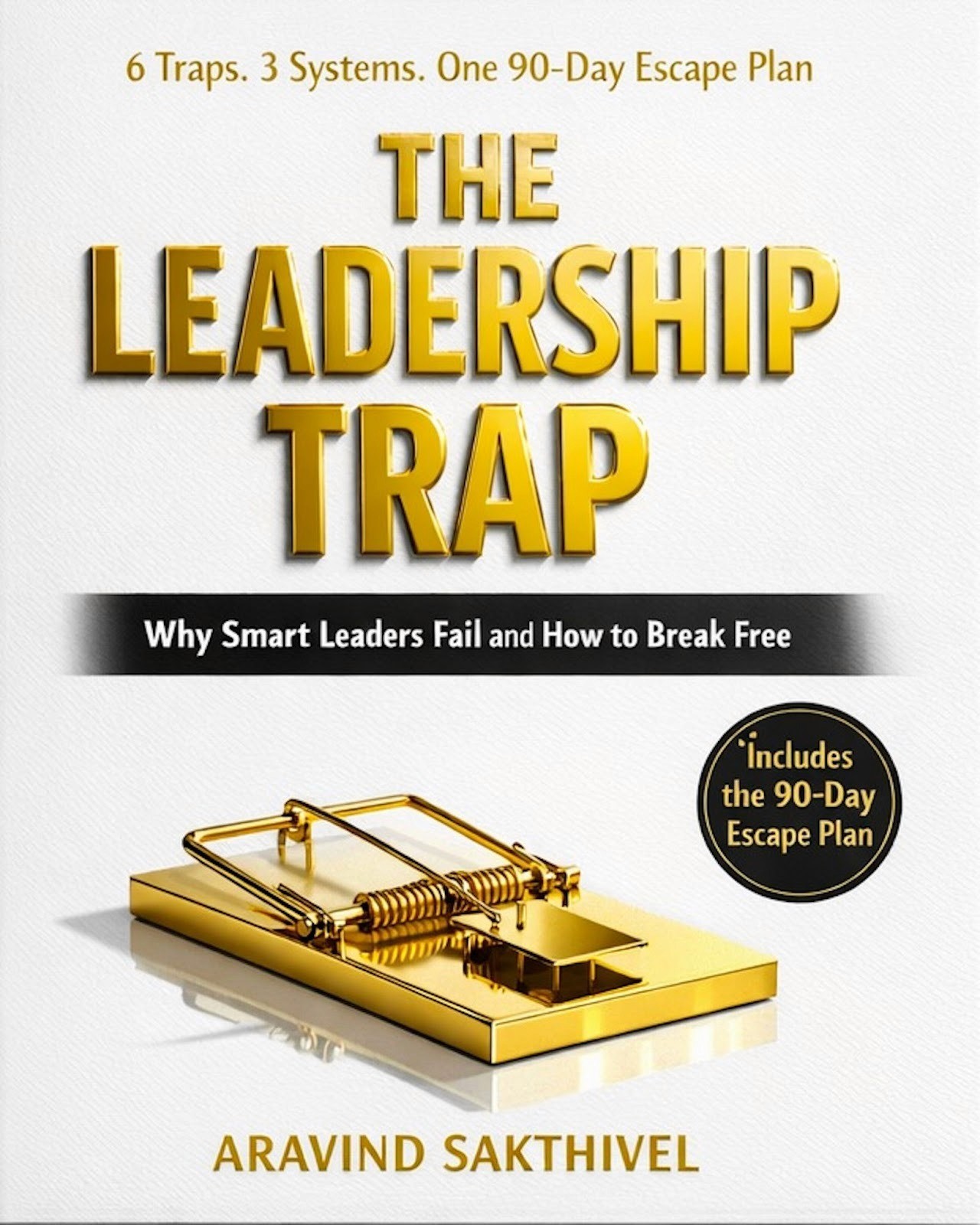
Aravind Sakthivel’s The Leadership Trap shows why capable leaders fail, not because they lack intent, but because systems quietly reward the wrong decisions. AI doesn’t create the traps; it accelerates them.

NATIONWIDE - JANUARY 2026 - (USAnews.com) Leaders are often seen as the cornerstone of organizational success, expected to inspire, strategize, and navigate uncertainty. However, what if the failures of these leaders are not due to incompetence, poor intentions, or weak communication but are rather a result of hidden systems that subtly reward the wrong decisions?
In The Leadership Trap, Aravind Sakthivel uncovers a sobering truth: even the most intelligent and capable leaders can fall into predictable patterns of failure. Aravind argues that the cause isn’t motivation, communication, or intent. It’s the system: incentives, governance, decision flows, and feedback loops that reward the wrong behaviors until failure looks “inevitable.” AI doesn’t fix that; it makes a flawed system move faster.
Aravind challenges the traditional narrative around leadership. He steers away from classic advice about motivation, charisma, or personal traits. Instead, his book dives into the mechanisms behind leadership failures. Using case studies from widely reported corporate crises, such as the Stratford Aerospace Horizon 900 crisis and the Atlantic Foods Capability Collapse (note: fictitious names are used to keep the focus on the learnings rather than finger-pointing), Aravind illustrates how decision flows, governance structures, and feedback loops play pivotal roles in shaping organizational outcomes.
A New Lens on Leadership
As a former Chief Information Officer for Fortune 500 companies, Aravind Sakthivel brings more than two decades of experience in enterprise technology leadership, particularly in digital transformations and post-merger integrations. This hands-on background sharpened his ability to identify why even well-intentioned leadership often fails to produce the desired outcomes. His professional experience, combined with his educational background from Nyenrode Business University, Harvard Business School, and Carnegie Mellon University, where he concentrated on leadership, strategy, technology, and systems thinking, has helped him develop the concept of leadership as an operating system, not just a set of personality traits.
The key to understanding why leaders fail, according to Aravind, lies in examining the systems within which they operate. His work identifies six recurring traps that lead to leadership breakdowns across industries. These traps, such as the "Echo Chamber," where truth fails to reach decision-makers, and "Metric Mirages," where dashboards obscure deeper issues, are not isolated events but systemic patterns that emerge repeatedly within organizations.
For instance, in the case of the FlexSpace IPO Breakdown, leadership was blinded by an over-reliance on optimistic metrics and failed to notice deeper organizational dysfunctions. Similarly, in the Apex Industrial Innovation Failures, leadership’s focus on activity rather than real outcomes led to stagnation.
The Role of AI in Amplifying Leadership Failures
In today’s rapidly transforming digital landscape, AI is both a boon and a potential hazard for leaders. While many consultants praise AI for its potential to increase productivity and foster innovation, Aravind warns that AI doesn’t inherently improve leadership; it merely amplifies existing systems. If governance is weak, AI accelerates the wrong decisions, removing the friction that would normally slow down poor judgment.
Aravind argues that AI makes leadership traps even more dangerous. AI speeds up decision-making, but if decisions are being made within flawed systems, AI simply helps them fail faster. For example, AI-driven dashboards may provide instant insights into company performance, but without strong governance, they might only reinforce existing blind spots, making it harder for leaders to identify and address underlying structural issues.
The Three Systems That Prevent Failure
To escape these leadership traps, Aravind introduces a framework built around three systems: the Challenge System, the Capability System, and the Cadence System. These systems provide leaders with a structured approach to diagnose weaknesses in their organizations and redesign decision-making processes before it's too late.
The Challenge System encourages leaders to seek constructive dissent and alternative viewpoints, breaking the Echo Chamber cycle.
The Capability System ensures that long-term strategic thinking doesn’t give way to short-term cost-cutting measures that erode organizational strength.
The Cadence System advocates for regular check-ins and feedback loops that allow organizations to course-correct early on, rather than waiting for crises to arise.
By implementing these systems, leaders can spot the warning signs of these six traps before they spiral into full-blown failures. The book offers practical tools, diagnostic frameworks, and real-world case studies, providing a roadmap for organizations to not only avoid failure but also to thrive in challenging environments.
Redesigning Leadership for the Future
As AI continues to shape decision-making, leaders must move beyond conventional wisdom and embrace a more nuanced understanding of leadership systems. Aravind’s work offers a research-driven, actionable approach to leadership that is both practical and insightful. Leaders who read The Leadership Trap will walk away with concrete tools to diagnose leadership decline, restore organizational health, and redesign systems that will allow them to lead more effectively, even as AI amplifies both their strengths and weaknesses.
This book is not just for inspirational leaders; it’s for senior executives, founders, decision-makers, and anyone in a leadership role who wants to break free from predictable patterns of failure. It’s a must-read for leaders who understand that success does not come from individual heroics but from the systems they build around themselves and their teams.
For interviews, speaking invitations, or media inquiries, visit Aravind Sakthivel's website or connect with him on LinkedIn at @AravindSakthivel.
Learn more about Aravind Sakthivel and his work at the following links:
Executive Contributor Profile
ResearchGate
Medium