Fault Lines at Home and Abroad Shape America’s Agenda
The United States entered the week confronting a volatile mix of economic uncertainty, judicial battles, and international tensions. Washington remained consumed by debates over presidential power, the future of the Federal Reserve, and the legal boundaries of executive authority, while geopolitical pressure mounted overseas amid renewed diplomacy with China and continuing instability tied to Iran. Across politics, finance, and the courts, Monday’s developments reflected a country navigating competing visions of leadership and governance in a high-stakes election-era environment.

By
May 11, 2026
Senate Moves Toward Confirming Kevin Warsh as Federal Reserve Chair
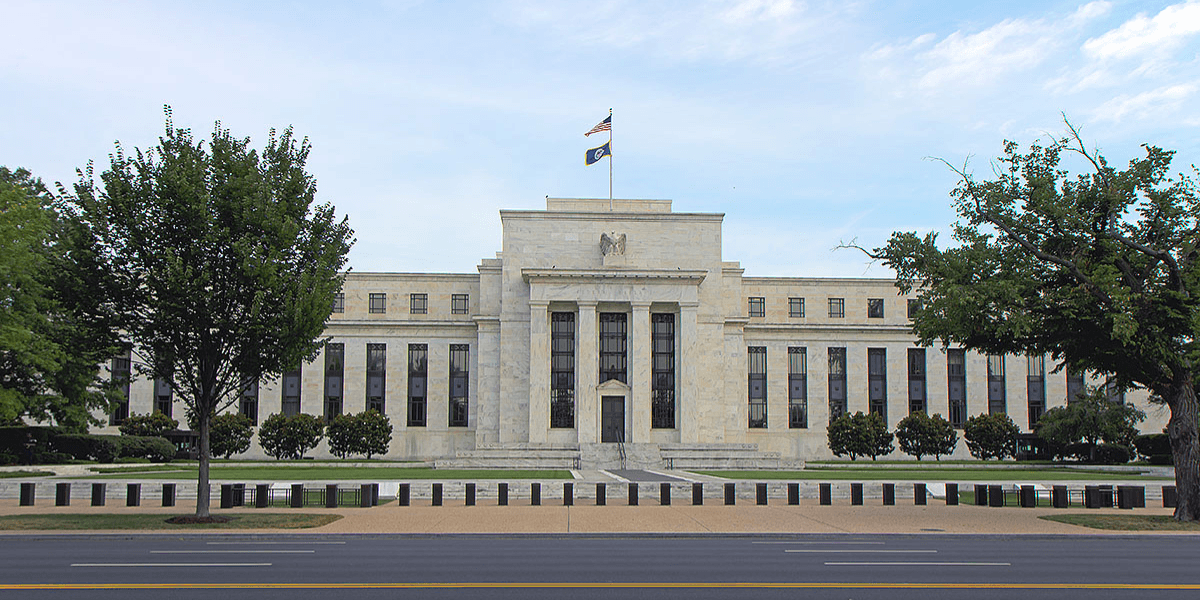
Attention in Washington centered on the expected Senate confirmation of Kevin Warsh as the next chair of the Federal Reserve. Warsh, a former Fed governor and longtime economic adviser aligned with President Donald Trump’s broader economic agenda, is set to inherit a central bank still grappling with inflation that remains above the Fed’s longstanding 2 percent target.
The transition comes during a politically sensitive period for the Federal Reserve. Trump has repeatedly criticized outgoing Chair Jerome Powell for maintaining relatively high interest rates and has argued that more aggressive cuts are necessary to stimulate growth. Democrats and some economists have raised concerns that the administration’s public pressure campaign risks undermining the Fed’s traditional independence from partisan politics.
Warsh has attempted to reassure lawmakers that he would preserve the institution’s autonomy while also advocating reforms to the Fed’s balance sheet and monetary strategy. Markets are closely watching whether his leadership will mark a shift toward looser monetary policy at a time when inflationary pressures remain elevated due to energy costs and ongoing global instability.
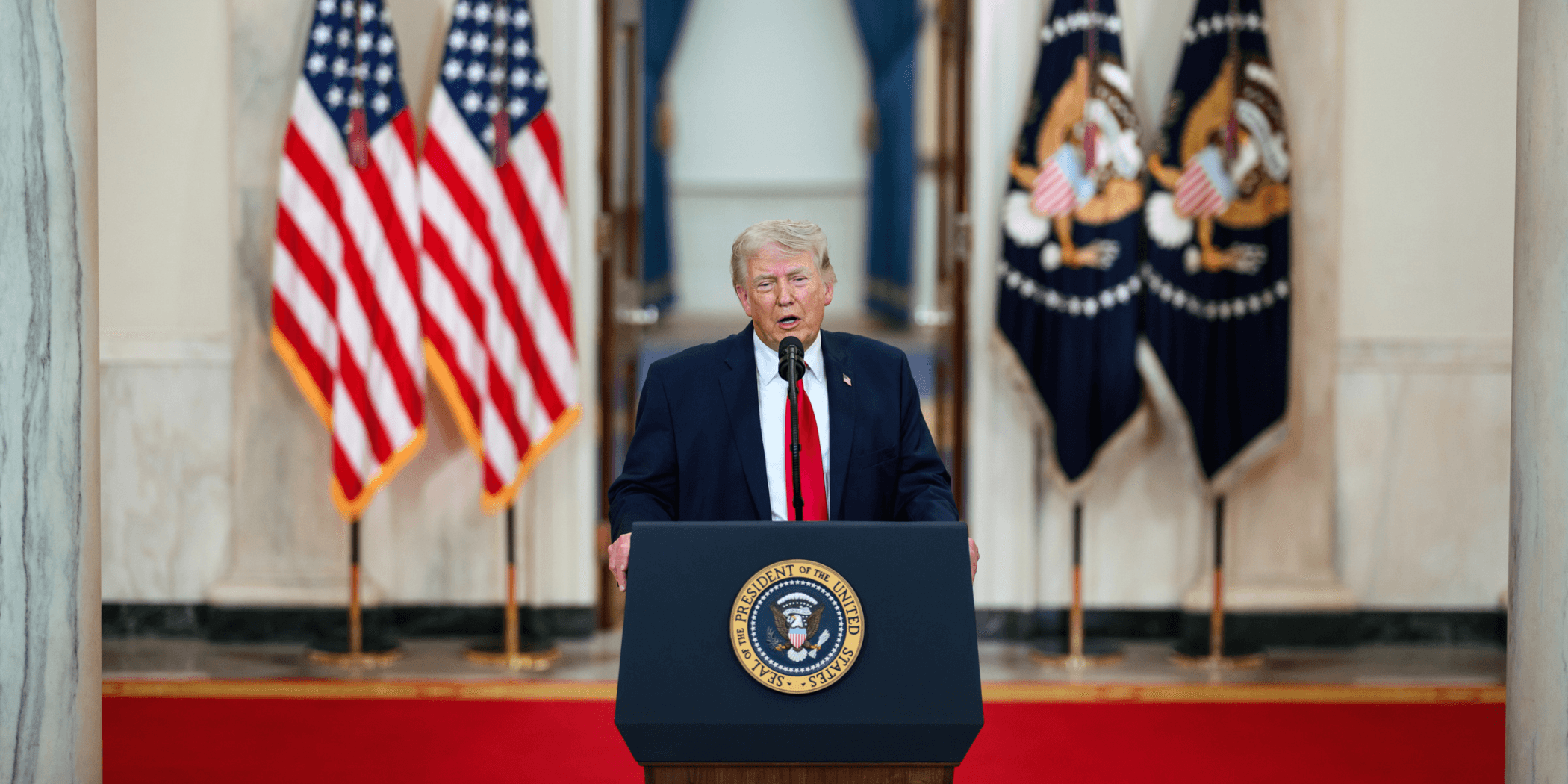
President Donald Trump delivers an address to the nation, Wednesday, April 1, 2026, in the Cross Hall of the White House.
Photo Credit: Daniel Torok/Wikimedia
Trump Administration Defends Economic Outlook Amid Tariff Fallout
The White House also sought to project confidence in the broader economy despite continuing fallout from the Supreme Court’s earlier ruling limiting presidential tariff authority. National Economic Council Director Kevin Hassett predicted that U.S. economic growth could exceed 6 percent annually, citing investment in artificial intelligence infrastructure, manufacturing expansion, and tax policies enacted under Trump’s economic agenda.
That optimism, however, comes amid lingering legal and economic repercussions from the administration’s tariff strategy. Earlier this year, the Supreme Court ruled that sweeping emergency tariffs imposed under the International Emergency Economic Powers Act exceeded presidential authority, forcing the administration to rethink key trade tools.
Businesses and trade groups continue to press for refunds tied to billions of dollars in previously collected tariffs, while courts are reviewing additional trade measures introduced after the ruling. Economists remain divided over the long-term impact of the administration’s trade policies, with supporters arguing tariffs strengthened domestic manufacturing and critics warning they contributed to inflation and supply-chain disruptions.
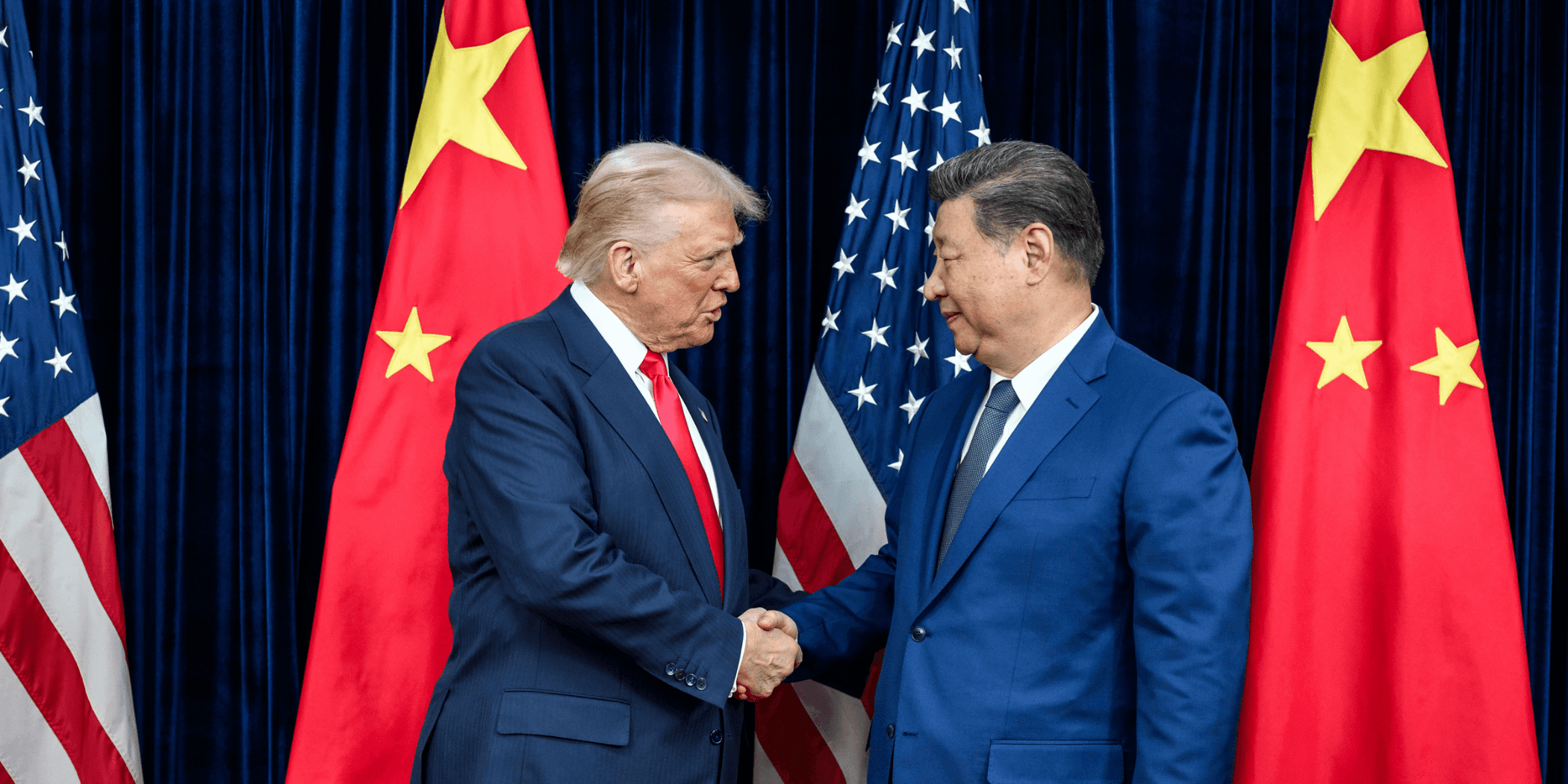
President of the United States Donald Trump greets General Secretary of the Chinese Communist Party Xi Jinping before a bilateral meeting at the Gimhae International Airport terminal, Thursday, October 30, 2025, in Busan, South Korea.
Photo Credit: The White House/Wikimedia
Trump’s China Visit Highlights Shifting Global Power Dynamics
On the international stage, President Trump’s visit to Beijing drew intense attention as he met with Chinese President Xi Jinping amid rising geopolitical strain. The summit marked Trump’s first trip to China since returning to office and comes during a period in which Beijing is increasingly asserting itself as a global power.
Analysts noted that China enters the talks with growing leverage, particularly through its dominance in rare earth minerals and advanced manufacturing sectors. Meanwhile, ongoing conflict involving Iran and tensions in the Strait of Hormuz have complicated U.S. foreign policy and diverted military attention away from Asia.
Although expectations for a major breakthrough remain modest, both governments appear eager to stabilize relations after years of escalating trade and security disputes. Taiwan, trade policy, and technological competition remain central flashpoints. Chinese officials have also emphasized that future cooperation will require what Beijing describes as greater respect for its territorial and strategic priorities.
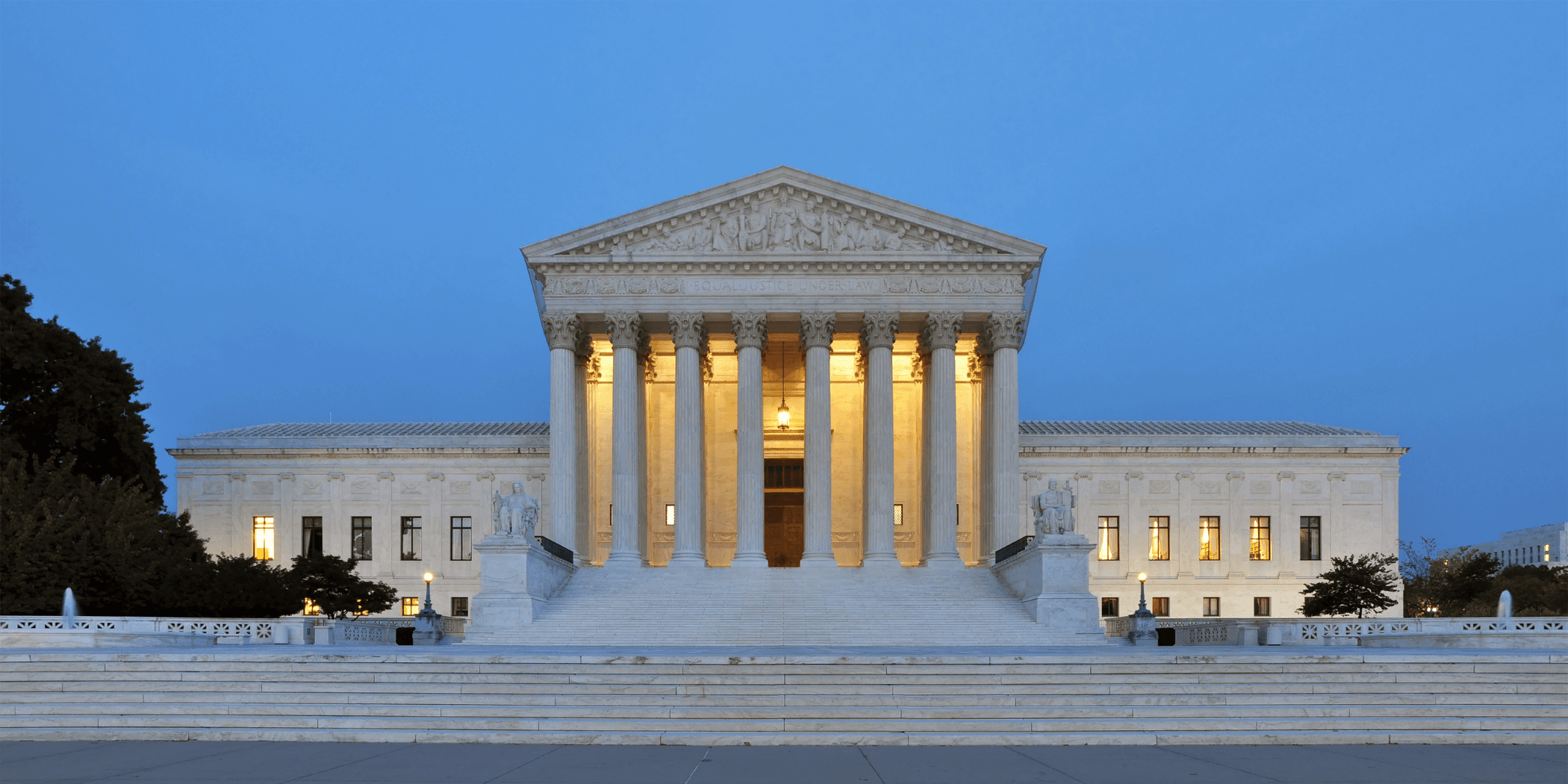
United States Supreme Court Building, seat of the nation's highest Court
Photo Credit: Joe Ravi/Wikimedia
Debate Intensifies Over Judicial Independence and Executive Power
Political controversy intensified after President Trump publicly suggested that Supreme Court justices appointed by Republicans should demonstrate “loyalty” to his administration as legal challenges continue against several executive actions. The comments prompted criticism from legal scholars and opponents who argued that the remarks threaten the principle of judicial independence.
The broader debate over executive authority has become increasingly central to the national political conversation. Recent court battles over tariffs, immigration policy, and federal emergency powers have repeatedly tested the limits of presidential action. Legal analysts say the judiciary is emerging as one of the most consequential checks on executive power during Trump’s second term.
At the same time, conservative legal advocates continue pushing for broader interpretations of constitutional protections in areas such as gun rights. The Justice Department recently signaled support for challenging state-level bans on AR-15-style rifles, setting the stage for additional major Supreme Court cases in the months ahead.

Protesters in Foley Square defending the right to abortion following the leak of a draft Supreme Court opinion that would overturn Roe v. Wade. May 2022
Photo Credit: Legoktm/Wikimedia
Abortion and Social Policy Battles Continue Across the States
Social policy disputes also remained at the forefront after the Supreme Court temporarily reinstated mail access to the abortion medication mifepristone while litigation continues. Democrats and reproductive-rights advocates described the ruling as only a temporary reprieve and pledged continued opposition to Republican-backed restrictions at both the federal and state levels.
The legal fight over abortion access continues to evolve nearly four years after the Court overturned Roe v. Wade. States remain sharply divided, with some expanding abortion protections while others pursue tighter restrictions. The issue is expected to remain a defining factor in the 2026 political landscape, especially in competitive congressional and gubernatorial races.
Broader cultural and legal disputes involving voting rights, gun regulation, and federal authority over state policies are similarly moving through the courts, reinforcing the judiciary’s central role in shaping national policy debates.
Looking Ahead
The coming days are likely to bring continued scrutiny of the Federal Reserve transition, further developments from Trump’s meetings in China, and renewed legal battles over executive power and trade policy. Lawmakers will also continue debating the economic consequences of inflation and tariffs as markets react to shifting monetary expectations. Meanwhile, several pending court cases involving abortion rights, firearms regulation, and presidential authority could carry lasting implications for both the 2026 election cycle and the balance of power in Washington.