Millions Rally Nationwide as War Abroad, Economic Strain, and Storm Threats Converge
March 29, 2026, finds the United States at a moment of intense domestic and global strain, as mass protests, international conflict, and economic uncertainty converge. Millions of Americans took to the streets over the weekend in one of the largest coordinated demonstrations in the nation’s history, while the ongoing war with Iran continues to ripple through global markets and U.S. policy. At home, rising borrowing costs and severe weather threats underscore the breadth of challenges facing policymakers and households alike.
Mass “No Kings” Protests Sweep the Nation
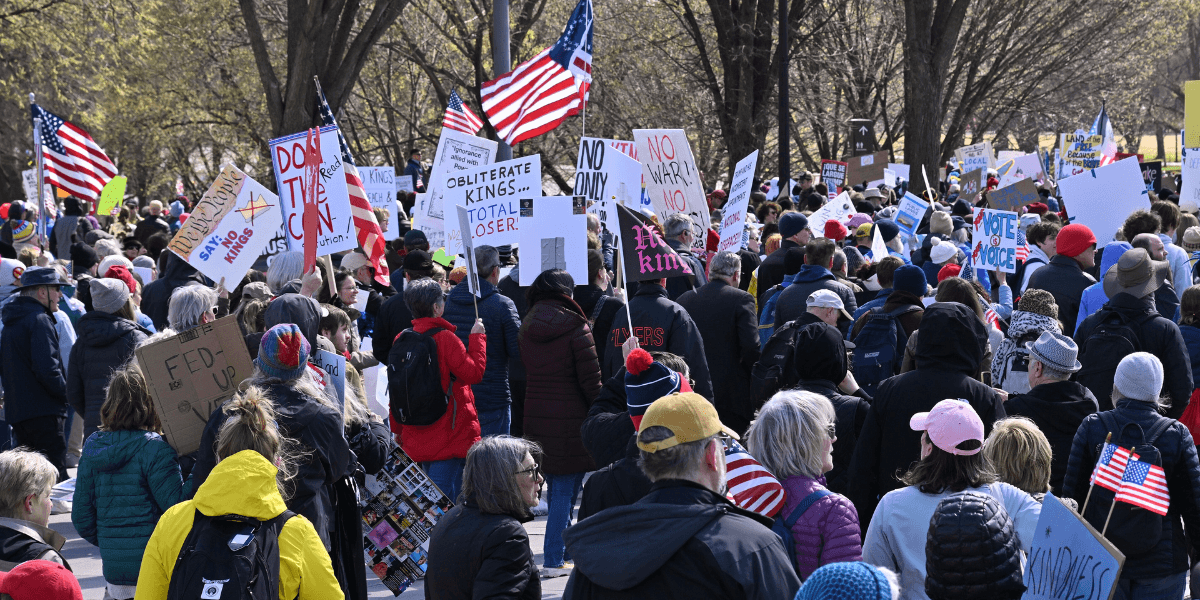
Millions of demonstrators rallied across all 50 states on March 28 in the latest wave of “No Kings” protests ընդդ the Trump administration, marking what organizers described as the largest single-day protest in U.S. history. The demonstrations were fueled by opposition to the administration’s handling of the Iran war, immigration enforcement policies, and broader concerns over governance and civil liberties.
The protests were notable not only for their scale—spanning thousands of coordinated events—but also for their diversity, drawing participation from labor unions, grassroots organizations, and political advocacy groups. While largely peaceful, the sheer size of the mobilization reflects deepening political divisions and signals sustained civic unrest that could shape the national agenda in the months ahead.
U.S. Deepens Involvement in Expanding Iran Conflict
The United States remains heavily engaged in a widening conflict with Iran, following joint U.S.-Israeli strikes that triggered ongoing retaliatory attacks across the Middle East. Recent developments include the deployment of thousands of U.S. troops to the region and continued military escalation involving critical infrastructure and strategic waterways.
The conflict has had immediate global consequences. Energy markets have been disrupted, with oil supply concerns contributing to rising prices and economic uncertainty worldwide. The U.S. government has also issued advisories urging Americans abroad to exercise increased caution, underscoring the growing security risks tied to the conflict.

Mortgage Rates Rise as Economic Pressures Persist
On the domestic front, economic concerns remain prominent as mortgage rates continue to climb. The average 30-year fixed mortgage rate reached approximately 6.43% in late March, reflecting persistent inflationary pressures and uncertainty tied in part to geopolitical instability.
The Federal Reserve has opted to hold interest rates steady for now, signaling a cautious approach as it balances inflation control with economic growth. However, higher borrowing costs are already cooling refinancing activity and complicating affordability for prospective homebuyers, adding strain to an already tight housing market.
Severe Weather Threatens Central U.S. as Spring Begins
Meteorologists are warning of a volatile start to the spring season, with severe storms expected to impact large swaths of the central United States. The convergence of warm Gulf air and cooler northern systems is creating conditions conducive to damaging winds, large hail, and possible tornado outbreaks across states such as Texas, Oklahoma, and Missouri.
These forecasts follow a March already marked by destructive tornado activity, highlighting the increasing frequency and intensity of extreme weather events. The anticipated storm systems pose risks to infrastructure, agriculture, and public safety, particularly in regions still recovering from earlier weather-related damage.

NCAA Tournament Advances Amid National Spotlight
Amid the heavier news cycle, the NCAA Men’s Basketball Tournament continues to capture national attention as it moves into the Sweet 16. This year’s tournament has been marked by major upsets and the emergence of both powerhouse programs and underdog contenders.
Top-seeded teams including Michigan, Duke, and Arizona remain in contention, while unexpected victories have added to the tournament’s unpredictability. With the Final Four approaching in early April, the event provides a moment of shared national focus, even as broader societal and political tensions persist.
Looking Ahead
In the days ahead, attention will remain fixed on the trajectory of the Iran conflict and its economic repercussions, particularly in energy markets and inflation trends. Domestically, the scale of the “No Kings” protests raises questions about potential political responses and the durability of large-scale civic mobilization. Meanwhile, severe weather risks and economic pressures will continue to test resilience across communities. Together, these developments suggest a consequential period ahead for both policymakers and the public as the nation navigates an increasingly complex landscape.