
Stefan Spengler: Mapping Cultural Memory Through Intermedial Image Worlds
A German mixed media artist whose work bridges analog and digital practices, Stefan Spengler joins the World Art Collection with a research-driven exploration of history, perception and cultural memory.
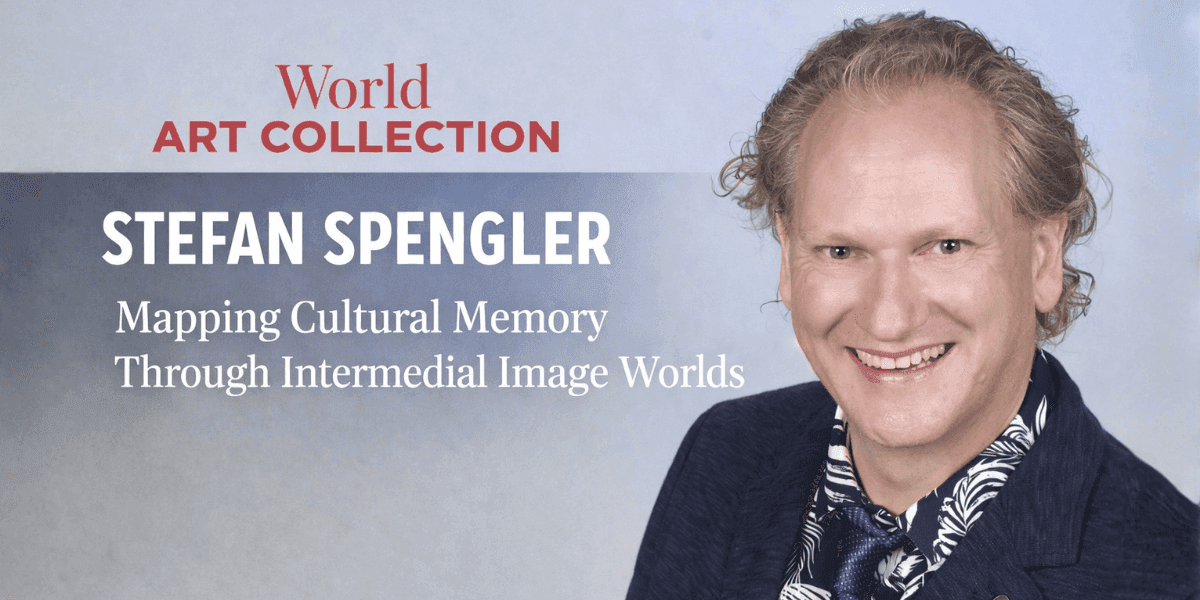
Stefan Spengler’s artistic practice unfolds at the intersection of image, memory and medium. Born in Leipzig and with various work locations in Baden-Württemberg, Germany, Spengler works across photography, painting and digital image processing, developing serial works that examine how historical traces persist within contemporary visual culture. His participation in the World Art Collection situates this reflective, intermedial approach within a broader international context, where art is understood not only as aesthetic production but as a form of cultural inquiry.
Rather than presenting singular, isolated images, Spengler constructs visual constellations – cycles, series and layered compositions that invite sustained attention. His works are shaped by an interest in how images mediate our understanding of space, time and collective experience. In an era marked by acceleration and fragmentation, his practice insists on slowness, concentration and the careful unfolding of meaning.
A Professional Identity That Stands Apart
At the core of Stefan Spengler’s work lies a commitment to seriality and reflection. He is a mixed media artist whose practice deliberately combines analog materials such as oil on chalk ground, drawing and photographic prints with digital techniques including photomontage, image editing and AI-assisted generation. This combination is not a stylistic gesture but a conceptual strategy, allowing different temporal, spatial and medial layers to coexist within a single visual field.
Spengler’s images often reference historical sites, archival material and architectural spaces, yet they resist documentary closure. Instead, they open intermedial spaces in which past and present overlap and where perception itself becomes the subject of inquiry. His artistic identity is shaped by this tension: between materiality and immateriality, between historical specificity and metaphorical openness, between the analog trace and the digitally transformed image.
The result is a body of work that feels both precise and provisional. Meaning does not assert itself immediately, but emerges through repetition, variation and attentive viewing. This reflective quality distinguishes Spengler’s practice within contemporary image-based art.
Vision, Method and Approach
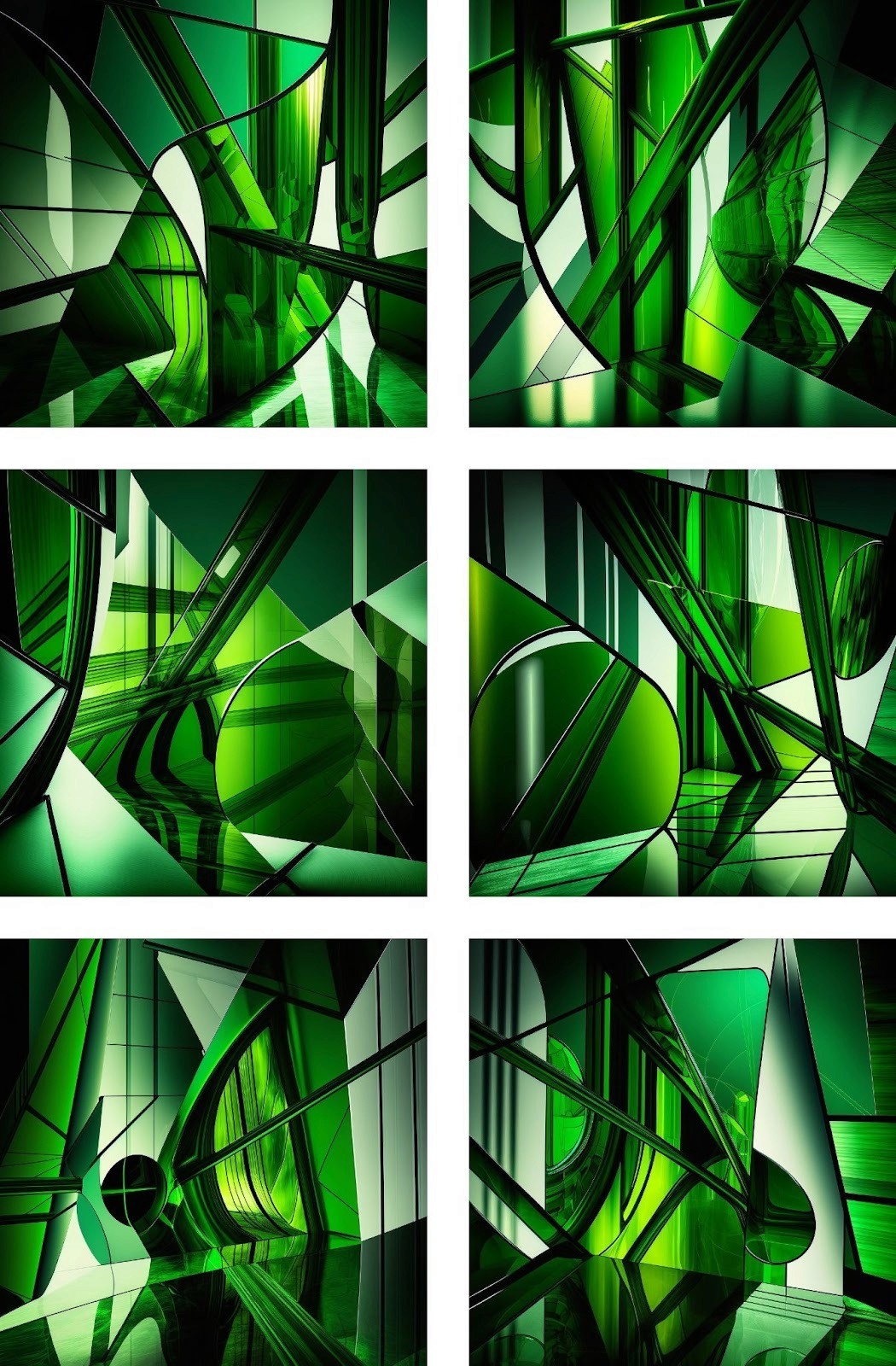
„Chromium Oxide Green Reflections”, digital homage to the „‚radies’–Polyptych“ from 2001, 6 variations, AI-generated artwork, digital print on canvas, mounted on wooden stretcher frame, edge printing, each 50 × 50 cm, 2022
Spengler’s artistic approach is rooted in experimentation and recombination. His creative trajectory began in childhood, driven by an impulse to work with materials in open-ended ways, removing objects from their original contexts and reassembling them into new forms. This early engagement with improvisation and transformation established a mode of thinking that continues to inform his work today.
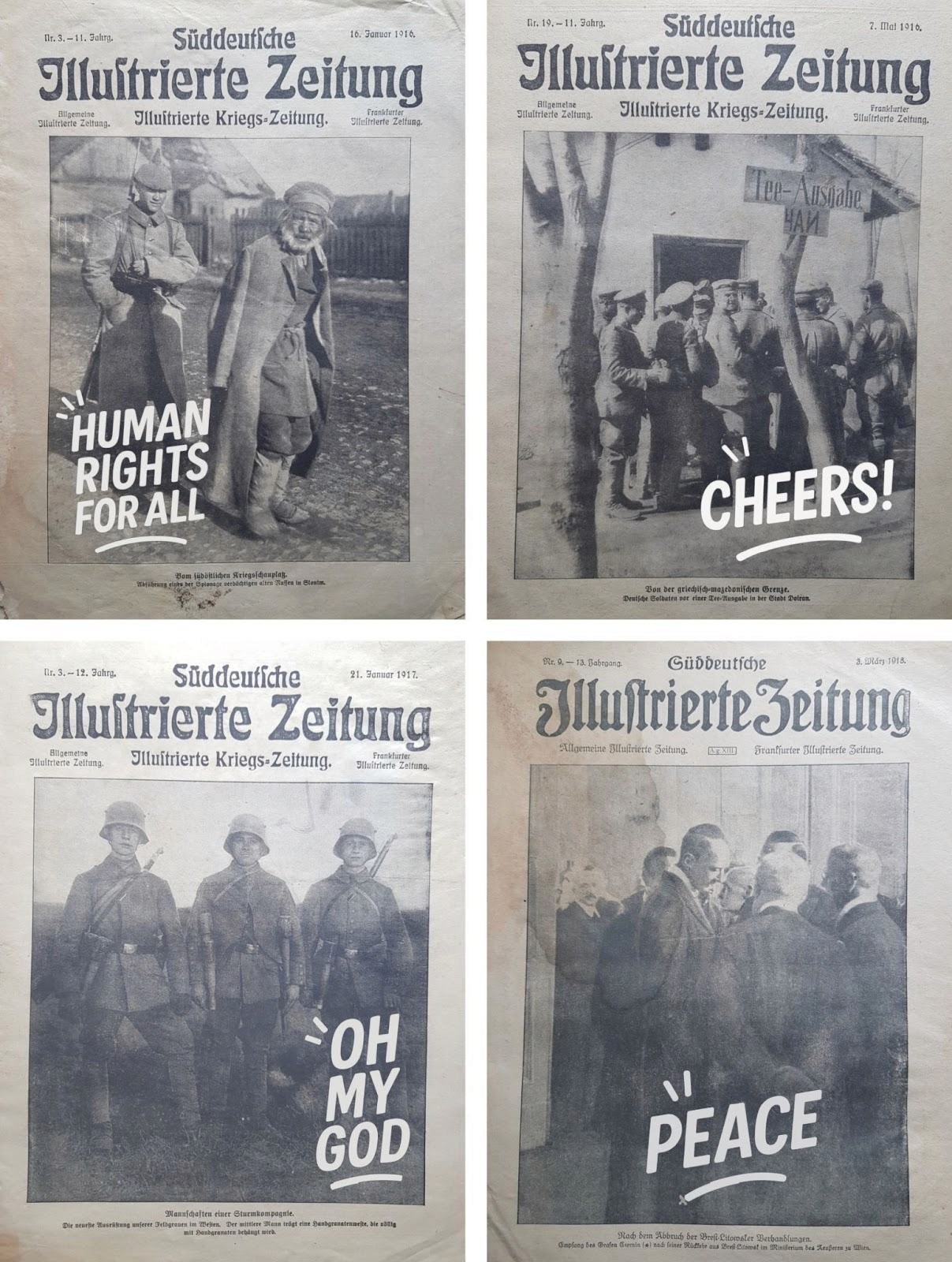
„War Polyptych”, historical newspaper front page, AI-generated clip art, digital image editing, No. 2, 5, 9 and 22 of a 22-part series, 2020/2025
During his academic and curatorial activities at the Institute of Art Education at Leipzig University, this experimental foundation evolved into a more reflective and research-oriented practice. His involvement with exhibitions and curatorial projects marked a shift toward an expanded understanding of art as a research-based field. This perspective was further deepened during his doctoral studies, in which he examined the relationship between art education, digitalization, collaboration with artistic practitioners and changing school-based and extracurricular learning environments. His research focused on processes of professionalization in artistic practice among adolescents within intermedial learning settings. The resulting doctoral thesis is titled „Art Education in the Context of Digitalization, Artist Collaboration and Extracurricular Learning Settings: An Empirical Study on the Professionalization of Artistic Practice among Adolescents in Intermedial Learning Settings”. The doctoral thesis was published by Springer VS in 2023 under the following original German title: „Kunstpädagogik im Fokus von Digitalisierung, Künstlerkooperation und Lernortwechsel. Eine empirische Studie zur Professionalisierung kunstgemäßen Handelns Jugendlicher in intermedialen Lernsettings”.
These experiences reinforced a central conviction in his work: that art does not emerge in isolation. Instead, it is shaped by relationships between space, history, medium and viewer. His visual strategies reflect this belief, using reflections, layered surfaces and fragmentary perspectives as metaphors for perception itself. Light, atmosphere and spatial ambiguity function as tools to make visible what is often overlooked – the subtle ways in which memory and cultural identity shape how we see.
Participation in the World Art Collection
Stefan Spengler discovered the World Art Collection through an Instagram advertisement, but his decision to participate was guided by deeper considerations. The project’s international and curated framework resonated with his understanding of art as a communicative and research-driven process. Rather than simply presenting works in isolation, the World Art Collection places artistic positions within a shared cultural dialogue.
For Spengler, this context matters. Being part of a global publishing initiative allows his work to engage with diverse perspectives and visual languages beyond local or national boundaries. The project’s emphasis on artistic quality, curatorial care and international visibility aligns closely with his own approach to image-making as a reflective practice embedded within broader cultural and historical processes.
Within the World Art Collection, his work contributes to a collective archive of contemporary art, where individual practices intersect and inform one another. This shared framework underscores his belief that artistic meaning is generated through exchange, comparison and dialogue.
An International Context
Spengler’s participation in an international publishing project situates his practice within a global conversation about how images function today. His focus on cultural memory and historical traces gains new resonance when viewed alongside works by artists from different cultural backgrounds, each engaging with their own contexts and visual traditions.
In this international setting, his intermedial image strategies highlight the role of medial transitions in shaping perception. The dialogue between analog and digital processes becomes a shared concern, reflecting broader questions about how technology influences memory, identity and the circulation of images. By contributing to this global framework, Spengler positions his work as part of an ongoing inquiry into contemporary image culture rather than as a closed or definitive statement.
Looking Ahead
Spengler’s current and future projects continue to develop his research at the intersection of analog and digital practices. He is currently engaged in new serial photographic and intermedial works that examine historical sites, cultural memory and processes of digital transformation. At the same time, his practice increasingly operates across artistic production, teaching and research, reinforcing his position within international publication and exhibition contexts.
His approach remains deliberately open and process-oriented. Rather than aiming for definitive statements, Spengler treats art as a space for questioning, reflection and perceptual shift. Meaning is allowed to emerge gradually, shaped by the interaction between image, context and viewer.
Within this perspective, his work invites viewers to slow down and engage more attentively with what they see. By foregrounding layers of memory, light and reflection, his images encourage personal connections to places, histories and visual experiences. Art, in this sense, becomes not a conclusion but a shared space of encounter – one in which perception is activated, dialogue is possible and new ways of seeing can take form.
Contact & Links
Website: https://www.stefanspengler.de
Instagram: @dr.phil.stefan.spengler
LinkedIn: https://www.linkedin.com/in/stefan-spengler/
Orchid: https://orcid.org/0000-0002-0976-0773
World Art Collection: https://culturalelab.com/landing/worldart.php