Surveillance Showdown, Middle East Strains, and Political Tensions Shape America’s Day
The United States is facing a convergence of domestic political battles and international uncertainty. From last-minute congressional action on surveillance powers to continued instability tied to the Iran conflict, today’s developments reflect a nation navigating security concerns, economic pressures, and sharp partisan divides. Key decisions in Washington are unfolding alongside global events with direct consequences for American policy and markets.

By
Apr 18, 2026
Senate Extends Surveillance Authority Amid Privacy Debate
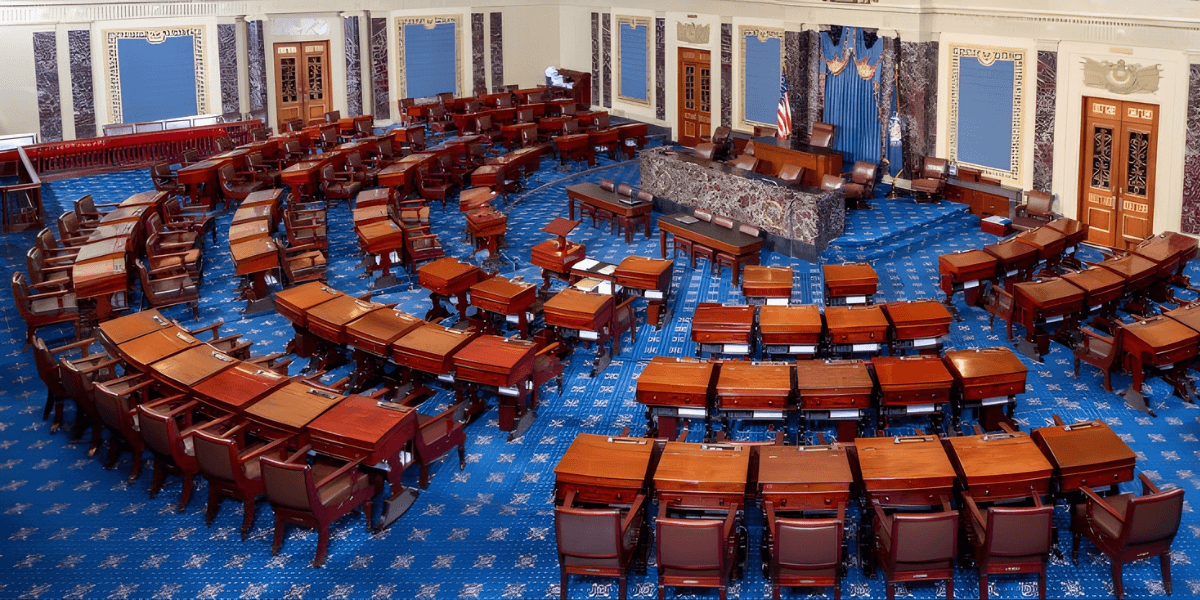
The U.S. Senate has approved a short-term extension of Section 702 of the Foreign Intelligence Surveillance Act, preserving a controversial national security tool while lawmakers continue negotiating reforms. The 10-day extension prevents an immediate lapse in surveillance authority, which allows intelligence agencies to monitor foreign communications that may involve Americans.
The move highlights deep divisions in Congress. Lawmakers from both parties have raised concerns about civil liberties and the potential for abuse, while intelligence officials argue the program remains essential for counterterrorism and foreign intelligence. The temporary extension signals that a broader compromise remains elusive, setting up a high-stakes legislative fight in the coming days.

U.S.–Iran Tensions Continue Despite Fragile Ceasefire
Geopolitical uncertainty remains a dominant force shaping U.S. policy and global markets. Although a temporary ceasefire between the United States and Iran has been in place since early April, the situation remains volatile, with conflicting developments around the Strait of Hormuz and ongoing military posturing.
The U.S. naval blockade of Iranian ports, imposed after failed negotiations, continues to complicate the truce and disrupt global shipping routes. Fluctuations in oil prices and market reactions underscore the economic stakes, as investors respond to shifting signals about stability in the region. While diplomatic channels remain open, repeated violations and uncertainty suggest that the ceasefire may be tenuous at best.

Political Turbulence Intensifies Across Washington
Domestic politics are marked by escalating tensions within and between parties. House Democrats have moved forward with articles of impeachment against Defense Secretary Pete Hegseth, citing alleged misconduct tied to military actions and internal policy decisions.
At the same time, President Donald Trump continues to drive headlines with controversial remarks and policy positions, including statements on foreign policy, immigration, and economic leadership. His ongoing criticism of Federal Reserve Chair Jerome Powell and push for a replacement have added another layer of uncertainty to economic policymaking.
These developments reflect a broader climate of institutional strain, with disputes spanning the executive branch, Congress, and federal agencies. The political environment remains highly charged as lawmakers grapple with competing priorities ahead of key legislative deadlines.

Economic Signals Mixed as Markets React to Global Events
Financial markets are responding to both domestic policy uncertainty and international developments. Recent trading activity has shown volatility, with oil prices fluctuating in response to Iran-related news and broader geopolitical risks.
At the same time, economic indicators suggest persistent inflationary pressures, partly driven by energy costs and global instability. Corporate earnings reports from major banks have delivered mixed results, reflecting both resilience in some sectors and ongoing challenges in others.
The Federal Reserve remains under scrutiny as it balances inflation control with economic growth concerns. With political pressure mounting and global risks intensifying, the central bank’s next moves will be closely watched by investors and policymakers alike.

Rare Aurora Event Highlights Space Weather Impact
Beyond politics and economics, a notable natural phenomenon is drawing attention across parts of the United States. A geomagnetic storm triggered by solar activity is expected to make the northern lights visible in several states, potentially reaching as far south as New York and Idaho.
Scientists attribute the event to a large coronal hole in the sun, releasing high-speed solar winds that interact with Earth’s magnetic field. While largely a visual spectacle, such storms can also disrupt communications and satellite systems, underscoring the broader implications of space weather on modern infrastructure.
Looking Ahead
In the days ahead, Congress faces mounting pressure to reach a long-term agreement on surveillance reform before the temporary extension expires. Meanwhile, the fragile ceasefire with Iran will remain a central focus, with any escalation likely to ripple through global markets and U.S. policy.
Domestically, political tensions show little sign of easing, as impeachment efforts, economic debates, and leadership disputes continue to unfold. With both national security and economic stability at stake, the coming week is poised to test Washington’s ability to navigate an increasingly complex and uncertain landscape.