
Nationwide Flight Shutdown Disrupts U.S. Travel, Supreme Court Takes Up Trump Asylum Ban, and Nvidia Turmoil Shakes Wall Street
A nationwide air traffic control communications failure brought U.S. flights to a standstill Friday, disrupting thousands of journeys and prompting urgent demands for infrastructure upgrades. In Washington, the Supreme Court agreed to review President Donald Trump's restrictions on asylum at the southern border, setting up another major legal test of his immigration policies. Meanwhile, Nvidia's leadership crisis continued to unsettle technology stocks, Microsoft faced a widespread service outage, and American diplomatic efforts to end the war in Ukraine moved forward as European leaders sought a greater role in negotiations. Together, the developments highlighted growing pressures on U.S. transportation systems, federal institutions, the technology industry and international diplomacy.
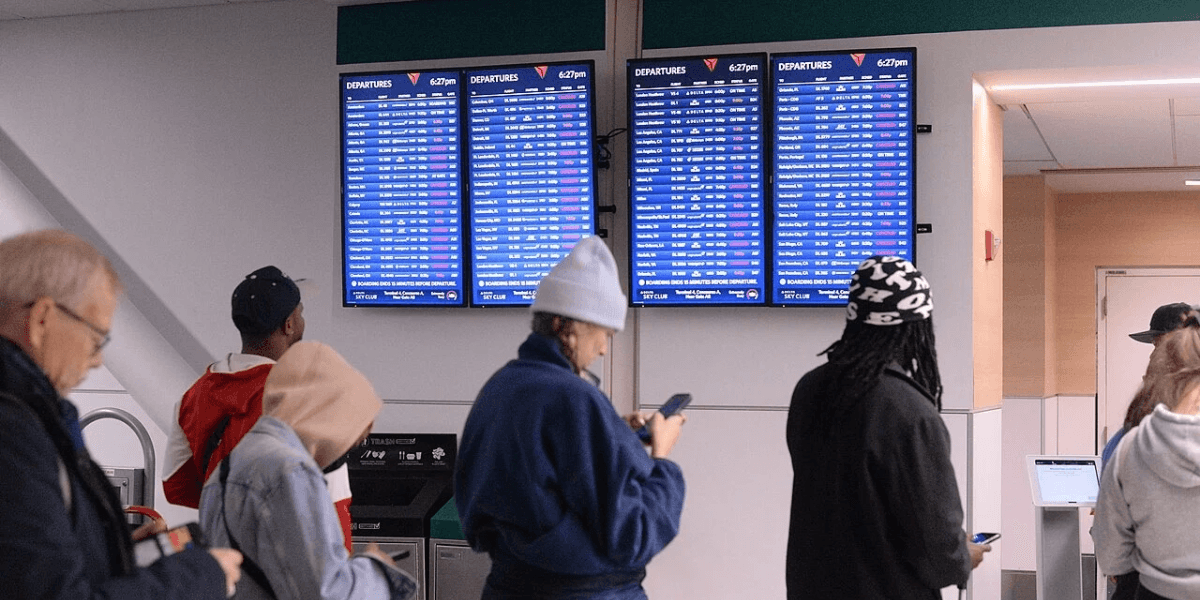
Nationwide FAA Communications Failure Grounds Thousands of Flights Across the United States
A major communications failure in the Federal Aviation Administration's air traffic control network triggered a nationwide ground stop Friday, temporarily preventing aircraft from departing airports across the United States. The disruption affected thousands of travelers, producing widespread cancellations and delays as airlines struggled to manage aircraft, crews and passengers stranded throughout the national aviation system.
The FAA eventually lifted the ground stop after the communications problem was addressed, but the disruption continued well beyond the initial shutdown. Flight-tracking service Flightradar24 reported more than 4,700 canceled flights and approximately 10,000 delays Friday, with hundreds of additional cancellations already scheduled for Saturday. The interruption was described as the longest nationwide aviation shutdown since the September 11, 2001, terrorist attacks, although Friday's incident resulted from a technical communications failure rather than a security threat.
The Trump administration attributed the shutdown to problems involving overloaded air traffic control systems, intensifying concerns about the reliability of aging aviation infrastructure. Transportation Secretary Sean Duffy initially requested approximately $30.1 billion for improvements to airports and air traffic control operations. By late Friday, the administration had increased its funding request to $50 billion, reflecting the urgency officials attached to modernizing the system.
The incident exposed vulnerabilities in a network responsible for coordinating tens of thousands of daily flights. Air traffic controllers depend on reliable communications and surveillance systems to maintain safe separation between aircraft, coordinate departures and arrivals, and respond to changing weather or operational conditions. Even a temporary nationwide interruption can produce cascading effects because airlines operate tightly connected schedules in which delayed aircraft and crews affect subsequent flights.
The immediate priority is restoring normal operations while investigators determine what caused the failure and whether existing backup systems performed as intended. Airlines will continue repositioning aircraft and crews, while federal officials face renewed questions about the costs, timetable and oversight required to modernize the country's air traffic control infrastructure.
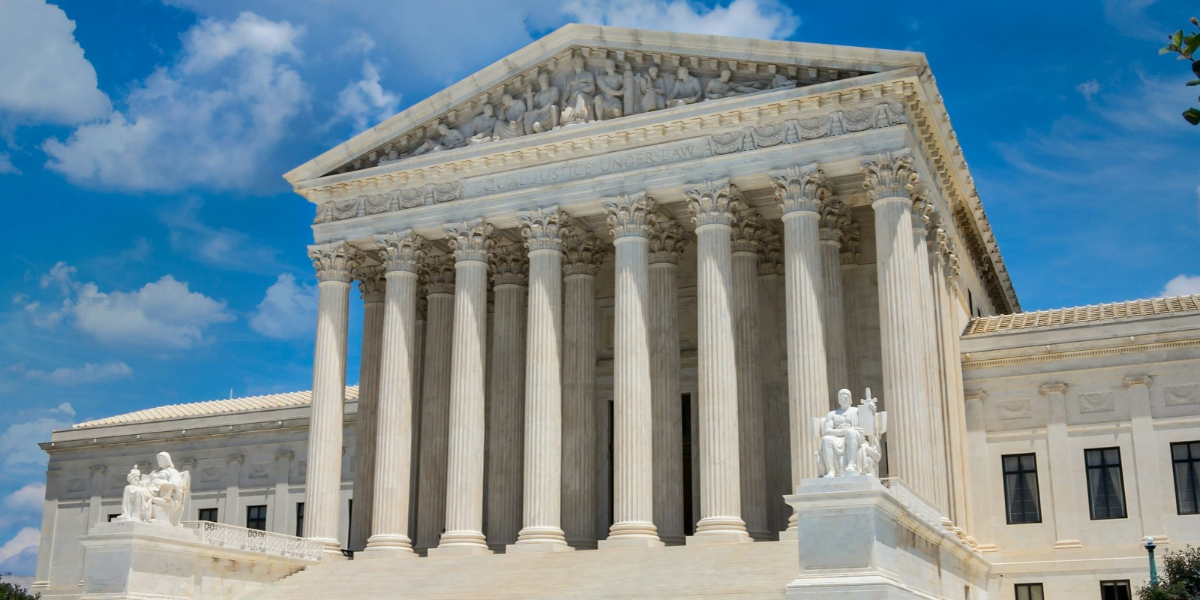
Supreme Court Agrees to Review Trump's Restrictions on Asylum at Southern Border
The U.S. Supreme Court agreed Friday to consider the legality of President Donald Trump's executive order suspending access to asylum for certain migrants arriving at the southern border, setting up a significant constitutional and statutory dispute over presidential immigration authority.
The administration is seeking to overturn lower court rulings that found the restrictions unlawful. Federal immigration law generally allows people who reach the United States to apply for asylum if they fear persecution in their home countries, although applicants must meet specific legal requirements to receive protection. Trump's order seeks to restrict access to that process as part of a broader effort to reduce unauthorized migration.
Administration officials argue that the president has authority to impose extraordinary border restrictions in response to immigration pressures and national security concerns. The American Civil Liberties Union and other immigrant-rights organizations contend that the order conflicts with protections established by Congress and improperly prevents eligible migrants from having their claims considered.
The case could clarify how far executive authority extends when presidential directives appear to conflict with statutory asylum procedures. It also arrives amid a changing political environment following the November midterm elections, in which Democrats secured substantial congressional gains and began preparing oversight investigations into administration policies.
The Court's decision to hear the case does not determine whether the restrictions are lawful. The justices will consider competing interpretations of immigration statutes and presidential authority before issuing a ruling. The next developments will include the submission of legal briefs, scheduling of oral arguments and potential clarification of how the restrictions will operate while litigation continues.

Nvidia Leadership Crisis Deepens as Technology Stocks Fall and Wall Street Faces New AI Tests
Nvidia's sudden leadership transition continued to reverberate through financial markets Friday, with investors reassessing the outlook for one of the world's most valuable semiconductor companies. Founder and longtime chief executive Jensen Huang resigned Thursday following disclosures concerning personal relationships, including one involving a woman suspected by U.S. intelligence officials of connections to Chinese espionage. The allegations have raised questions about corporate governance and security, although they do not establish that Nvidia's confidential information was compromised.
Huang's departure comes at a sensitive moment for the artificial intelligence industry. Nvidia supplies advanced processors used by major technology companies to develop and operate AI systems, and its growth has helped drive stock-market gains over recent years. The company now faces the challenge of maintaining customer confidence and strategic continuity while its board searches for permanent leadership.
The uncertainty contributed to another difficult trading session for technology shares. The Nasdaq Composite fell 0.9% Friday to close at 25,136.27, while the S&P 500 declined 0.4% to 7,561.67. The Dow Jones Industrial Average edged 0.1% higher to 52,347.55. Despite Friday's losses, all three major indexes recorded weekly gains, with the S&P 500 advancing 2.5% and the Nasdaq rising 2.3%.
Investors are also weighing inflation pressures and the possibility that the Federal Reserve could maintain restrictive monetary policy longer than previously anticipated. Rising Treasury yields and concerns about the profitability of large-scale AI investments have increased scrutiny of technology valuations.
Two major events will test investor confidence next week. Nvidia is scheduled to report quarterly earnings Tuesday, offering an opportunity to assess demand for AI chips and the company's operational outlook following Huang's resignation. On Thursday, shares of Anthropic, the developer of the Claude AI assistant, are expected to begin trading publicly in a highly anticipated initial public offering.
The combination of Nvidia's earnings and Anthropic's market debut could provide an important indication of whether investors remain willing to support the extraordinary spending and valuations associated with artificial intelligence.

Microsoft Outage Disrupts Businesses and Governments Worldwide as Recovery Efforts Continue
A widespread Microsoft service outage extended into Friday, disrupting email, workplace communications and business operations across multiple continents. The incident affected Microsoft Outlook, Teams, Copilot and other Microsoft 365 services, leaving millions of users unable to access essential workplace tools and forcing companies and government agencies to activate alternative communications arrangements.
The problems began Thursday and continued for more than 24 hours in some regions. Microsoft attributed the disruption to server and infrastructure issues, saying its systems experienced capacity and traffic-management problems. The company reported no evidence of malicious activity and said it was implementing fixes across affected infrastructure to stabilize services.
The outage had consequences beyond individual email users. Government agencies in the United States, Australia and Japan reported disruptions, while financial institutions, shipping companies and other businesses experienced delays in routine operations. Some organizations relied on telephone calls, fax machines and other backup methods to maintain essential communications.
European stock exchange operator Euronext reported email difficulties affecting its listing operations, while other companies adjusted earnings-related communications and administrative processes. Airlines also warned customers about possible communication delays, adding to a day already marked by substantial disruption to U.S. air travel.
The incident underscored the concentration of essential digital services among a relatively small number of global technology providers. Microsoft 365 supports business communications, document management, calendars and collaboration for organizations of nearly every size. A prolonged failure can therefore affect institutions that have no direct operational relationship beyond their reliance on the same software infrastructure.
By Friday, Microsoft reported signs of recovery as fixes were deployed more broadly, although some customers continued to experience problems. The company had not established a definitive timetable for complete restoration during much of the day.
The next priority is ensuring stable service across all affected regions and identifying the technical failures that allowed the disruption to spread. Organizations are also likely to review their backup communications arrangements and contingency plans, particularly where access to cloud-based systems is essential to daily operations.

European Leaders Secure Role in Ukraine Peace Talks Following U.S. Meetings With Putin and Zelenskyy
European governments agreed Friday on a coordinated negotiating team for future Ukraine peace discussions, marking a significant development in U.S.-led diplomatic efforts to end the war between Russia and Ukraine.
The agreement followed meetings involving American envoys Steve Witkoff and Jared Kushner, Russian President Vladimir Putin and Ukrainian President Volodymyr Zelenskyy. The U.S. representatives met Putin in Moscow before traveling to Dublin to brief Zelenskyy and European officials on the latest diplomatic discussions.
At a gathering in Dublin, European leaders agreed that Britain, France, Germany, Italy and Poland would participate alongside European Union institutions in the next round of negotiations. European Council President António Costa said the group would coordinate its position, reflecting the importance European governments attach to decisions affecting Ukraine's sovereignty and the continent's long-term security arrangements.
The agreement addresses a major concern among European leaders that negotiations between Washington and Moscow could produce proposals affecting European security without sufficient European participation. Russia has repeatedly raised objections to Western military support for Ukraine and the possible deployment of European forces following a ceasefire.
Despite the diplomatic movement, substantial differences remain between Russia and Ukraine. Moscow continues to assert claims over Ukrainian territories it says it has annexed, while Kyiv maintains that any settlement must respect Ukrainian sovereignty. Questions about security guarantees, territorial control, sanctions and the future presence of foreign forces remain unresolved.
Earlier discussions in Abu Dhabi produced an agreement in principle on a prisoner exchange but no comprehensive peace settlement. The continued fighting, including attacks affecting Ukrainian energy infrastructure, has added urgency to negotiations as winter approaches.
Zelenskyy also reported continuing restrictions affecting Ukraine's access to Starshield satellite services, which support military operations. The issue has introduced an additional complication into Kyiv's relationship with Washington as diplomatic discussions proceed.
The next round of negotiations will test whether the expanded format can produce substantive progress. Particular attention will focus on Russia's willingness to engage directly with European representatives, the implementation of the proposed prisoner exchange and whether the parties can establish a workable framework for a ceasefire.
Looking Ahead
The aftermath of Friday's nationwide aviation shutdown will remain a major domestic priority as airlines work through canceled flights and federal officials investigate the communications failure. The administration's $50 billion air traffic control funding request could become an important issue in congressional budget discussions. The Supreme Court's decision to review the asylum restrictions will also draw attention as legal arguments develop over the limits of presidential authority and protections established by federal immigration law.
Financial markets face a consequential week, with Nvidia's quarterly earnings scheduled for Tuesday and Anthropic's anticipated stock-market debut Thursday. Both events will offer fresh evidence about investor confidence in artificial intelligence amid growing concerns about valuations, corporate governance and the sustainability of technology spending. Microsoft will face scrutiny over the reliability of its cloud services following the prolonged global outage.
Internationally, attention will turn to the next stage of Ukraine peace negotiations and the newly agreed European role in the diplomatic process. The participation of European governments, Russia's response to proposed security arrangements and progress toward a prisoner exchange will help determine whether the renewed talks can move beyond preliminary discussions toward a more substantial agreement.