Tippas Introduces Digital Tipping Platform in Miami’s Hospitality Sector
Tippas modernizes digital tipping in Miami, empowering hospitality professionals with fast, transparent, frictionless payments.

By
Mar 4, 2026

NATIONWIDE - MARCH 2026 - (USAnews.com) In Miami’s fast-paced hospitality scene, where restaurants, hotels, nightlife venues, and entertainment spaces operate at full capacity year-round, tipping remains a central part of the service economy. Yet as consumers increasingly rely on cashless transactions, traditional tipping methods have struggled to keep pace.
The decline of physical currency has introduced new logistical challenges for hospitality professionals who depend on tips as a meaningful component of their income. While digital payments have transformed how customers pay for goods and services, tipping systems have not always evolved at the same speed. This shift has prompted new approaches designed to align gratuity practices with modern payment habits.
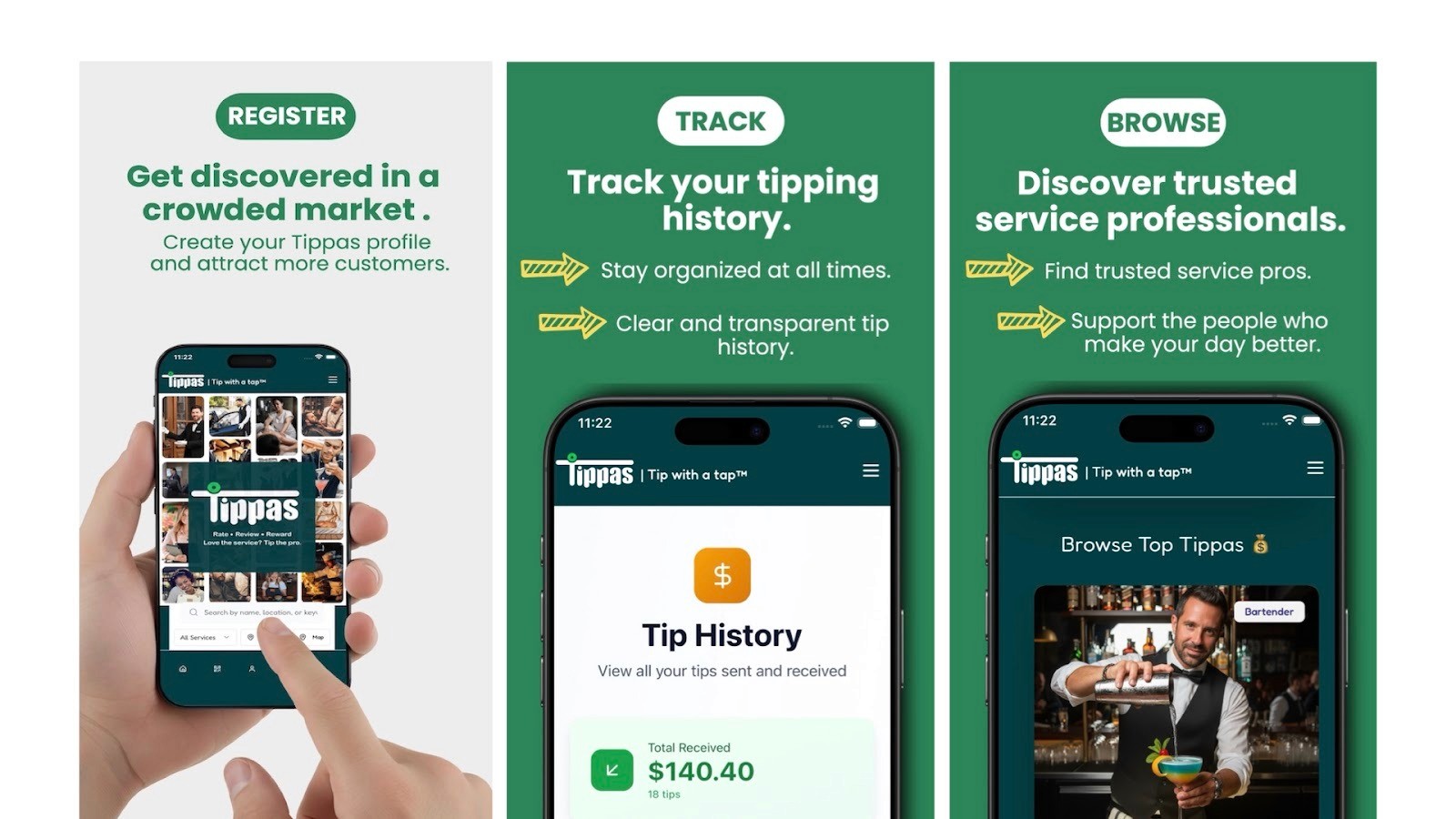
One company entering this space is Tippas, a Miami-based digital tipping platform founded by entrepreneur Fabrizio Buono. The platform is designed specifically for hospitality workers, including bartenders, servers, valets, and performers, who operate in environments where speed and efficiency are essential.
Addressing a Cashless Shift
Across the United States, cash usage has steadily declined as contactless and mobile payments become more common. In hospitality environments, this transition has created operational gaps. Traditional tip jars and cash handoffs are less practical when transactions take place digitally.
Digital tipping options do exist, but many were developed as secondary features within broader payment processing systems. As a result, they may not always reflect the specific workflow needs of hospitality professionals.
Buono observed these changes within Miami’s service industry and saw an opportunity to build a system focused exclusively on gratuities. According to Buono, the goal was to create a streamlined and transparent process that reflects how modern consumers already interact with payment technology.
“Dealing with payments is all about trust,” Buono says. “If you cannot build trust, you cannot build scale.”
Building Infrastructure for Service Professionals
Rather than positioning itself solely as a mobile application, Tippas describes its approach as infrastructure for digital tipping. Infrastructure, in this context, refers to systems designed to operate consistently in high-volume, fast-paced environments.
The platform was developed around three primary considerations: speed, transparency, and simplicity.
Speed is essential in hospitality settings where transactions occur continuously throughout a shift. Digital tools must operate seamlessly without interrupting workflow.
Transparency refers to clear transaction visibility, allowing users to understand how tips are processed. In industries where gratuities contribute significantly to earnings, clarity in payment systems plays an important role in building confidence.
Simplicity addresses both the customer and worker experience. Any additional steps or technical friction can discourage adoption, particularly during peak service hours.
By concentrating on these operational factors, the company aims to integrate tipping into the broader digital payment ecosystem without adding complexity.
Launching in a High-Volume Market
Miami serves as the company’s initial launch market. The city’s hospitality sector is both economically significant and culturally influential. Restaurants, nightlife venues, hotels, and event spaces collectively contribute billions to the local economy and employ a large service workforce.
Launching in a high-volume environment provides real-world conditions to evaluate performance and scalability. Hospitality professionals in Miami often work in settings where efficiency directly impacts customer satisfaction and earnings. As a result, the city presents a practical testing ground for digital tipping systems.
Industry observers note that trends established in Miami’s hospitality market often expand into other metropolitan areas. For technology platforms, early adoption in such environments can provide insight into broader national applications.
The Human Impact of Payment Technology
While digital payment innovation often centers on convenience, its implications for service workers are more personal. For many hospitality professionals, tips help cover essential living expenses, from housing and transportation to savings.

Uncertainty in payment processing, such as delays or lack of visibility, can introduce stress into an already demanding profession. Supporters of dedicated tipping platforms argue that improved infrastructure can reduce that uncertainty.
Buono emphasizes that the platform’s development was guided by conversations with hospitality workers. Understanding their daily workflow, peak service pressures, and income reliance informed the product’s structure.
Technology in the service industry continues to evolve, from point-of-sale systems to mobile ordering and reservation platforms. Digital tipping represents another dimension of that transformation, reflecting broader societal movement toward contactless commerce.
A Broader Industry Trend
The growth of fintech solutions tailored to specific industries has accelerated in recent years. Rather than offering one-size-fits-all payment tools, newer platforms increasingly focus on sector-specific needs.
In hospitality, where interpersonal interaction remains central, payment systems must operate quietly in the background while preserving the human element of service. Digital tipping platforms are part of a wider effort to modernize operational tools without disrupting customer experience.
As cash usage continues to decline, the adaptation of gratuity systems appears likely to remain a topic of industry discussion. Companies entering the digital tipping space are responding to that structural shift.
Tippas’ introduction into Miami’s hospitality market reflects one approach to addressing these evolving conditions. Whether digital tipping becomes a standardized feature across venues nationwide will depend on adoption, performance, and continued changes in consumer behavior.
Additional information about the company and its platform can be found on its official website, as well as on Instagram and LinkedIn.
For now, the shift underscores a broader reality: even longstanding traditions like tipping are being reshaped by the digital economy.