
Midterm Elections Enter Final Stretch as Iran Tensions Rise, Ukraine Ceasefire Ends and Southwest Flooding Forces Evacuations
The United States entered the final day before its midterm elections Monday as Republicans and Democrats made their closing appeals in closely contested congressional races that could reshape control of Washington. President Donald Trump faced political pressure over rising living costs, trade policies and the conflict with Iran, while an unexpected endorsement complicated a pivotal Senate contest in Michigan. Overseas, diplomatic efforts to prevent renewed fighting with Iran remained unresolved, and a temporary humanitarian ceasefire expired in southern Ukraine. Meanwhile, dangerous flooding triggered evacuations across parts of the American Southwest, adding a domestic emergency to an already consequential news cycle.
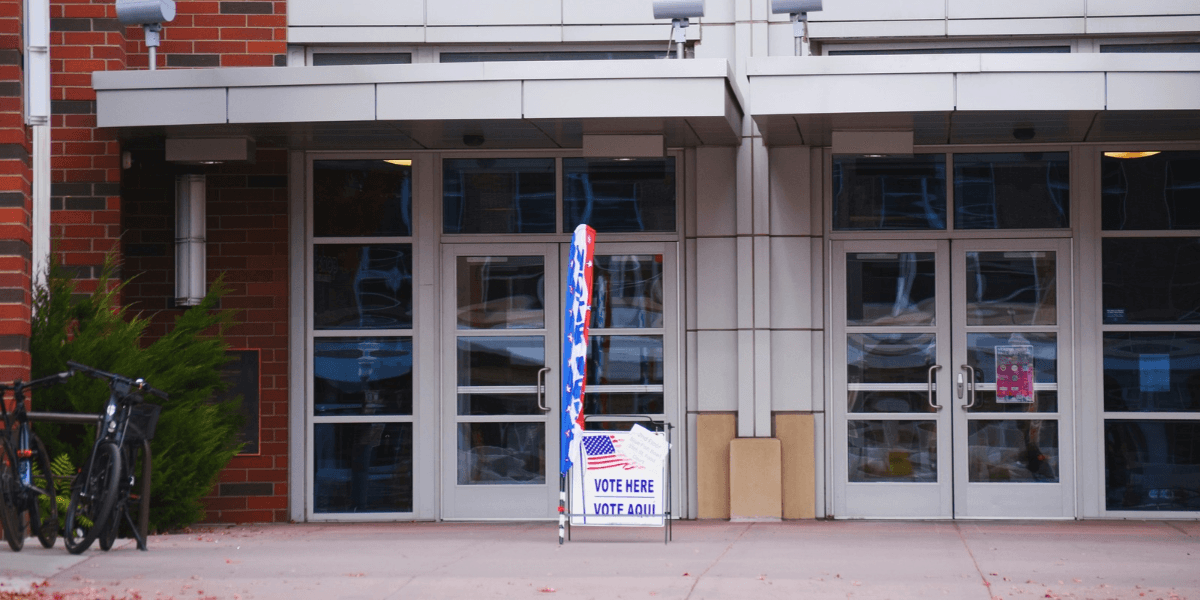
Midterm Elections Reach Final Day as Control of Congress Hangs in the Balance
The 2026 midterm elections entered their final stretch Monday, November 2, with voters preparing to determine control of the House of Representatives and Senate. President Donald Trump spent Sunday campaigning in Iowa and Kansas, two states where Republicans face competitive challenges despite their traditionally strong electoral position. The president argued that Republican candidates could prevail, while Democrats continued focusing on household expenses, energy prices and dissatisfaction with the administration's handling of major domestic and international issues.
The election is unfolding against an economic backdrop complicated by tariffs, higher agricultural costs and the war involving Iran. These pressures have become central to campaigns in competitive states, particularly where farmers, manufacturers and consumers have experienced increased operating or household expenses. The Trump administration has announced approximately $15 billion in agricultural assistance initiatives, including support intended to offset higher diesel and fertilizer costs. Additional payments totaling $13.8 billion are planned to address shortfalls for producers of major crops during the 2025 growing year. Whether the assistance influences voting in rural communities remains uncertain.
One of the most unexpected developments emerged in Michigan, where Democratic Rep. Haley Stevens endorsed Republican Senate candidate Mike Rogers after losing the Democratic primary to Abdul El-Sayed. Stevens announced her support Sunday following a dispute over her participation in a campaign event with El-Sayed. Her decision exposed divisions within the state's Democratic coalition just before an election that could prove important to the Senate's balance of power. El-Sayed dismissed the significance of the endorsement and said his campaign remained focused on voters' economic concerns.
Election administration also drew increased attention. The Justice Department defended a California voter-registration list it says includes more than 20,000 suspected noncitizens, while an immigrant-rights organization challenged the reliability of the information in federal court. Separately, concerns about federal law enforcement personnel serving as election monitors prompted legal scrutiny over possible voter intimidation. Federal officials maintained that monitoring activities would not interfere with voting.
With Election Day scheduled for Tuesday, November 3, both parties face a final effort to mobilize supporters, particularly in closely contested congressional districts and Senate races. The results will determine not only which party controls Congress but also the legislative and oversight environment for the remaining two years of Trump's presidential term.

Iran Proposes Reopening Strait of Hormuz as Risk of Renewed Conflict Persists
Diplomatic uncertainty surrounding Iran intensified Monday as Tehran outlined a proposal that could reopen the Strait of Hormuz and restart nuclear negotiations with Washington. Iranian officials indicated that the strategic waterway could reopen within two days if the United States accepted several conditions, including lifting restrictions on Iranian ports and oil exports and supporting a ceasefire arrangement covering Lebanon. No American acceptance of the proposal had been announced.
The Strait of Hormuz remains central to international energy security because it connects the Persian Gulf with global shipping routes. Restrictions on commercial navigation through the passage have implications far beyond the Middle East, affecting oil transportation, insurance costs, fuel prices and the broader economic outlook. Under Iran's proposed arrangement, vessels would travel through a route coordinated with Oman and remain subject to Iranian supervision.
The proposal followed several days of discussions involving an Iranian delegation in Qatar. Although the delegation departed, Iranian officials said indirect communication with Washington continued. Trump also reported speaking with Israeli Prime Minister Benjamin Netanyahu on Sunday, as regional governments monitored the possibility of renewed American or Israeli military action against Iran. The extent of any military planning remained uncertain, and diplomatic negotiations had not produced a confirmed breakthrough.
The situation carries consequences for the United States at a particularly sensitive political moment. Elevated fuel costs have already featured prominently in the midterm campaign, while the prospect of further military escalation raises questions about regional security, American military commitments and the stability of international energy supplies.
Elsewhere in the region, humanitarian pressures remained severe. Renewed fighting in Yemen has displaced more than 300,000 people, according to reporting on the conflict, while Israeli military operations and continued strikes in Gaza have added to civilian concerns. China has also announced plans to send a special envoy to Iran, Oman and Saudi Arabia during November, reflecting broader international efforts to contain regional instability.
The immediate diplomatic question is whether Washington and Tehran can narrow their differences over sanctions, maritime access and ceasefire conditions before tensions produce another military confrontation.

Ukraine's Humanitarian Ceasefire Expires as Cyberattacks Disrupt Emergency Warning Systems
A temporary ceasefire in southern Ukraine expired early Monday, ending a six-day humanitarian operation that had allowed civilians to escape dangerous areas around the Russian-occupied town of Oleshky in the Kherson region. The arrangement, negotiated with assistance from U.S. first lady Melania Trump and involvement from Pope Leo, represented an unusual period of direct humanitarian coordination between Moscow and Kyiv during the continuing war.
Ukrainian military officials reported evacuating 167 civilians from threatened areas of Kherson on Sunday, including 22 children and 21 people requiring additional mobility assistance. Residents leaving Oleshky traveled through Russian-controlled territory, with some making an extended journey through Crimea, Russia and Belarus before reaching Ukrainian-controlled areas. The temporary agreement also permitted mine-clearing operations and deliveries of food, medicine and other essential supplies.
Ukrainian and Russian human rights officials acknowledged that the operation had proceeded under the agreed arrangements and indicated that discussions about future humanitarian cooperation could continue. However, the ceasefire was not extended. By Monday morning, Ukrainian authorities reported renewed Russian drone attacks in Kherson, including an attack on a vehicle that wounded two elderly civilians.
The resumption of hostilities coincided with a separate security problem affecting emergency communications in both countries. Ukrainian authorities reported that hackers had compromised an air raid warning application, sending false alerts about nuclear radiation, chemical hazards and disturbances in Kyiv. The service was temporarily suspended before being restored overnight. Russian officials separately reported that their emergency notification application had been targeted with fabricated warnings, including messages concerning nuclear attacks.
The incidents raised concerns about the reliability of civilian warning infrastructure during wartime. Emergency alert systems are especially important in Ukraine, where residents regularly depend on mobile notifications to seek shelter from missiles and drones. The identity of those responsible for the intrusions remained uncertain, and there was no confirmed evidence that the two attacks were coordinated.
Meanwhile, Ukraine continued confronting pressure on its electricity infrastructure. Emergency power cuts were reported in Kyiv and surrounding areas Monday as Russian strikes continued affecting the country's energy system. With colder weather approaching, maintaining electricity supplies and civilian access to heating remains a significant challenge.
The expiration of the Kherson agreement leaves open the possibility of additional localized humanitarian arrangements, but it does not indicate progress toward a broader military ceasefire. Both governments continue to hold substantially different positions on the terms of ending the war.

Severe Southwest Flooding Triggers Evacuations as Colorado River Levels Reach Dangerous Heights
Communities across the American Southwest faced dangerous flooding Monday following intense rainfall that overwhelmed waterways, closed roads and forced residents to evacuate in Colorado, Arizona and New Mexico. The storms affected areas already dealing with saturated ground and earlier flooding, increasing the risk of rapid runoff and damage to homes, businesses and transportation infrastructure.
Among the most threatened communities was Pagosa Springs, Colorado, where officials warned that the San Juan River could reach historically dangerous levels. Forecasts called for a crest as high as 21.9 feet, substantially exceeding the approximately 17.8-foot level associated with a devastating flood in 1911. Local authorities ordered evacuations from vulnerable areas, closed access roads and directed residents toward designated emergency shelters. The unusually high forecast prompted warnings that the flooding could become catastrophic if river levels reached their projected peak.
Conditions were also serious in northern Arizona. In Sedona, rising water along Oak Creek forced evacuations and trapped some residents inside their homes. Emergency crews used aircraft for rooftop rescues, while nearly 20 households required assistance relocating. Other Arizona communities, including Flagstaff and Tucson, experienced flooded roads and overwhelmed drainage systems. Authorities were also searching for a man reportedly swept into floodwaters in Flagstaff.
Across the Four Corners region, emergency officials warned residents near the Animas, La Plata and San Juan rivers to move to higher ground. Evacuation notices were issued in parts of San Juan County, New Mexico, as rapidly rising water threatened low-lying neighborhoods. The National Weather Service warned that some locations could receive rainfall equivalent to several months of normal precipitation within a matter of days.
The flooding has also renewed attention to disaster recovery costs and federal assistance. New Mexico officials have been seeking additional reimbursement for emergency response and infrastructure damage associated with earlier flooding. Local governments face expenses for debris removal, damaged roads, emergency shelter operations and protective measures, even as additional storms threaten the region.
The immediate priority remains protecting residents and monitoring river levels as the storm system shifts eastward. Emergency officials will also need to assess damage to roads, bridges, utilities and water systems before displaced households can safely return.

Wall Street Faces Election Uncertainty, Major Technology Earnings and a Critical Jobs Report
U.S. financial markets began a consequential week Monday as investors prepared for the midterm elections, a closely watched employment report and earnings announcements from major technology companies. The convergence of political uncertainty, inflation concerns and questions about artificial intelligence spending has created several potential catalysts for stocks, bonds and currency markets.
Tuesday's congressional elections could influence expectations for federal spending, financial regulation, energy policy and the technology industry. A change in control of either chamber could alter the administration's ability to advance legislation, although the immediate market reaction will depend on the specific results and investors' expectations. Financial firms, healthcare companies, defense contractors and technology businesses are among the industries closely watching the outcome.
Economic attention will turn later in the week to the Labor Department's October employment report, scheduled for Friday, November 6. Economists surveyed ahead of the release expect approximately 65,000 jobs to have been added during October, following a reported increase of 29,000 in September. The unemployment rate stood at 4.2% in the previous report. The figures will provide another assessment of whether the labor market remains resilient despite higher borrowing costs and uncertainty surrounding trade and energy prices.
The Federal Reserve left its benchmark interest rate unchanged at its most recent meeting, while upgrading its description of economic activity from solid to strong. Investors are now weighing the possibility of another rate increase in December as policymakers assess inflation and employment trends. A stronger-than-expected jobs report could reinforce expectations that interest rates will remain elevated, while weaker hiring could complicate the central bank's outlook.
Corporate earnings will provide another major test. Apple is among the prominent companies scheduled to report results, alongside semiconductor businesses including Advanced Micro Devices and Qualcomm. Investors are paying particular attention to artificial intelligence-related spending following disappointing earnings reactions involving several large technology companies. Questions about the pace of AI investment, the profitability of new infrastructure and demand for computing equipment have become increasingly important to market valuations.
International monetary policy will also be in focus, with central banks in Australia, Sweden, Britain and Norway scheduled to announce decisions this week. Their actions could offer further evidence of how persistent inflation and global energy disruptions are affecting borrowing costs across major economies.
Taken together, the week's developments could shape expectations for U.S. economic growth, interest rates and corporate profitability through the remainder of 2026.
Looking Ahead
Tuesday's midterm elections will dominate the immediate U.S. news agenda as voters determine control of Congress and the direction of federal policymaking for the next two years. Closely contested Senate races, including Michigan, and competitive House districts will be central to the outcome. Election officials will also face scrutiny over voting procedures, ballot counting and the handling of any legal challenges.
Beyond Washington, attention will remain on Iran's proposal to reopen the Strait of Hormuz, the possibility of renewed humanitarian arrangements in Ukraine and ongoing flood emergencies across the Southwest. Financial markets will assess election results alongside major technology earnings and Friday's October employment report, which could influence expectations for the Federal Reserve's next interest rate decision.