
Midterm Elections Enter Final Weekend as Federal Courts Intervene, Wall Street Faces AI Concerns and Iran Issues New Warning
The United States entered the final weekend before the November 3 midterm elections with early voting approaching record levels, intensifying legal disputes over election administration and renewed campaigning in closely contested Senate races. Federal judges delivered setbacks to the Trump administration's efforts to intervene in ballot processing, while investors assessed a turbulent week for technology stocks and the growing costs of artificial intelligence development. Internationally, heightened tensions involving Iran and continued U.S. military support for Ukraine underscored the foreign-policy challenges facing Washington as voters prepare to determine control of Congress.

Midterm Elections Enter Final Weekend as Early Voting Approaches 50 Million
The battle for control of Congress intensified Saturday, October 31, as Republicans and Democrats entered the final days of campaigning ahead of Tuesday's midterm elections. Nearly 50 million Americans had already cast ballots by the beginning of the weekend, according to election data cited by Reuters, putting early participation on course for a midterm record. The unusually high turnout reflects the significance of elections that will determine control of the House of Representatives and Senate during the final two years of President Donald Trump's second term.
Trump adjusted his campaign schedule to make in-person appearances in Iowa and Kansas on Sunday, reversing earlier plans to hold remote rallies. Both states have competitive Senate contests that could influence the chamber's balance of power. The president campaigned in Florida on Friday, while former President Bill Clinton appeared on behalf of Democrats in Mississippi. Former Vice President Kamala Harris also completed a multistate campaign tour, including appearances in Georgia, where she urged Democratic voters to participate in the election.
The closing campaign has placed particular emphasis on household affordability, immigration, economic performance and the administration's domestic and foreign policies. Competitive Senate races in Alaska, Texas, Michigan and other states have attracted national attention, while numerous House contests could determine whether Republicans retain their congressional majority.
Despite heightened disputes surrounding election administration, a Reuters/Ipsos survey conducted from September 30 through October 5 found that 76% of respondents were confident their ballots would be counted accurately. Confidence was broadly similar among Republican and Democratic respondents.
The immediate focus is on the final campaign appearances, remaining early-voting opportunities and preparations for Election Day. With several contests potentially decided by narrow margins, turnout and the processing of absentee ballots could become central to determining when control of Congress is established.

Federal Courts Restrict Justice Department Election Actions as Alaska Investigation Expands
Federal courts delivered significant rulings affecting election administration Friday, as the Justice Department continued pursuing investigations and legal challenges involving voter eligibility and ballot processing.
U.S. District Judge Trina Thompson issued a temporary restraining order prohibiting the Justice Department from threatening, intimidating or coercing state and local election workers into stopping the processing of ballots solely because federal authorities allege that the voters are ineligible. The order, which remains in effect through November 16 unless modified, followed a lawsuit brought by civil rights organizations and labor unions representing election workers.
The ruling came as the U.S. Court of Appeals for the Ninth Circuit rejected an emergency Justice Department request involving approximately 20,000 California ballots. Federal officials had sought to have ballots associated with individuals they identified as potentially ineligible voters separated from the normal counting process. The appellate decision left the lower court's refusal to impose that requirement in place.
A separate controversy intensified in Alaska, where federal authorities are investigating allegations that Democratic operatives helped recruit a candidate whose name closely resembles that of Republican Senator Dan Sullivan. The nonpartisan candidate, Daniel J. Sullivan, is appearing on the ballot in a competitive Senate election involving Democratic challenger Mary Peltola.
The Justice Department has sought court intervention concerning potentially affected ballots and the certification process. Alaska officials have challenged the federal government's requests, while Peltola has denied knowledge of the alleged recruitment effort. The existence of an investigation does not establish that a crime occurred.
The administration has also pursued voter-registration information from numerous states as part of its broader investigation into alleged noncitizen voting. State election officials and voting-rights organizations have challenged aspects of those efforts, raising questions about federal authority over elections traditionally administered by state and local governments.
These cases carry immediate significance because they concern the handling of ballots just days before voting concludes. Further court filings, possible appeals and decisions by state election officials could shape how the disputes proceed during counting and certification.

Wall Street Confronts Technology Selloff as Investors Question AI Spending
U.S. financial markets ended the final trading session of October under heavy pressure as disappointing corporate earnings intensified concerns about the cost of artificial intelligence development and the ability of major technology companies to generate returns from their investments.
Technology shares led Friday's selloff, with the Nasdaq Composite falling more than 3% during the session and reaching a three-month low. The broader S&P 500 and Dow Jones Industrial Average also declined as investors reduced exposure to technology and other growth-oriented stocks.
Intel and Amazon were among the companies facing significant selling pressure following their quarterly earnings announcements. Investors focused on capital expenditures, profitability and the financial implications of expanding AI infrastructure. Semiconductor manufacturers and server companies also suffered losses as concerns spread across the technology supply chain.
The retreat reflects a growing debate over the economics of AI. Major technology companies have committed substantial resources to data centers, advanced processors, cloud infrastructure and electricity supplies. Although demand for computing capacity remains strong, the scale of spending has raised questions about how quickly businesses can recover their investments through new products and services.
Amazon's latest results illustrated the tension. Its Amazon Web Services division reported revenue growth of 39.3% in the quarter ending September 30, its fastest expansion in nearly five years. Nevertheless, the company's cautious outlook for the holiday shopping quarter and broader investment commitments contributed to concerns about future profitability.
The uncertainty extends beyond individual technology companies. Heavy spending on AI infrastructure has become an important driver of construction, equipment orders, electricity demand and corporate borrowing. A sustained slowdown in technology investment could therefore affect several sectors of the U.S. economy.
Market participants are also preparing for the midterm elections, which could alter expectations for federal spending, trade policy, taxation and technology regulation. With major stock indexes already experiencing heightened volatility, the election outcome could become another important factor in investment decisions.
The next significant test will come when U.S. markets reopen Monday, November 2. Investors will be watching whether technology shares stabilize, whether selling spreads to other industries and how financial markets respond to the final days of the congressional campaign.

Iran Warns of Wider Retaliation as Diplomatic Efforts Focus on Strait of Hormuz
Iran issued a new warning Saturday that any renewed military attack by the United States or Israel would trigger an immediate response without geographic restrictions, adding to tensions across the Middle East.
Supreme Leader Ayatollah Mojtaba Khamenei instructed Iranian military commanders to prepare for retaliation against potential threats, according to Iranian state media. The statement follows months of regional instability after the U.S.-Israeli military campaign against Iran earlier this year.
Iranian officials have indicated that the country would determine the timing and conditions for ending any renewed hostilities. The warning underscores the risk that further military confrontation could extend beyond the immediate conflict area and affect American interests, regional security arrangements and international commercial shipping.
At the same time, diplomatic discussions continued over the Strait of Hormuz, one of the world's most strategically important maritime passages. Iranian Foreign Minister Abbas Araghchi said mediators had developed a proposal that could allow the waterway to reopen fully within two days, although implementation remained uncertain.
Iranian officials have indicated that shipping arrangements would need to comply with conditions involving Iranian oversight and coordination with Oman. The details of any agreement, including enforcement and guarantees for commercial vessels, remain critical unresolved issues.
The strait connects the Persian Gulf with international shipping routes and plays a central role in global energy transportation. Restrictions on maritime traffic can increase freight costs, complicate oil and gas deliveries and influence fuel prices internationally.
A separate allegation added to the uncertainty Saturday when Iranian state media reported that American forces had attacked fishing boats near Qeshm Island. Local officials reported casualties, but Reuters said there was no immediate confirmation from the United States. The reported incident remained unverified.
Regional governments, including Saudi Arabia and Egypt, have urged restraint and continued diplomatic engagement. Their concerns reflect the possibility that a renewed confrontation could disrupt trade, energy infrastructure and civilian transportation across a wider area.
The immediate diplomatic focus is whether negotiations can produce a workable arrangement for maritime traffic and reduce the likelihood of further military action. Any confirmed agreement affecting the Strait of Hormuz would carry significant consequences for energy markets and international shipping.
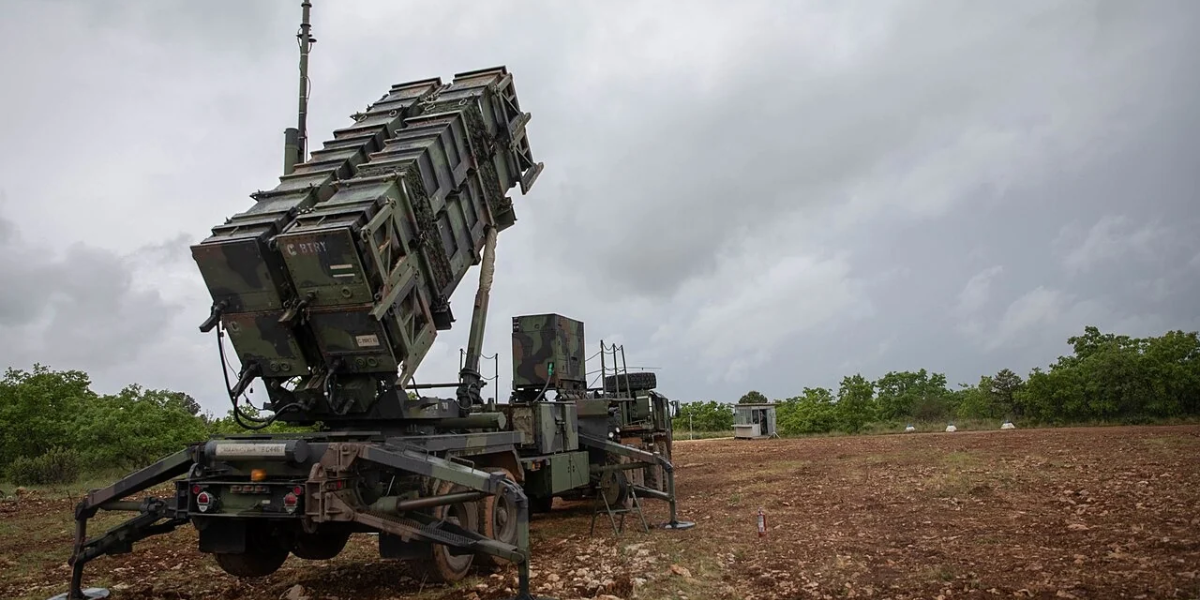
United States Approves $2.1 Billion Patriot Missile Sale to Ukraine, but Delivery Timing Remains Uncertain
The Trump administration approved a proposed $2.1 billion sale of 500 Patriot air-defense interceptor missiles to Ukraine, marking a substantial new commitment to Kyiv's defensive capabilities as Russian attacks continue to threaten Ukrainian cities and infrastructure.
The State Department announced the authorization Friday, October 30, with the development receiving further attention Saturday as Ukrainian officials assessed how quickly the weapons could become available.
The proposed sale covers Patriot PAC-3 interceptor missiles and associated support. The weapons are designed to intercept incoming aerial threats, including ballistic missiles, and have become particularly important to Ukraine's efforts to defend population centers and essential infrastructure.
According to the State Department, the purchase will be financed through contributions from Canada, Germany and Norway, alongside Ukrainian funding supported by European financing arrangements. The department said no U.S. government funds would be used for the purchase.
Lockheed Martin is designated as the principal contractor.
The approval follows repeated warnings from Ukrainian President Volodymyr Zelenskyy that the country faces serious shortages of air-defense ammunition. Russian attacks on Ukraine's energy infrastructure have intensified concerns about electricity supplies and civilian safety as colder weather approaches.
However, the authorization does not mean the missiles will arrive immediately. Reuters reported that the interceptors covered by the proposed sale have yet to be manufactured and, according to people briefed on the matter, might not be delivered until the early 2030s.
Zelenskyy welcomed the American decision but emphasized that Ukraine needs additional defenses much sooner. Ukrainian officials have urged Washington and allied governments to consider transferring missiles from existing inventories while replacing those supplies through future production.
That approach would require coordination among governments already managing their own air-defense requirements. The United States and its allies have faced growing demand for advanced interceptors amid conflicts in Europe and the Middle East.
The transaction also remains subject to the normal congressional review process for major U.S. arms sales.
The next developments will center on whether Washington and European partners can accelerate deliveries, whether existing stockpiles can provide immediate assistance and how quickly manufacturers can expand production. Those decisions could determine the practical impact of the agreement on Ukraine's defenses in the coming months.
Looking Ahead
The November 3 midterm elections will dominate the U.S. news agenda in the coming days. President Trump is scheduled to campaign in Iowa and Kansas on Sunday, while candidates nationwide make their final appeals to voters. Election officials will continue preparing polling locations, processing eligible early ballots and responding to legal challenges. The closest House and Senate races could take additional time to resolve after polls close, particularly where absentee-ballot counting continues beyond Election Day.
Financial markets reopen Monday following a difficult week for technology shares, with investors assessing corporate earnings, AI investment commitments and the approaching election. Internationally, attention will remain on negotiations concerning the Strait of Hormuz and efforts to prevent renewed military confrontation with Iran. Ukraine's request for accelerated Patriot missile deliveries will also test coordination between Washington and European allies as Russian attacks continue.
Together, these developments will shape the opening days of November, with congressional control, financial-market stability and major international security decisions all approaching consequential milestones.