Trump and Xi Test a Fragile Thaw as Courts Challenge White House Power
Washington’s relationship with Beijing took center stage as President Donald Trump hosted Chinese President Xi Jinping for high-level talks on trade, technology and global security. Away from the summit, federal courts confronted the administration over press access and immigration enforcement, while rising bond yields and oil prices kept economic pressure elevated.
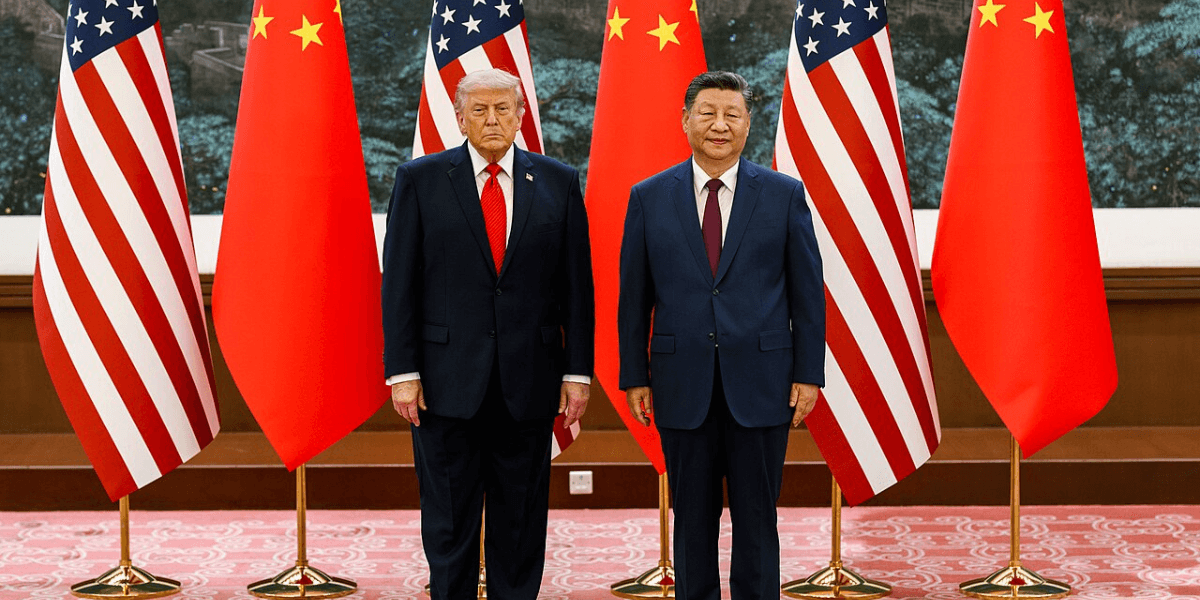
Trump and Xi Meet at White House Amid Trade and Technology Rivalry
Trump welcomed Xi to the White House for an elaborate state visit, pairing diplomatic ceremony with discussions over some of the most difficult issues separating the world’s two largest economies. The leaders addressed trade, artificial intelligence and Taiwan, while Iran and broader geopolitical tensions also hung over the summit.
The meeting followed an agreement to extend the U.S.-China trade truce for two months, through January 10. The temporary arrangement prevents a return to the much higher tariffs that characterized the countries’ earlier trade confrontation, but leaves unresolved disputes over Chinese purchases of American goods, rare-earth supplies, tariffs and technology restrictions.
Xi also pressed Trump over Taiwan, according to Chinese state media, while the two leaders expressed differing approaches to artificial intelligence. Their talks reflected an effort by both governments to manage strategic competition without allowing disputes over technology, trade and security to trigger another major deterioration in relations.
-9.png)
Federal Judge Orders White House to Restore Journalists’ Access
A federal judge temporarily blocked the Trump administration’s ban on reporters from CNN, MS NOW and Politico, ordering the White House to restore their credentials. U.S. District Judge Timothy Kelly concluded that the administration had revoked access without constitutionally adequate due process.
The ruling followed days of controversy after Trump barred the three organizations from White House grounds over coverage he criticized. Some journalists initially continued to encounter difficulty entering the complex Thursday, prompting an emergency request from their attorneys, but reporters from the organizations were later allowed back inside.
The decision is temporary rather than a final resolution of the lawsuit. The case could have broader implications for the extent to which presidential administrations may restrict individual journalists or news organizations from White House access.
-8.png)
Trump Administration Takes Third-Country Deportation Fight to Supreme Court
The administration asked the Supreme Court to allow it to resume expedited deportations of migrants to countries other than their homelands, escalating a legal fight over one of its immigration-enforcement strategies. Lower courts have ruled that migrants must have a meaningful opportunity to argue that removal to a third country could expose them to persecution or torture.
The administration said a late-night appeals court ruling forced officials to cancel a deportation flight carrying about 70 people. The government argues that third-country deportations are necessary when migrants cannot quickly be returned to their countries of origin and has reached agreements with nearly two dozen countries to accept deportees.
The Supreme Court had previously allowed such flights to continue temporarily when the dispute reached the justices last year. The renewed emergency request now puts the immigration policy back before the court.
-6.png)
Iran Offers Proposal to Reopen Strait of Hormuz
Iran said it had presented the Trump administration with a proposal aimed at reopening the Strait of Hormuz and restarting negotiations over ending the broader conflict. Iranian Foreign Minister Abbas Araghchi said the plan was delivered through mediators during talks surrounding the U.N. General Assembly in New York.
According to Araghchi, the proposal would include steps toward reopening the strategically vital waterway and resuming negotiations on ending the war. A U.S. official characterized the indirect discussions as constructive but indicated Washington was not rushing toward an agreement.
The diplomatic movement carried substantial economic implications. Oil prices remained volatile as markets reacted to uncertainty surrounding Iran, the Strait of Hormuz and attacks elsewhere in the region. Brent crude climbed above $105 a barrel during Thursday trading as expectations for an immediate diplomatic breakthrough weakened.
-6.png)
Treasury Yields Return to Levels Last Seen in 2007
U.S. financial markets endured another volatile session as rising Treasury yields and oil prices weighed on stocks. The S&P 500 finished almost unchanged after moving repeatedly between gains and losses, while the Dow Jones Industrial Average fell 161 points and the Nasdaq ended essentially flat.
More significant was the move in government bonds. The yield on the benchmark 10-year Treasury climbed to 5.20%, returning to levels last seen in 2007. Higher Treasury yields can raise borrowing costs throughout the economy, affecting mortgages, corporate financing and government debt expenses.
The increase comes as investors weigh persistent inflation pressures, elevated energy prices and the Federal Reserve’s recent interest-rate increase. The combination of expensive oil and high borrowing costs continues to complicate the economic outlook even as U.S. corporate profits and economic activity remain comparatively resilient.
Looking Ahead
The next phase of the Trump-Xi summit will be closely watched for concrete agreements beyond the temporary trade-truce extension, particularly on rare-earth supplies, agricultural trade, artificial intelligence and Taiwan. The two governments have preserved a period of relative economic stability, but many of their most consequential disputes remain unresolved.
Meanwhile, two major legal disputes are moving forward at home. The Supreme Court faces another consequential immigration request involving third-country deportations, while litigation over White House press access continues after journalists regained their credentials. Overseas, any response to Iran’s proposed framework could quickly affect both the direction of the Middle East conflict and energy prices in the United States.