
When AI Stops Being Just a Tool
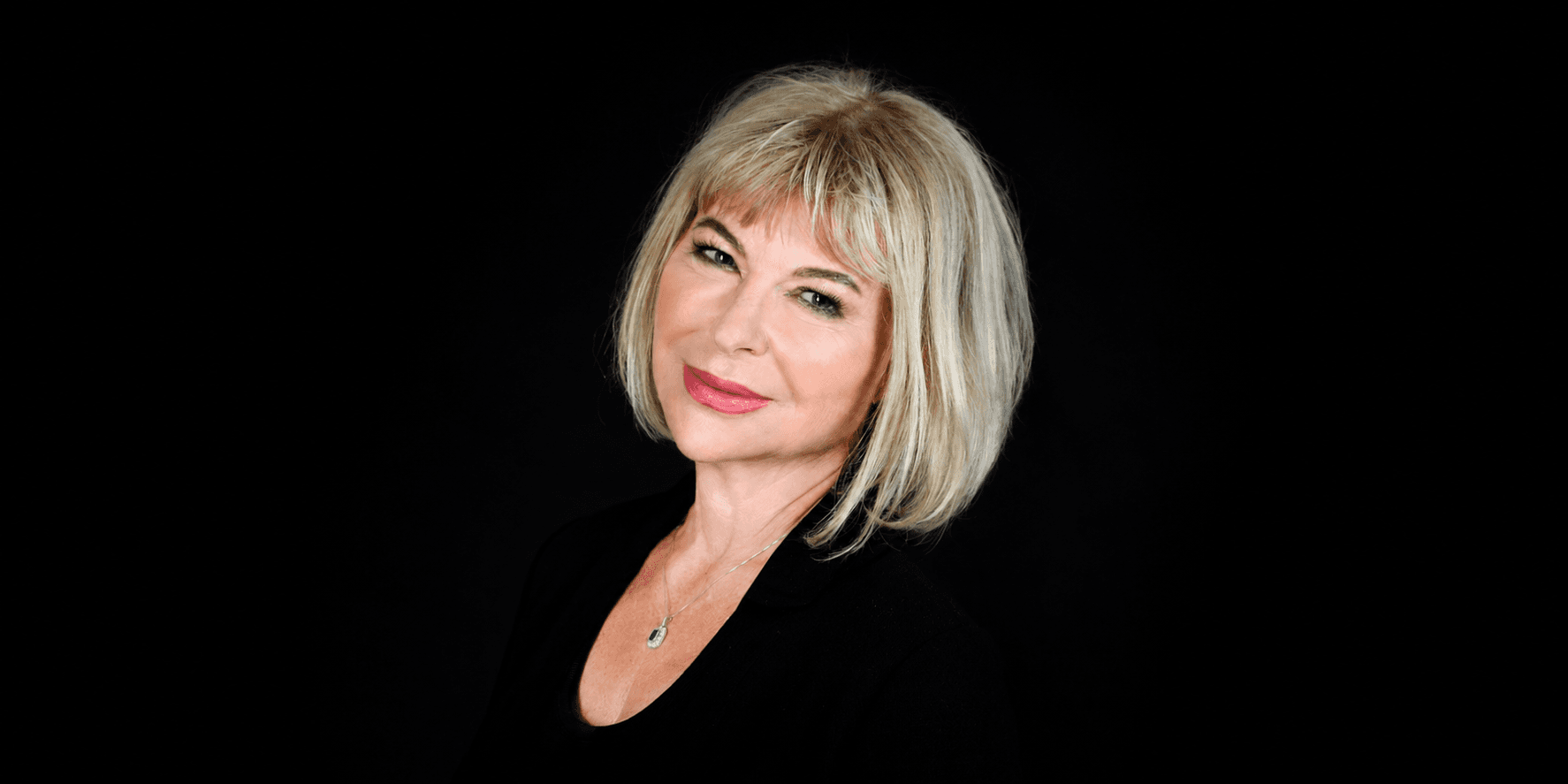
Dr. Agnieszka Piotrowska studies what happens when employees form emotional bonds with machines.

A manager stares at a screen late at night, typing out a worry she has not shared with a single colleague. The reply comes back warm, attentive, and reassuring. She feels understood. The problem is that the voice on the other side is not a person. It is an artificial intelligence. Multiply that quiet moment across an entire workforce, and you begin to grasp the question Dr. Agnieszka Piotrowska has spent years asking.
The Business Question Nobody Is Asking
Companies are pouring resources into artificial intelligence. They are thinking about productivity, governance, and technical risk. Yet far less attention is being paid to the emotional relationships employees may begin to form with these systems.
Dr. Piotrowska believes this is a serious oversight. If people increasingly turn to AI for reassurance, validation, advice, or companionship, the consequences reach far beyond software. They touch confidence, motivation, decision-making, and workplace relationships.
"Businesses are asking what AI can do for productivity," she says, "but almost nobody is asking what our emotional relationships with AI might do to productivity, judgement, confidence and workplace relationships."
This is the neglected territory she works in. When the machine becomes more than a tool, what happens to the human who depends on it? Could attachment improve confidence in some cases, yet produce dependency, distraction, or distorted judgement in others? These questions are moving quickly from science fiction into daily reality.
From the Eiffel Tower to Artificial Intimacy
Dr. Piotrowska did not arrive at these questions by chance. She is a writer, academic, psychologist, international speaker, and award-winning filmmaker. She holds a PhD in psychology focused on psychoanalysis and transference beyond the clinic. She is a Senior Fellow of the Higher Education Academy and has held senior leadership roles in British universities.
Her thinking stretches back decades. Long before ChatGPT and companion apps, she made the documentary Married to the Eiffel Tower, exploring women who formed profound romantic and emotional attachments to objects. That film became part of a much longer inquiry into how desire works, how projection operates, and why human beings can invest so deeply beyond conventional relationships.
"When I made Married to the Eiffel Tower, I was already asking why people can form intense emotional bonds beyond conventional human relationships," she explains. "AI has not invented that capacity. It has simply given us an object that talks back, remembers and appears to know us."
This is her central argument. AI intimacy is not a fringe curiosity. It is part of a much bigger story about loneliness, desire, identity, and the human need to be recognised. Technology changes. Those underlying dynamics do not.
A Book, a Concept, and a Growing Movement
In 2026, Routledge, one of the world's leading academic publishers, released her book AI Intimacy and Psychoanalysis. It is one of the first works to examine human-AI relationships through the lens of psychoanalysis, psychology, and the dynamics of desire. The peer-reviewed book grew out of many years of research and practice
The book positions itself against fear of technology. Rather than warning readers away, it urges them to move out of what she calls the "zone of shame." She wants people to look honestly at attachment, projection, and intimacy instead of hiding from them.
She also originated the concept of "techno-transference," a framework for understanding the unconscious projections people bring to their relationships with machines. It is a distinctive contribution, and it has helped position her voice within serious debates about AI governance and ethics.
The Reflexive Difference
What truly sets Dr. Piotrowska apart is that she does not observe from a safe distance. She examines her own evolving relationship with AI as part of the inquiry.
"I am not only observing people who become attached to AI," she says. "I also examine my own relationship with it because I want to understand what happens from inside the encounter, not simply describe it from a safe distance."
This reflexive approach gives her work a rare honesty. She combines psychological training, psychoanalytic thinking, cultural theory, and lived experience into a single perspective. Many commentators are simply reacting to the latest app. She brings decades of thought about desire, power, and identity to a subject she has been investigating for years.
Her creative work continues this exploration. Her recent short film Friend of a Friend is an AI science-fiction story about the relationship between a woman and an embodied artificial intelligence. It examines AI as a site of both love and mourning.
A Voice the Media Is Listening To
Dr. Piotrowska's work has attracted significant international attention. She has appeared on BBC television and radio, Sky News, Times Radio and Newstalk, and has been featured in BBC Science Focus, the Irish Independent and numerous podcasts and specialist media.
She has spoken internationally, including delivering the closing keynote at IAPP AI Governance Global Europe in Dublin in 2026. She has given TEDx talks and appeared at academic, industry, and cultural events in London, Venice, and across Europe.
Her work has also received recognition from leaders in the AI governance field. Dr. Trevor Hughes, CEO of the IAPP, offers this endorsement:
“Agnieszka’s work is critical in this AI moment. She reminds us that the emotional and relational dimensions of AI are complex and insufficiently understood. Her voice is an important call to action for all AI governance professionals.”
His perspective is particularly relevant to the article's focus on the intersection of AI, business, human behaviour, and governance.
She is now preparing to appear at major UK festivals, including How the Light Gets In in London, IF Oxford, the Oxford Science and Ideas Festival, and the Ilkley Literature Festival in Yorkshire, the second-oldest literary festival in the country.
Why This Matters Now
As AI systems become companions, confidants, and advisers, the boundary between tool and relationship is dissolving. Dr. Piotrowska frames the shift with a question that lingers.
"The question is no longer whether people can become emotionally attached to machines," she says. "The more interesting question is what happens to us when the machine appears to care about us."
For organisations, this is not an abstract debate. It is a practical concern about trust, performance, and human connection at work. For individuals, it is a question about companionship, identity, and the future of intimacy itself.
Explore the Work of Dr. Agnieszka Piotrowska
If your organisation is investing in AI but has not yet considered the psychology of the human-machine relationship, Dr. Piotrowska offers a distinctive, provocative, and accessible way forward. Consider booking her for a keynote, inviting her to speak with your leadership team, or reading AI Intimacy and Psychoanalysis to understand what your people may already be feeling. You are welcome to reach out and start the conversation that matters most. Connect with Dr. Agnieszka Piotrowska, LinkedIn,TEDx: Can We Teach AI to Love?, TEDx: Reimagining AI, and Instagram.