
U.S. Tariff Backlash Grows as Middle East Conflict Escalates, Ukraine Ceasefire Claims Emerge and Powerful Hurricanes Threaten Coastal Communities
The United States faces mounting economic and foreign-policy pressures as the November midterm elections approach, with new reporting highlighting manufacturing job losses linked to tariffs and continued frustration over the cost of living. Overseas, a deadly attack on Saudi Arabia's main international airport has heightened tensions surrounding the conflict with Iran, while President Donald Trump has announced what he describes as an energy ceasefire between Russia and Ukraine. Meanwhile, powerful hurricanes are threatening communities in Mexico and the United States, and the Justice Department has opened an antitrust investigation involving major television networks' coverage of the White House.
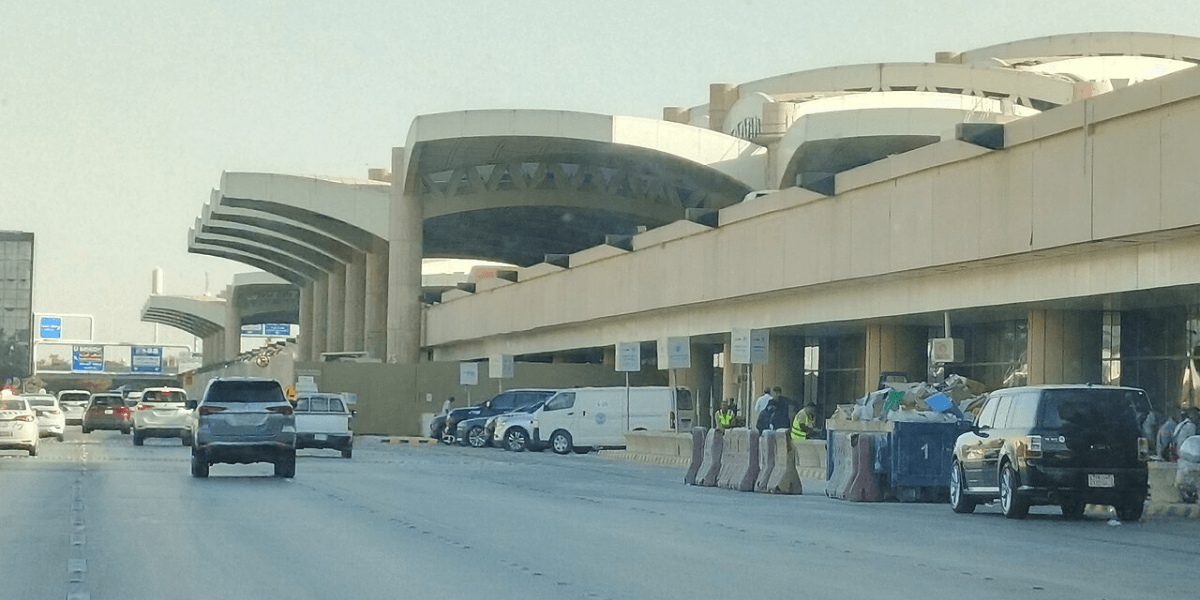
Deadly Saudi Airport Attack Raises Stakes in Middle East Conflict as Iran Rejects U.S. Proposal
A major attack on Saudi Arabia's King Khalid International Airport in Riyadh has intensified regional security concerns, killing at least 12 people and injuring more than 300, according to Saudi authorities.
The Saturday attack struck one of the kingdom's most important transportation hubs amid continuing hostilities involving Iran, its regional allies and the United States. Saudi officials identified victims from several countries, including the United States. Secretary of State Marco Rubio acknowledged the death of an American citizen, while President Trump condemned the attack.
A Saudi-led coalition blamed Yemen's Iran-backed Houthi movement. The Houthis had claimed responsibility for earlier attacks targeting the airport, although responsibility for the latest deadly strike remains subject to the authorities' investigation. Reports on Sunday indicated that another projectile had struck an airport terminal, underscoring the continuing threat to civilian aviation and critical infrastructure.
The attacks have raised the prospect of additional Saudi military responses and increased requests for assistance from regional and Western partners. The potential consequences extend beyond Saudi Arabia, given the importance of Gulf air corridors, energy infrastructure and commercial shipping to international trade.
Meanwhile, efforts to negotiate an end to the broader conflict with Iran remain unresolved. Mohsen Rezaei, a senior official on Iran's Supreme National Security Council, said Tehran considered the latest American response to its negotiating proposal insufficient.
According to Iranian state media, Rezaei said the U.S. position had failed to address all seven conditions presented by Tehran. He also warned that renewed escalation could place regional data centers and communications cables at risk.
A central issue remains the Strait of Hormuz, a critical passage for global oil and gas shipments. Continued restrictions or uncertainty surrounding the waterway could affect energy prices, insurance costs and international shipping schedules.
The latest developments leave diplomatic negotiations and regional military preparations proceeding simultaneously. The immediate questions are whether Washington and Tehran can narrow their differences over the terms of a settlement and whether Saudi Arabia will seek additional military support following the airport attacks.
-15.png)
Tariff-Related Job Losses Add to Economic Concerns Ahead of U.S. Midterm Elections
President Donald Trump's trade policies are facing renewed scrutiny as American manufacturers report layoffs and rising costs associated with imported materials, adding another economic challenge for Republicans ahead of the November 3 congressional elections.
An Associated Press examination published Sunday highlighted the experiences of factory workers whose employers have reduced operations or closed facilities amid higher costs. In Zeeland, Michigan, longtime clockmaker Howard Miller shut down its factory after more than a century in business, eliminating nearly 200 jobs. The company depended on imported components, making it vulnerable to changes in trade costs. Other manufacturers, including businesses in the recreational vehicle and consumer goods industries, have also reported employment reductions.
The broader economic picture remains complicated. Manufacturing employment has faced pressure from automation, changing consumer demand, global competition and business investment decisions, making it difficult to attribute individual layoffs exclusively to tariffs. The White House maintains that its trade policies are intended to strengthen domestic production and encourage investment in American industry.
Nevertheless, public confidence in the administration's approach to trade has weakened. A September Associated Press-NORC poll found that approximately three in ten American adults approved of Trump's handling of trade negotiations, compared with roughly four in ten in March.
The economic debate extends beyond manufacturing. Reuters reported that U.S. consumer sentiment declined further in early October, approaching historically weak levels as households expressed concern about persistent inflation and higher living costs associated with the Middle East conflict.
Trade uncertainty has also persisted following a February Supreme Court decision rejecting the administration's use of emergency powers to impose sweeping tariffs. The ruling forced the administration to reconsider parts of its tariff framework while businesses continued adjusting to changing import costs.
With congressional elections less than a month away, employment conditions, consumer prices and manufacturing investment are expected to remain central issues in competitive races. Upcoming economic indicators and corporate earnings reports will provide additional evidence of how tariffs and geopolitical disruptions are affecting American businesses and households.
-15.png)
Trump Announces Russia-Ukraine Energy Ceasefire, but Terms Remain Unclear
President Donald Trump said Sunday that Russia and Ukraine had reached an agreement to halt attacks on energy infrastructure, describing the arrangement as an energy ceasefire that would take effect immediately.
The announcement represents a potentially significant diplomatic development in the continuing war, although details about the agreement, its duration and enforcement were not immediately established. Independent confirmation of the full terms was not available in the initial reporting.
Energy infrastructure has been a recurring target throughout the conflict. Strikes on electricity generation facilities, transmission networks, fuel depots and other installations have disrupted civilian services and complicated Ukraine's economic recovery. Attacks affecting Russian energy facilities have also become an important element of the broader military confrontation.
A narrowly defined agreement protecting energy infrastructure could reduce some immediate risks to civilian electricity and heating supplies without resolving the underlying territorial and security disputes.
The announcement follows a period of renewed tension between Washington and Kyiv. Trump recently criticized Ukrainian President Volodymyr Zelenskyy amid disagreements involving Russia and energy-related arrangements, while raising questions about Ukraine's political leadership.
In an interview reported Sunday, Zelenskyy said he would organize elections in Ukraine if Russia agreed to a 60-day ceasefire. The proposal comes against the backdrop of wartime restrictions and the practical difficulties of conducting nationwide voting while large numbers of Ukrainians remain displaced or serve in the armed forces.
The prospect of elections is politically sensitive because Ukraine remains under martial law, and organizing a vote would require addressing security, legal and logistical challenges.
For European governments and NATO allies, the immediate significance of Trump's announcement lies in whether the reported arrangement can be verified and sustained. A halt to energy attacks could become a limited confidence-building measure, but it would not necessarily indicate progress toward a comprehensive peace agreement.
Attention now turns to official statements from Moscow and Kyiv, any monitoring arrangements established to assess compliance, and whether the reported pause produces measurable changes in military activity.
-13.png)
Powerful Hurricanes Threaten Mexico and U.S. Communities as Emergency Operations Continue
Severe tropical weather is creating simultaneous emergencies across parts of North America, with Hurricane Simon threatening Mexico's Pacific coastline and Hurricane Isaias leaving significant damage and power outages in the United States.
Simon intensified into a Category 4 hurricane, bringing sustained winds of approximately 150 miles per hour as it moved near Mexico's western coastline on Sunday.
The U.S. National Hurricane Center reported that the storm's center was roughly 110 miles south-southeast of Cabo Corrientes early Sunday, moving north-northwest at about 6 miles per hour. Although its eye remained offshore, the storm's proximity to land exposed coastal communities to destructive winds, dangerous surf, heavy rainfall and potentially catastrophic flooding.
The Mexican states of Jalisco, Colima and Michoacán faced particularly serious threats. Forecasts indicated that some areas could receive as much as 30 inches of rain, creating the potential for landslides in mountainous terrain and flash flooding in low-lying communities.
Authorities in Jalisco suspended classes and began evacuations in vulnerable coastal municipalities. In Puerto Vallarta, a major international tourism destination, residents and businesses boarded up buildings while emergency officials warned of dangerous coastal conditions.
The geography of the affected region adds to the risks. Communities situated between steep mountain slopes and the Pacific Ocean may face flooding and landslides even if the hurricane's center does not make landfall.
In the United States, Hurricane Isaias caused widespread disruption after making landfall Saturday. Reuters reported at least four deaths and approximately 670,000 customers without electricity following the storm's passage.
Damage assessments and restoration efforts were continuing as the system moved northward, with authorities monitoring additional rainfall, flooding and infrastructure hazards.
The two storms illustrate the range of emergency challenges associated with major hurricanes, from immediate evacuation decisions to prolonged electricity restoration and transportation disruptions.
For Mexico, the storm's track and proximity to populated coastal areas remain the primary concerns. In the United States, the next phase involves restoring essential services, assessing property damage and addressing continuing flood risks.
-11.png)
Justice Department Opens Antitrust Investigation Into White House Television Coverage Dispute
The U.S. Justice Department is investigating whether a coordinated suspension of White House television coverage by major broadcast networks violated federal antitrust law, adding a new legal dimension to an ongoing dispute over journalists' access to President Donald Trump.
The investigation concerns a decision by the White House television press pool to temporarily stop covering the president after the administration barred CNN, MS NOW and Politico from the White House.
The television pool includes ABC, CBS, CNN, Fox and NBC. Its rotating coverage arrangements allow participating news organizations to share reporting and footage of presidential activities when space or access is limited.
Justice Department spokesperson Emily Covington confirmed the investigation, explaining that coordinated boycotts among competing businesses can raise antitrust concerns. The department said it was examining whether the participating organizations had violated federal competition laws.
The announcement does not establish that any network engaged in unlawful conduct. Investigators would need to assess the circumstances surrounding the coordinated action and determine whether it constituted a prohibited agreement under applicable antitrust standards.
The dispute originated with the administration's decision to restrict access for three news organizations. CNN, MS NOW and Politico subsequently challenged those restrictions in court and obtained temporary relief.
That judicial protection is scheduled to remain in effect until Tuesday, making the next court proceedings an important development in the broader dispute.
Television pool coverage has since resumed, but the Justice Department's inquiry has generated concerns among press freedom advocates.
The Committee to Protect Journalists criticized the investigation, arguing that antitrust enforcement should not be used to discourage news organizations from defending access to government officials.
The administration's position, as reflected in the Justice Department's announcement, focuses on whether competing media companies improperly coordinated their commercial conduct.
The case brings two distinct legal questions into focus: the government's authority to regulate coordinated business activity and the constitutional protections surrounding newsgathering and press access.
The outcome could have implications beyond the current White House dispute, particularly for established arrangements through which competing news organizations cooperate to provide coverage of government institutions.
No finding of wrongdoing has been announced. Further developments are expected as the temporary court order approaches its expiration and the Justice Department determines how to proceed with its investigation.
Looking Ahead
The coming days will bring several developments with potential consequences for U.S. policy and international stability. Negotiations involving Iran and the United States remain closely tied to security in the Persian Gulf, particularly after the deadly Riyadh airport attack. Washington's announcement of a Russia-Ukraine energy ceasefire will also face its first practical test as governments assess whether attacks on critical infrastructure have stopped.
Domestically, attention will turn to additional economic data, corporate earnings and the approaching November 3 midterm elections, with tariffs, inflation and manufacturing employment remaining prominent concerns. Tuesday's scheduled expiration of temporary judicial protection for three news organizations will be another development to watch. Emergency officials in Mexico and the United States will continue tracking hurricane impacts, evacuation needs and recovery operations as the full extent of storm damage becomes clearer.