
U.S. Stocks Hit Record Highs as Iran War Pressures Mount, Justice Department Expands Citizenship Cases, and Global Health Officials Monitor Russia
U.S. financial markets climbed to record highs Tuesday as investors weighed strong corporate earnings against the economic pressures of the ongoing war with Iran. In Washington, the Justice Department intensified its efforts to revoke citizenship from naturalized Americans accused of obtaining it unlawfully, while President Donald Trump prepared for discussions with Russian President Vladimir Putin over a suspected infectious disease case in Siberia. Meanwhile, the approaching November midterm elections brought renewed attention to inflation, national security and public safety, as scientists announced a Nobel Prize recognizing advances in the study of elusive subatomic particles.
-3.png&w=3840&q=90)
Wall Street Reaches Record Highs as Corporate Earnings Offset Economic Uncertainty
U.S. stocks advanced to new records Tuesday, October 6, as investors responded to encouraging corporate earnings, lower Treasury yields and optimism about continued business growth. The S&P 500 rose 0.6% to close at 7,818.93, surpassing its previous record established in August. The Dow Jones Industrial Average gained 253.38 points, or 0.5%, to finish at 51,521.28, while the technology-heavy Nasdaq Composite climbed 0.4% to 27,599.79, marking its second consecutive record close. The Russell 2000 index of smaller companies moved in the opposite direction, declining 0.6%, suggesting that the market's gains were not evenly distributed.
Corporate developments helped support the rally. Constellation Energy attracted investor attention after announcing a long-term agreement to supply electricity to Google, highlighting the growing relationship between technology infrastructure and the energy industry. Food producer Lamb Weston also benefited from stronger-than-expected earnings, reinforcing expectations that major companies can maintain profitability despite elevated operating costs. Falling bond yields provided additional support by easing borrowing-cost concerns and making equities comparatively more attractive.
The market's performance contrasted with persistent uncertainty surrounding the war with Iran, energy prices and the broader inflation outlook. Rising transportation and fuel costs have become important concerns for households and businesses, particularly as geopolitical disruptions affect international energy markets. Investors will now focus on additional earnings announcements, economic indicators and developments in the Middle East to determine whether the rally can continue. The divergence between large-company stock indexes and smaller businesses also remains an important measure of how broadly economic optimism is spreading.
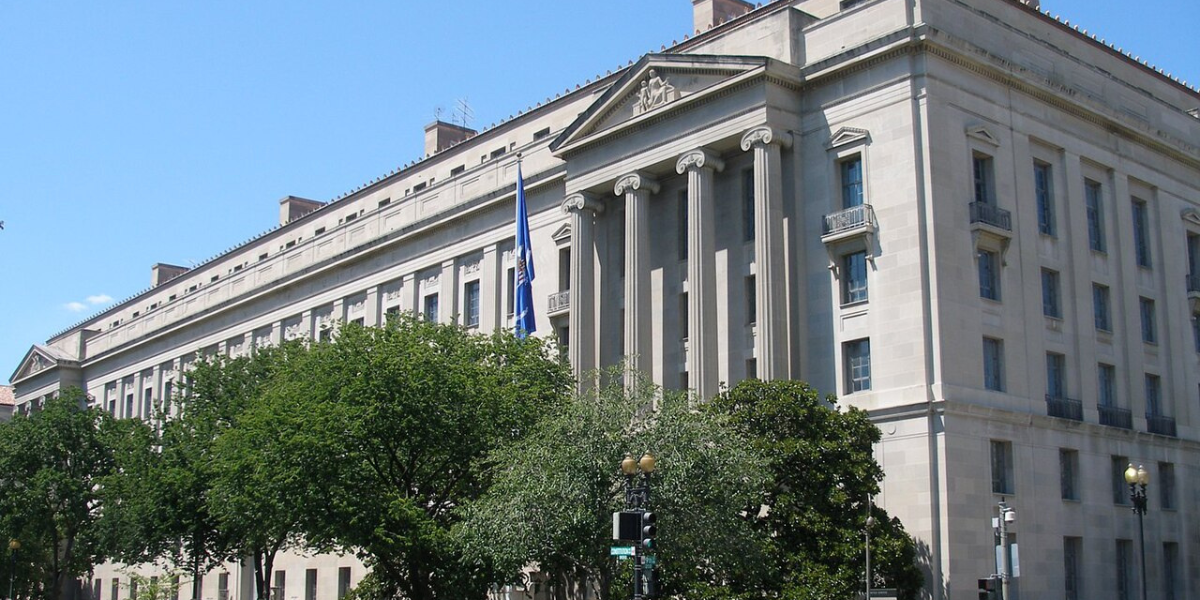
Justice Department Expands Efforts to Revoke Citizenship in 40 Cases
The Trump administration's Justice Department has moved to revoke the U.S. citizenship of 40 naturalized Americans accused of wrongdoing connected to their citizenship eligibility, marking a significant expansion of its denaturalization efforts. The department announced the cases Monday, with the development drawing additional attention Tuesday as immigration enforcement and federal authority remained prominent national issues. Attorney General Todd Blanche described the initiative as the largest modern denaturalization effort, reflecting the administration's decision to devote additional personnel and resources to such proceedings.
Denaturalization is a legal process through which the federal government seeks to cancel citizenship previously granted through naturalization. Under federal law, the government generally must establish that citizenship was illegally obtained or secured through concealment of a material fact or willful misrepresentation. The process is distinct from deportation and ordinarily requires judicial proceedings. Criminal conduct committed after naturalization does not, by itself, automatically establish grounds for revoking citizenship.
The administration has made denaturalization a priority as part of its broader immigration agenda, with officials setting ambitious targets for additional cases. The expansion raises significant legal questions about the evidence required to invalidate citizenship, the scope of federal enforcement authority and protections available to naturalized Americans. Each case must be evaluated under applicable legal standards, and the filing of an action does not establish that citizenship was improperly obtained. Courts will ultimately determine whether the government's allegations justify revocation.
The proceedings are likely to receive continued scrutiny from immigration attorneys, civil-rights organizations and lawmakers as the Justice Department pursues additional filings. Beyond the immediate cases, the initiative could shape the federal government's approach to citizenship enforcement and the interpretation of longstanding denaturalization laws.
-17.png)
Trump Plans Putin Call as Health Officials Investigate Suspected Plague Case in Russia
President Donald Trump said Tuesday that he planned to speak with Russian President Vladimir Putin about a possible case of pneumonic plague at a research institute in Siberia, prompting increased attention from international public health authorities. The investigation follows the death of a female employee at the Irkutsk Anti-Plague Research Institute of Siberia and the Far East. Russian authorities attributed the death to pneumonia of an undetermined cause, and officials had not confirmed that the illness was caused by the bacterium responsible for plague.
The World Health Organization said Tuesday that it was communicating with Russian authorities and assessed the risk outside Russia as very low. The U.S. Centers for Disease Control and Prevention also said it was monitoring reports of the suspected infection and remained prepared to respond to any emerging threat. Pneumonic plague is a serious bacterial infection that affects the lungs and can spread through close contact with infectious respiratory droplets. Although the disease can be fatal without prompt treatment, antibiotics are effective when administered early.
Speaking at the White House, Trump said U.S. intelligence officials were examining the situation and suggested that additional information could become available Wednesday. He had previously indicated that the United States would be willing to assist Russia in addressing the potential health emergency. The planned conversation with Putin also comes amid substantial diplomatic tensions related to Russia's continuing war against Ukraine and Washington's consideration of additional economic sanctions.
The Trump administration faces an October 18 deadline to determine which Russian entities, if any, will be sanctioned under the Lindsey O. Graham Sanctioning Russia and Iran Act, signed into law September 18. Ukraine has submitted a list of Russian companies, vessels and individuals it wants targeted by U.S. restrictions. The combination of a possible public health concern and an approaching sanctions decision places the planned presidential conversation within a broader period of strained U.S.-Russia relations.
Health authorities are expected to continue investigating the cause of the research institute employee's death while assessing whether any additional infections have occurred. Officials have not established evidence of a wider outbreak, and the WHO's assessment indicates that the immediate international risk remains limited.
-16.png)
Iran War and Rising Living Costs Shape Final Month of U.S. Midterm Campaigns
With the November 3 midterm elections less than a month away, President Trump and Republican candidates are placing renewed emphasis on public safety, immigration enforcement and national security as economic concerns complicate the political environment. Trump traveled to Grand Island, Nebraska, on Monday to campaign for Republican candidates and promote his administration's economic record, bringing the debate over inflation, energy costs and the war with Iran into the final weeks of the election season.
The conflict with Iran has become increasingly connected to domestic economic concerns as disruptions to energy supplies and transportation routes contribute to higher fuel and shipping costs. Farmers, trucking companies and consumers face pressure from elevated diesel prices and other expenses. Tariffs on imported goods have added another source of cost pressure. These developments have created challenges for Republican candidates seeking to emphasize economic growth while responding to voter concerns about affordability.
Republican campaigns across the country have also revived messages centered on violent crime, border security and law enforcement. House Speaker Mike Johnson and other party leaders have pointed to declining crime rates and strengthened border enforcement as evidence of the administration's approach to public safety. Democrats have countered by highlighting their own law enforcement credentials, criticizing the administration's handling of economic conditions and challenging aspects of its immigration policies. The competing arguments reflect differing assessments of which issues will matter most to voters in closely contested races.
The broader political significance extends beyond individual congressional districts. Control of Congress will influence the administration's ability to advance legislation, oversee federal spending and pursue its policy agenda during the remaining two years of Trump's term. Campaigns are therefore concentrating on voter turnout and economic messaging as the election approaches.
Meanwhile, the Middle East conflict continues to create uncertainty for U.S. foreign policy. Iran-related tensions have raised concerns about regional security, commercial shipping and the stability of international energy markets. These developments have direct implications for American businesses and consumers, linking foreign policy decisions to domestic economic conditions.
In the weeks ahead, both parties are expected to intensify campaigning in competitive states and congressional districts. Economic conditions, developments in the Iran conflict and voter perceptions of public safety will remain central issues as candidates make their final appeals before Election Day.
-14.png)
Nobel Physics Prize Honors Breakthroughs in Detecting Elusive Particles
The 2026 Nobel Prize in Physics brought international recognition Tuesday to scientific work that has expanded researchers' ability to observe neutrinos, nearly massless subatomic particles that travel through matter with remarkably little interaction. The Nobel committee recognized physicist Francis Halzen for work instrumental in developing the IceCube Neutrino Observatory, a major scientific installation embedded deep within Antarctic ice near the South Pole.
Neutrinos are produced by processes ranging from nuclear reactions inside stars to some of the most energetic events in the universe. Because they rarely interact with ordinary matter, detecting them requires enormous instruments and highly sensitive equipment. IceCube uses thousands of optical sensors buried within Antarctic ice to detect faint flashes of light produced when certain neutrinos interact with nearby particles. Those signals allow researchers to reconstruct information about the particles' origins and energies.
The observatory has helped establish neutrino astronomy as a powerful method for studying distant cosmic phenomena. Unlike light, which can be absorbed or scattered as it travels through space, neutrinos can pass through dense environments and carry information from regions that conventional telescopes cannot easily observe. This makes them valuable for investigating extreme astrophysical processes, including activity associated with black holes and other high-energy cosmic sources.
Halzen's contributions to the observatory's development helped transform an ambitious experimental concept into an operational scientific instrument. The project also demonstrates the importance of international collaboration and long-term investment in fundamental research, with scientists and institutions from multiple countries contributing to the facility's construction and operation.
The recognition comes as researchers continue refining techniques for detecting rare particle interactions and improving the precision of astronomical observations. Future advances in neutrino detection could help scientists better understand how the universe produces extremely energetic particles and how matter behaves under extraordinary conditions.
The award also highlights the broader scientific value of Antarctic research infrastructure. Although the observatory is located in one of the world's most remote environments, its findings contribute to an international research effort connecting particle physics, astronomy and cosmology.
Looking Ahead
Several developments will shape the national and international news agenda in the days following October 6. Financial markets will assess whether the latest record highs can be sustained as companies report earnings and investors monitor inflation, interest rates and energy costs. Washington will also face increasing scrutiny over its denaturalization initiative, with federal court proceedings determining the outcomes of individual cases. Public health officials are expected to provide further information about the suspected infectious disease case in Russia, while any discussion between Trump and Putin could attract attention because of the approaching October 18 sanctions deadline.
Internationally, the Iran conflict and its consequences for global shipping and energy supplies will remain major concerns. Domestically, the November 3 midterm elections are entering their final four weeks, with candidates emphasizing economic affordability, immigration, public safety and foreign policy. The interaction between geopolitical developments, consumer costs and political uncertainty is likely to remain a defining feature of the U.S. news cycle as October progresses.