
Midterm Election Fallout Reshapes Washington and Wall Street as Ukraine Attacks Intensify and Global Climate Talks Begin
The political and economic consequences of the U.S. midterm elections dominated Sunday's news as President Donald Trump and an incoming Democratic-controlled Congress faced growing pressure to address inflation, household costs and federal spending. Financial markets continued assessing the implications for artificial intelligence, energy and healthcare, while renewed Russian attacks in Ukraine complicated preparations for U.S.-mediated peace negotiations. Meanwhile, Israel began a potentially difficult government-formation process following an inconclusive election, and world leaders prepared for a major United Nations climate conference in Turkey.

Democrats and Trump Face Pressure to Address Inflation Following Midterm Elections
The economic consequences of Tuesday's midterm elections moved to the forefront of Washington's political agenda Sunday, with Democrats preparing to take control of both chambers of Congress in January and President Donald Trump facing a divided federal government for the second half of his term. The election results reflected widespread voter dissatisfaction with living costs, creating pressure on both parties to demonstrate progress on inflation, housing affordability and household finances. Trump has maintained that the U.S. economy is performing strongly and has expressed a willingness to cooperate with Democrats, although substantial disagreements remain over taxation, federal spending, trade and the administration's economic policies.
Annual inflation has reached 3.7%, according to figures cited in Associated Press reporting, as tariffs and disruptions associated with the U.S.-Iran war continue to affect prices. The federal government is borrowing approximately $2 trillion annually, while interest payments on the national debt exceed $1 trillion, complicating efforts to reduce costs without increasing deficits. The incoming Congress will also confront longer-term financial challenges involving Social Security, whose trust funds are projected to become insufficient to pay full scheduled benefits by the end of 2032 without legislative action. Although Democrats will gain significant influence over legislation and federal spending, major policy changes will still require negotiations with the White House, and Trump retains presidential veto authority. The immediate question is whether the administration and congressional leaders can identify areas of cooperation before the new Congress convenes in January.

Wall Street Reassesses Artificial Intelligence, Energy and Healthcare After Election Results
Financial markets entered the weekend following substantial shifts in investor expectations after Democrats' midterm victories raised questions about future federal regulation, international trade and the direction of U.S. energy policy. Technology companies associated with artificial intelligence experienced particularly sharp volatility as investors considered whether a Democratic-controlled Congress and newly elected state officials could impose additional restrictions on data-center development. Companies including Nvidia and Lam Research were among those affected by changing expectations surrounding the industry's expansion, while investors also reconsidered the financial returns from the substantial spending required to build and operate AI infrastructure. The market reaction reflected uncertainty over potential policy changes rather than regulations that have already been enacted.
Defense contractors and energy producers also faced selling pressure as investors assessed whether the election results might increase political pressure to end the U.S.-Iran war and ease disruptions to global oil supplies. Shares of major defense companies, including Lockheed Martin, Northrop Grumman, RTX and General Dynamics, declined between 4% and 12% in the days following the election. Healthcare companies moved in the opposite direction, with hospital operators gaining on expectations that lawmakers could pursue additional Medicaid funding and support for Affordable Care Act coverage. HCA Healthcare rose 6.9%, Tenet Healthcare gained 6.2% and Universal Health Services advanced 10.4% during the post-election period. Homebuilders, retailers and some consumer-goods companies also benefited from expectations of possible tariff relief and affordability measures. Investors will now turn to upcoming inflation data and congressional policy signals to determine whether those expectations are supported by economic conditions and legislative developments.

Russian Drone Strike Hits Ukrainian Rescue Operation as Peace Negotiations Approach
Russian forces struck emergency personnel working at the site of an earlier deadly attack in southern Ukraine on Sunday, underscoring the continuing intensity of the war ahead of planned U.S.-mediated negotiations. Ukrainian authorities said a Russian drone hit rescue operations in Komyshuvakha, a village in the Zaporizhzhia region, where emergency workers were searching through the remains of a former school and nearby shelter that had been struck by guided bombs. No injuries were reported in Sunday's attack, although specialized rescue equipment was damaged. Ukrainian officials said the earlier bombing killed at least 55 people, with another 45 still listed as missing as authorities continued identifying recovered bodies. Residents had reportedly gathered at the location to receive humanitarian assistance when the original attack occurred.
The latest strike came amid another wave of aerial attacks across Ukraine, including Russian operations that left more than 600,000 people without electricity in the Dnipropetrovsk region, according to Ukrainian President Volodymyr Zelenskyy. Ukrainian officials also reported that the Russian-controlled Zaporizhzhia Nuclear Power Plant had lost its external electricity supply and was operating on backup diesel generators, renewing concerns about the safety of Europe's largest nuclear facility. Diplomatic efforts are continuing despite the fighting, with France announcing that it will participate alongside other European representatives in U.S.-mediated Russia-Ukraine talks scheduled for November 10–11 in Abu Dhabi. French Foreign Minister Jean-Noël Barrot said European security interests must be represented in the negotiations, although the precise role of European officials remains unclear. The discussions are expected to test whether Washington, Moscow and Kyiv can make progress toward an agreement while military operations and attacks on civilian infrastructure continue.

Israel's President Gives Opposition Leader First Opportunity to Form Government
Israel entered a new phase of political negotiations Sunday after President Isaac Herzog formally gave opposition leader Gadi Eisenkot the first opportunity to assemble a governing coalition following the country's October 27 parliamentary election. The vote produced no clear majority for either Eisenkot's political alliance or the bloc led by outgoing Prime Minister Benjamin Netanyahu, leaving smaller parties in a position to determine the next government. Eisenkot now has an initial 28-day period to secure sufficient parliamentary support, with the possibility of a two-week extension. Netanyahu and his Cabinet will remain in office in a caretaker capacity while negotiations proceed.
Coalition discussions are expected to be complicated by disagreements over military service, religious exemptions and the role of Arab-led political parties. Eisenkot has insisted that potential governing partners support mandatory military or civilian national service, a position that could create difficulties with ultra-Orthodox parties seeking to preserve exemptions for religious students. At the same time, cooperation with Arab-led parties remains politically sensitive for several members of the opposition alliance, including the conservative Yisrael Beytenu party, which has rejected joining such a coalition. Israel's newly elected Knesset is scheduled to be sworn in Tuesday, November 10. If Eisenkot cannot form a government, Herzog could give Netanyahu an opportunity to assemble an alternative coalition. Continued failure to establish a parliamentary majority could eventually force another election, prolonging uncertainty over Israel's domestic leadership and its approach to regional security, Gaza and relations with the United States.
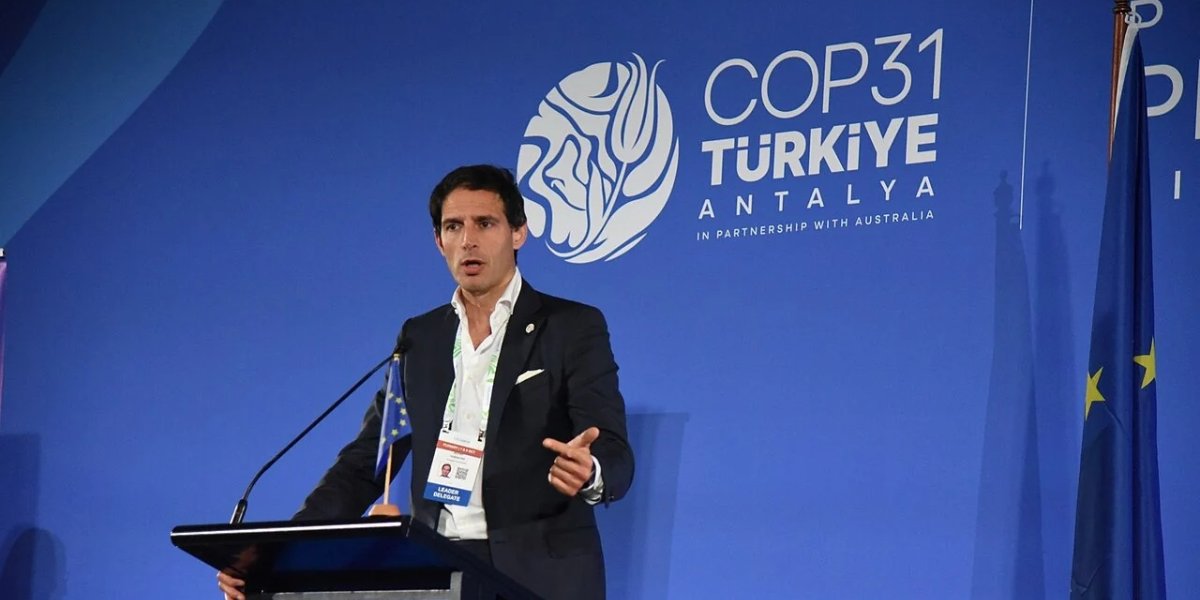
United Nations Climate Summit Opens Against Backdrop of Rising Global Temperatures
International attention turned toward Antalya, Turkey, ahead of the November 9 opening of the 31st United Nations Climate Change Conference, known as COP31, where governments will confront mounting pressure to translate existing climate commitments into measurable emissions reductions and financial assistance for vulnerable countries. The conference, scheduled to run through November 20, comes as governments face continuing disagreements over fossil-fuel production, climate financing and the pace of the global energy transition. In an interview published ahead of the gathering, outgoing United Nations Secretary-General António Guterres warned that the international response remains insufficient to prevent increasingly severe consequences from global warming. He pointed to the accelerating effects of extreme weather while emphasizing the continuing expansion of renewable electricity generation.
Negotiations are expected to focus on how countries can strengthen emissions-reduction efforts while addressing the financial needs of developing economies exposed to floods, droughts, rising seas and other climate-related disruptions. Guterres has called for additional financial contributions from fossil-fuel companies to support countries experiencing climate damage, although such proposals remain politically contested. For the United States, the summit arrives during a period of changing congressional leadership and uncertainty over future federal energy and environmental policy. Discussions surrounding renewable energy, fossil-fuel investment and international climate financing will therefore carry implications beyond the negotiations themselves, including for global energy markets, infrastructure spending and international economic relationships. The conference's principal test will be whether participating governments can move beyond previously announced commitments toward concrete funding arrangements and implementation plans.
Looking Ahead
The coming week will bring several developments with direct implications for the U.S. economy and international security. The Bureau of Labor Statistics is scheduled to release October's Consumer Price Index on Tuesday, November 10, followed by the Producer Price Index on Friday, November 13. Both reports will provide updated evidence of inflation pressures following the midterm elections and help shape expectations for Federal Reserve policy. Investors will also watch whether the recent shifts in technology, healthcare and energy stocks continue as markets reopen.
Internationally, U.S.-mediated negotiations involving Russia and Ukraine are scheduled for November 10–11 in Abu Dhabi, with European participation adding another dimension to discussions over a possible settlement. Israel's new parliament will convene Tuesday as coalition negotiations continue, while delegates at COP31 begin two weeks of climate diplomacy in Turkey. Together, these developments will help determine whether the political changes and diplomatic initiatives emerging from the past week produce tangible economic and security outcomes.